
Brutalist architecture: the hidden beauty of béton brut
What is brutalist architecture? The origins of béton brut, France's concrete heritage, and the eye of a photographer who devoted a whole series to it — with excerpts from my Griffith Review interview.

Long unloved, sometimes slated for demolition, brutalist architecture is enjoying a remarkable revival of interest. Its massive volumes, its surfaces of exposed concrete and its structural frankness fascinate a new generation of architects, photographers and architecture lovers. I have devoted part of my own work to revealing what is sculptural about these buildings — the series Utopies Perdues — and I discussed it at length in an interview published by the Australian journal Griffith Review, “Musique concrète”, from which this article quotes a few passages. Here is a clear reading of what brutalism really is, where it comes from, and why it deserves a second look.
What is brutalist architecture?
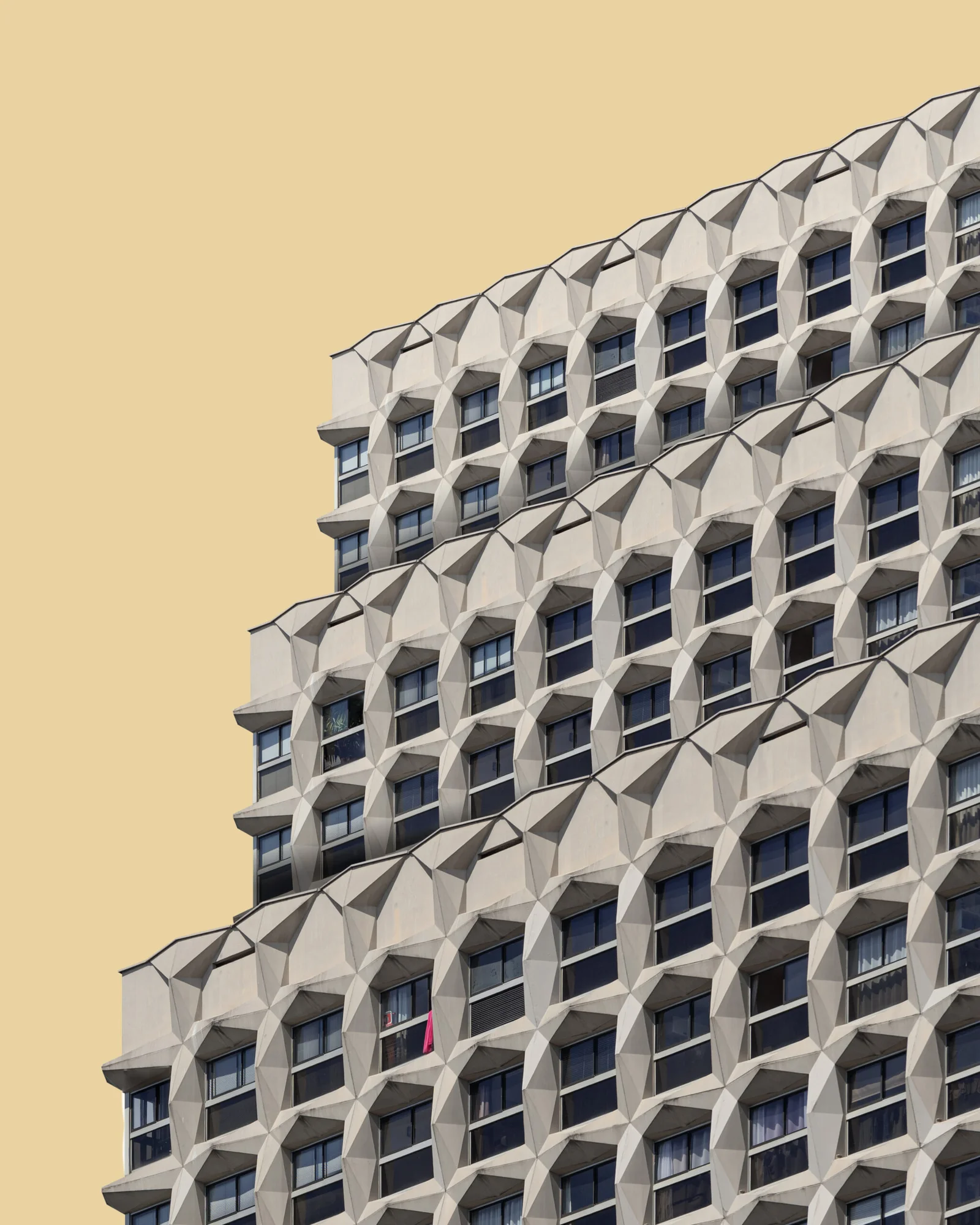
Brutalist architecture is a post-war movement, emerging from the 1950s onwards, characterised by the frank, assertive use of raw shuttered concrete — the famous béton brut from which the word brutalism derives. Far from any connotation of brutality, the term refers first of all to a material shown as it is, without cladding or artifice, still bearing the imprint of its formwork boards.
Brutalist buildings can be recognised by a few recurring traits: massive, geometric volumes; a structure that is legible from the outside (you can see how the building stands up); materials exposed without decoration; and a monumentality that favours function and the expression of matter over ornament. It is an architecture of constructive sincerity: nothing is hidden, everything is shown.
But reducing brutalism to an aesthetic would miss the essential. As I put it to Griffith Review:
The original brutalism is the projection, in concrete, of strong social ideals. It’s also the architectural sedimentation of a given period: the hopeful ’50s up to the ’70s.
“Musique concrète”, Griffith Review No. 73, 2021
Origins: from béton brut to the “New Brutalism”
The starting point is inseparable from Le Corbusier. With the Cité radieuse in Marseille (1952), he erected a manifesto for modern collective housing whose raw concrete façades became a reference. The Sainte-Marie de La Tourette convent, near Lyon, extends this research in a more austere, spiritual register.
In the 1950s, British critics theorised the movement: in 1955 Reyner Banham published a founding text, The New Brutalism, which gave the current its name and its intellectual frame. Brutalism then spread internationally — administrations, universities, social housing, cultural facilities — carried by the urgency of reconstruction and by a faith in social progress that architecture was meant to embody.
Brutalism in France: from housing estates to icons
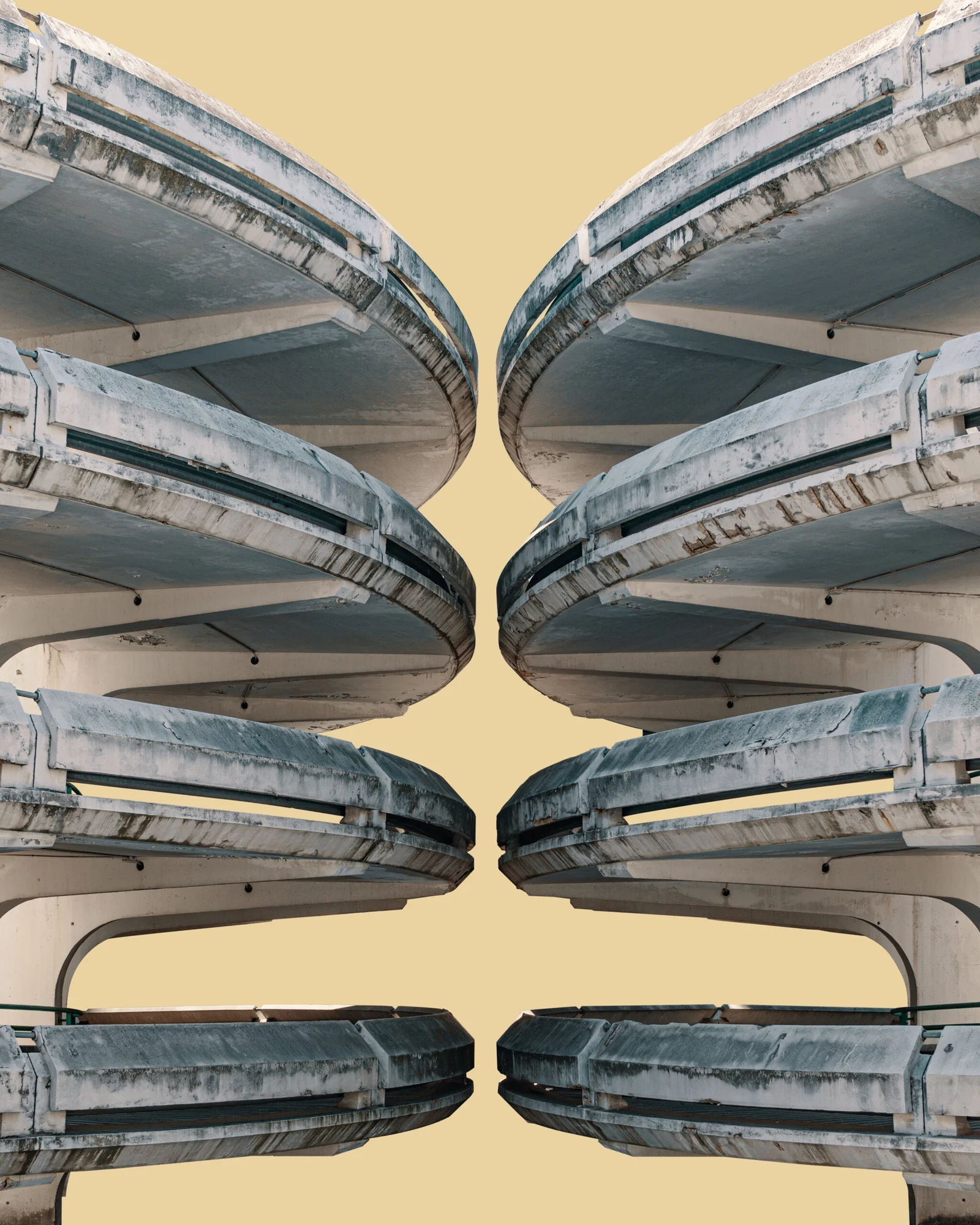
France possesses a brutalist heritage whose richness is often underestimated. Beyond the Cité radieuse, several works testify to the formal audacity of the period:
- The Sainte-Bernadette du Banlay church in Nevers (Claude Parent and Paul Virilio, 1966), a tilted block of concrete that puts the theory of the “oblique function” into practice.
- Les Choux de Créteil (Gérard Grandval), housing towers whose balconies evoke petals — an example of organic, sculptural brutalism.
- The grands ensembles of the Paris region and of France’s big cities, long derided, now being re-evaluated as major testimonies to a social and urban ambition.
These buildings crystallise the paradox of brutalism: conceived as promises of the future, they sometimes came to embody the failure of urban utopias, before being rediscovered for their plastic power. That paradox is precisely what drove my series:
Undoubtedly, their very liberal use of concrete. But also the ideology behind them: the beautiful idea that a real utopia is possible and that society and life can be shaped by their surroundings. Of course most of these ideals came and went — some were probably a bit naive to be honest — but these buildings stayed behind as testimony of a past hope that never materialised. Hence the title of the series.
“Musique concrète”, Griffith Review No. 73, 2021
Why brutalism fascinates again
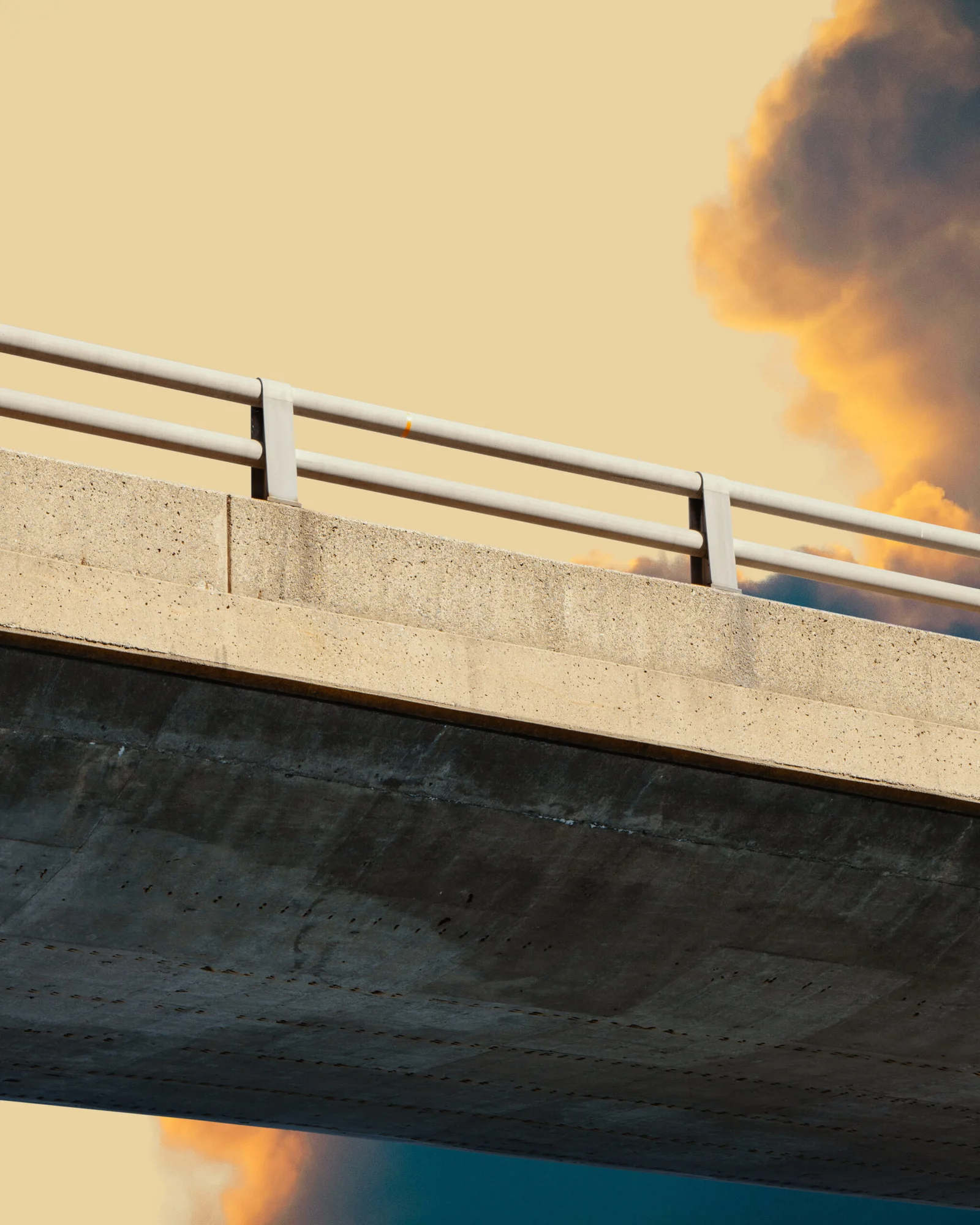
Several reasons explain this return to grace. First, a weariness with the smooth, interchangeable façades of contemporary architecture: raw concrete offers matter, texture, presence. Then, photography and social media have played a decisive role — the play of shadows on concrete, the geometric compositions and the monumentality of these buildings lend themselves remarkably well to the image. Finally, a growing heritage awareness: as these buildings come under threat of demolition, their historical and aesthetic value is at last being recognised.
Should we speak of a brutalist revival, then? In the interview, I qualified the idea:
The brutalist resurgence we see today from the leading architects is more brutalist-inspired than purely brutalist: a brutalist shell devoid of its original socialist ideals, if you will. And that’s okay!
“Musique concrète”, Griffith Review No. 73, 2021
Some architects have even pushed for brutalism to be renamed “heroic architecture”, feeling the original term carries negative connotations. I don’t buy it: the very soul of brutalism is embedded in its name, and if it has stuck for so many decades, there is probably a reason. Why try to rebrand the past when you can look forward? That forward thinking is exactly what drove brutalism in the first place.
Photographing brutalism: an author’s eye
My interest in this architecture goes back a long way. In Saint-Pierre-et-Miquelon, where I was born, almost every building is small and made of wood: raw concrete was, to me, a totally alien form of architecture. I have vivid memories of the brutalist buildings of Halifax, Nova Scotia, discovered as a child on trips to Canada — at the time I had no idea what it was or what it stood for, but the impression was strong enough to steer my photographic practice, much later, towards architecture.
Raw concrete is a demanding, rewarding photographic subject. Everything hinges on light: raking, it reveals the texture of the formwork and sculpts the volumes; against the light, it turns masses into graphic silhouettes. Photographing brutalism means looking for the hidden geometry, isolating a structural detail, conveying scale without crushing the subject — and sometimes revealing a beauty the hurried eye does not perceive.
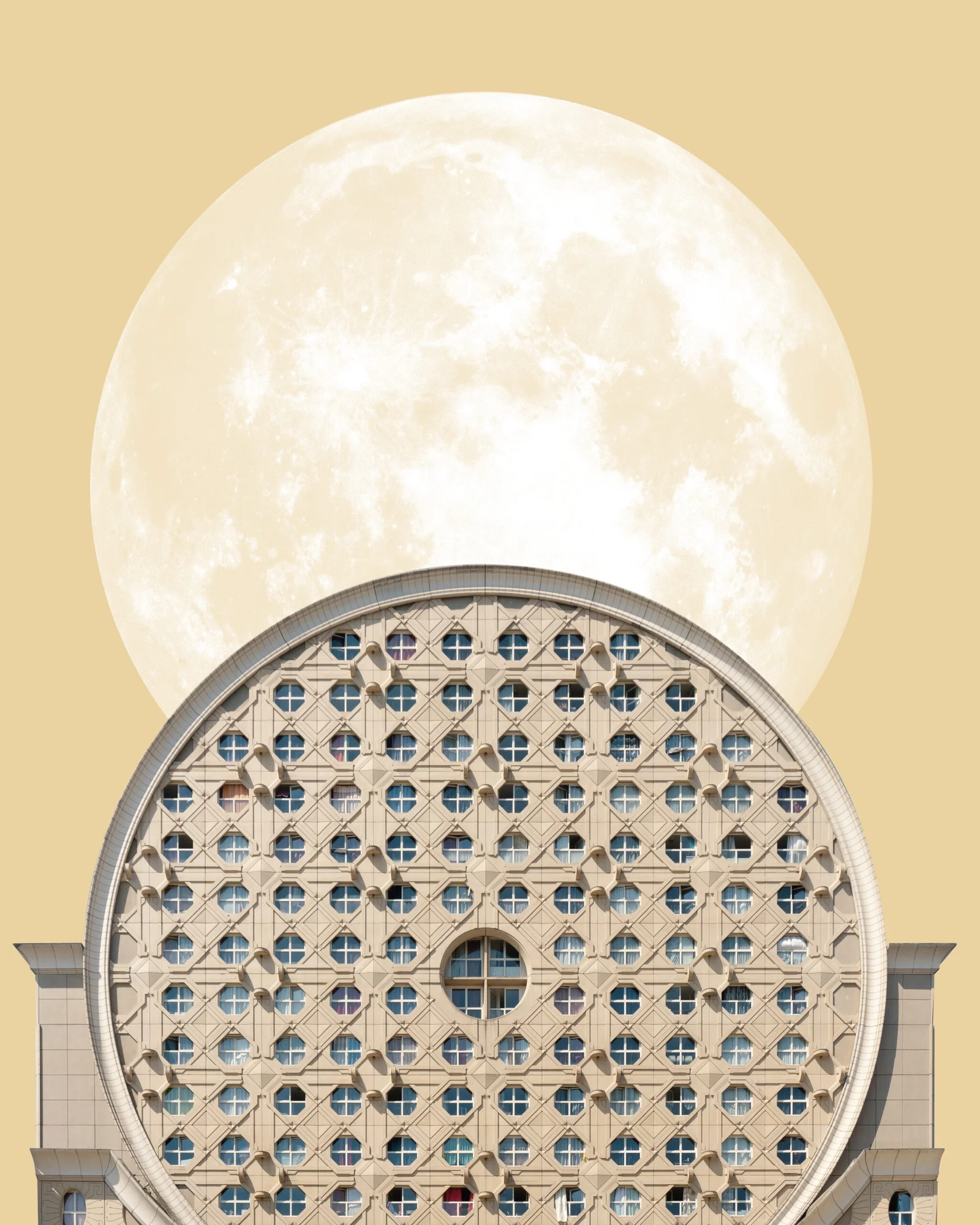
This is the approach behind Utopies Perdues, my series on concrete architecture and housing estates, available as limited-edition art prints. It dialogues with a broader body of work on architectural utopia and modernity, and with my photographic reconstructions of visionary projects that were never built.
Frequently asked questions
Why is it called brutalism? The term comes from béton brut — raw, shuttered concrete, the movement’s signature material — not from any notion of brutality. It was popularised by British critics in the mid-1950s.
What is the difference between brutalism and modernism? Brutalism is a branch of post-war modernism. It stands apart through the frank exposure of materials — raw concrete above all — the monumentality of its volumes and the assertive expression of structure.
Is brutalist architecture still being built today? The historical movement spans mainly from the 1950s to the 1970s. But its vocabulary — exposed concrete, massive volumes, constructive sincerity — inspires many contemporary architects, in a register often described as neo-brutalist.
The full interview, “Musique concrète: the raw beauty of brutalism”, conducted by Carody Culver, appeared in Griffith Review No. 73 (2021). Working on a project involving concrete architecture, a housing estate or a modern building worth showcasing? Discover my work as an architectural photographer in Paris or let’s talk about your project.