
« The Brutalist »: When Cinema Sublimates Brutalist Architecture and Its Heritage
Brady Corbet's The Brutalist seen by an architectural photographer: brutalism's history and heritage, and the film's echoes in my Lost Utopias series.
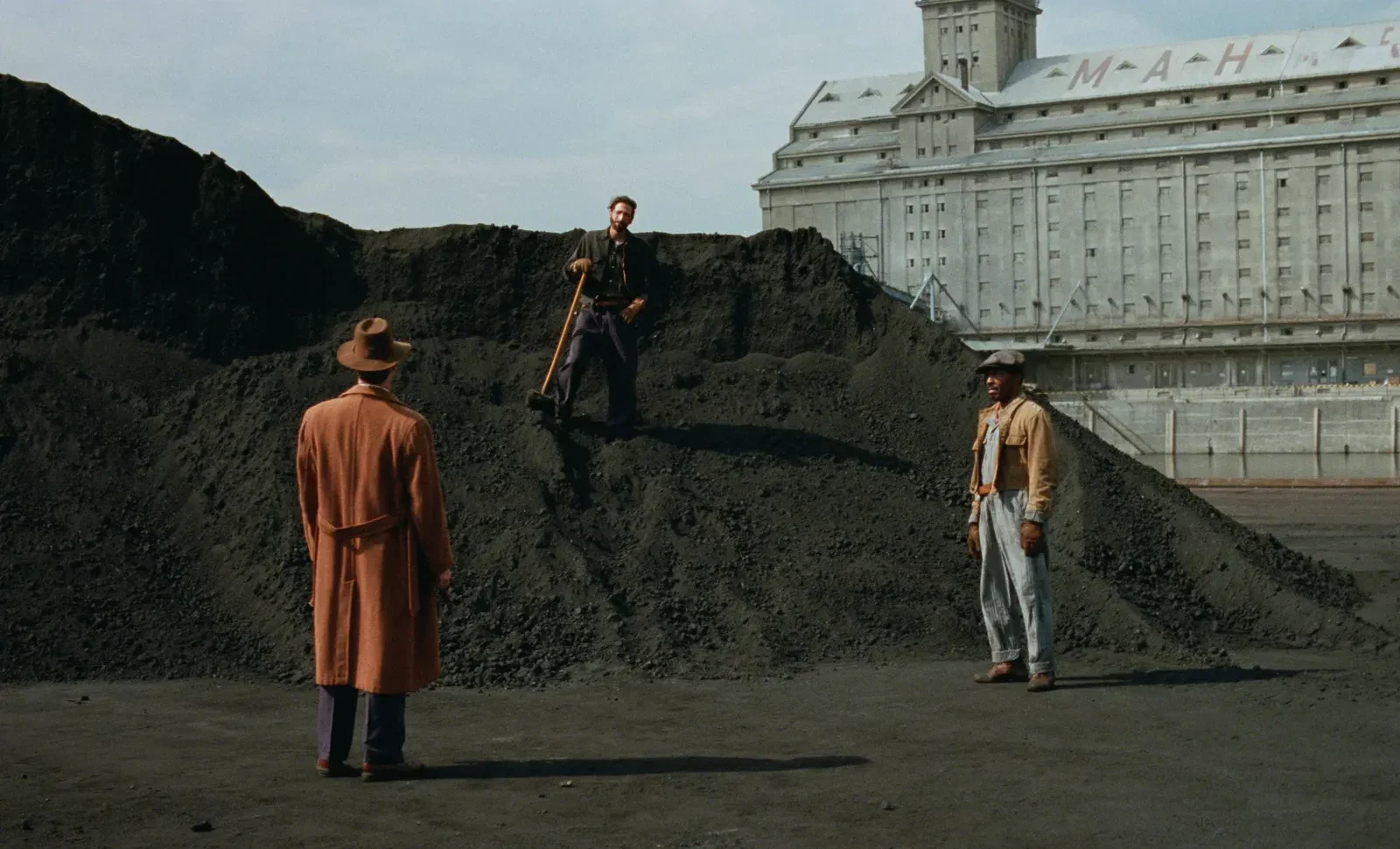
The Brutalist (2024) by Brady Corbet explores brutalist architecture through the fictional journey of László Toth, a visionary Hungarian architect and Holocaust survivor who emigrates to the United States after the war (Le Monde, 2024). Portrayed by Adrien Brody, László attempts to rebuild his life and career in America, driven by his modernist ideals but confronted with the realities of the New World.
To understand the movement behind the film — origins, béton brut, French heritage — see my guide to brutalist architecture.
The title The Brutalist refers to brutalism, an architectural style that emerged in the mid-20th century, renowned for its raw concrete constructions, massive and minimalist. The term “brutalism” derives from “béton brut,” a concept dear to Le Corbusier, emphasizing the honesty of materials rather than violent brutality (Wikipedia). This movement, popular between the 1950s and 1970s, advocated for sincere and functional architecture. The Brutalist draws inspiration from this philosophy to weave its narrative, intertwining László’s personal story with the broader issues of post-war architecture. In doing so, it offers a rich context that will resonate with architects, urban planners, and other professionals in the building and city industries who are passionate about the history of their discipline.
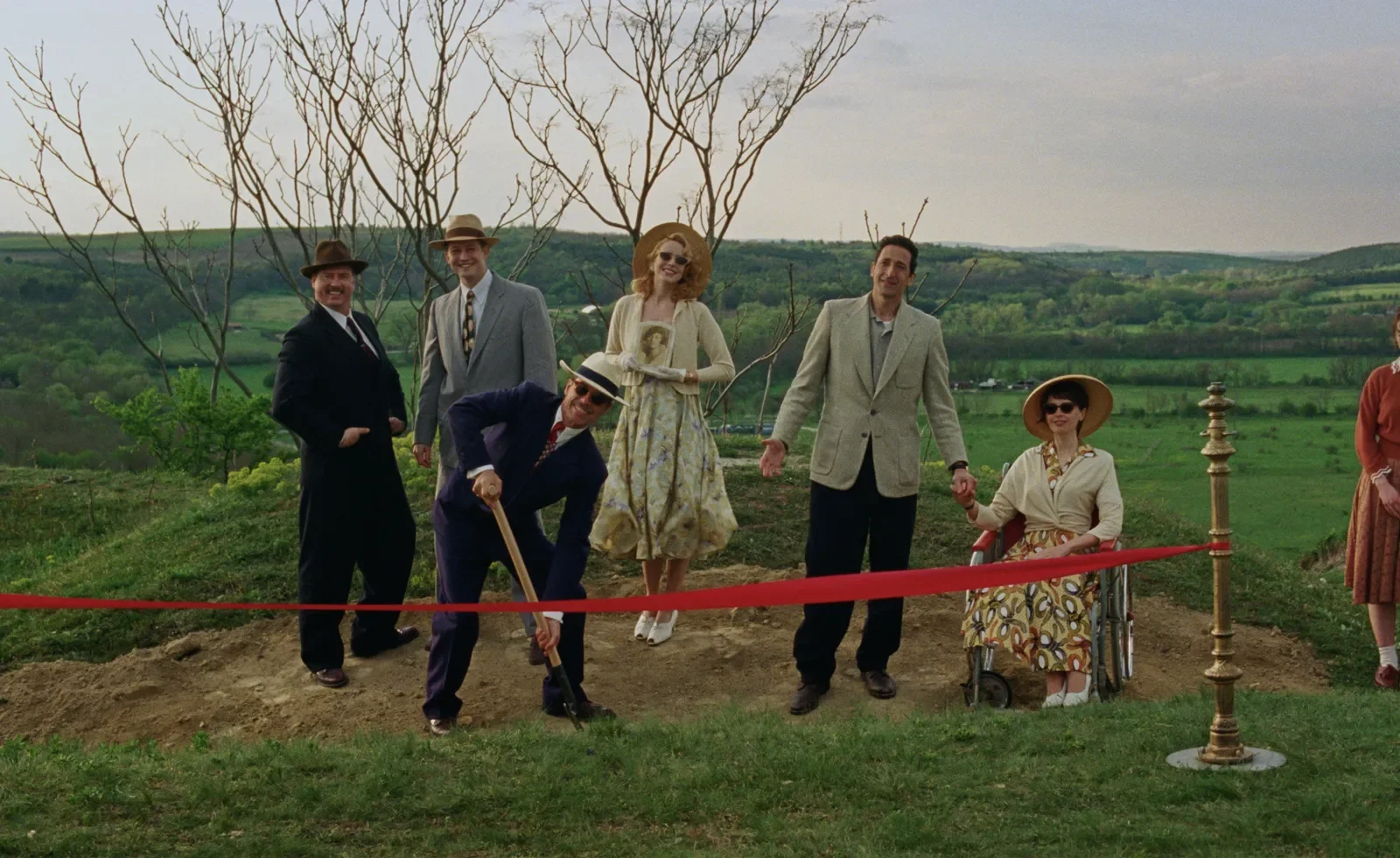
Brady Corbet, a 36-year-old American director, presents his third feature film with immense ambition (Le Monde, 2024). Shot in VistaVision, the film highlights the monumentality of spaces and buildings, bringing architecture to life on screen. In The Brutalist, architecture is not just a backdrop: it is a true character, reflecting the protagonist’s dreams and struggles.
Brutalism in Cinema: Architectural Exploration and the Film’s Aesthetics
The Brutalist permeates the screen with brutalist aesthetics from its opening scenes. László Toth, newly arrived in 1950s Pennsylvania, carries with him the legacy of the Bauhaus and European modernism. His sketches and models starkly contrast with post-war American architecture, which is opulent and adorned with ornamentation. The film skillfully plays on this contrast: László’s brutalist visions—with pure geometric lines and bare concrete facades—stand out against the decorative skyscrapers and suburban neighborhoods of the United States (Wallpaper, 2024).
Visually, Corbet contrasts the utopian simplicity of the brutalist style with the exuberance of the American landscape of the time, highlighting the mutual misunderstanding between the immigrant architect and his host country. Narratively, architecture becomes the stage for dramatic tension. Discovered by a wealthy patron, Harrison Lee Van Buren Sr. (Guy Pearce), László is entrusted with the construction of a mysterious monumental project—a complex called “The Institute.” This massive undertaking takes on an allegorical dimension: the central structure that László must build symbolizes both his creative genius and the compromises he is forced to accept.

The film’s artistic direction designed The Institute as a place rich in meaning, “a factory-crematorium disguised as a church,” according to production designer Judy Becker (Filmmakers Academy, 2024). By filming The Institute with grand angles and sculptural lighting, Corbet imbues the architecture with an almost mystical aura. Every flight of concrete stairs, every massive column subtly reflects László’s inner story: his vision of a new world collides with the lingering shadows of the 20th century.
My Personal Experience with The Brutalist
The film The Brutalist left a profound impact on me, triggering a double shock. First, the aesthetic shock: the VistaVision process used by the director gives the image an incredible texture, often leaving me unsure whether I was watching a period film or a contemporary work. The cinematography of this feature film is simply stunning, enhancing the atmosphere and emotions conveyed on screen. With over three hours of runtime, The Brutalist stands out with a direction that feels like a condensation of the best cinematic ideas of recent years. For instance, some exterior shots of buildings evoke the filmography of Wes Anderson, featuring frontal, vertical, symmetrical, and imposing compositions.
The second shock was realizing that brutalism, a subject that had remained relatively niche until now, might be experiencing a revival in collective consciousness. Despite its stark subject matter, the film has been widely distributed, earning critical acclaim both from audiences and in theaters, and was recently awarded at the Oscars, notably for Adrien Brody’s performance and its outstanding cinematography. As a longtime admirer of brutalism, I can only be delighted to see this architectural style emerging from obscurity.
This renewed interest in brutalism raises an important question: are we on the verge of a shift in mindset? Long dismissed for its harsh appearance, brutalism is beginning to re-emerge in a neo-brutalist form in some recent architectural projects. However, it is crucial to acknowledge that while brutalism is fascinating both aesthetically and philosophically, pure brutalism presents significant environmental challenges, particularly regarding the ecological impact of concrete and the thermal insulation of buildings.


Brutalist Architecture and Its Legacy: Ambition, Decline, and Resurgence
Born as an extension of the modernist movement, brutalism left a lasting mark on architectural history with its radical ambition. Popularized in the United Kingdom in the 1950s by architects such as Alison and Peter Smithson, and later adopted worldwide, the brutalist style reached its peak between the 1950s and 1970s (Wikipedia). Its core principles: celebrating the honesty of materials, embracing functionality without ornamentation, and often using architecture in service of the public good. Brutalism can be found in large-scale social housing projects, universities, city halls, and modernist churches—programs where architects had free rein to experiment with bold and stripped-down forms.
The use of raw concrete (exposed, uncoated) became brutalism’s most iconic signature, giving buildings a massive, almost sculptural presence. The ambitions of brutalism’s pioneers were often driven by idealism. They envisioned reimagined cities, modular collective housing that could offer a better life for middle- and working-class communities (think of Le Corbusier’s Unité d’Habitation in Marseille or Habitat 67 by Moshe Safdie in Montreal, etc.). However, public and critical reception was mixed. While some praised brutalism’s expressive power and bold formal experimentation, others criticized it for its coldness and perceived inhumanity.
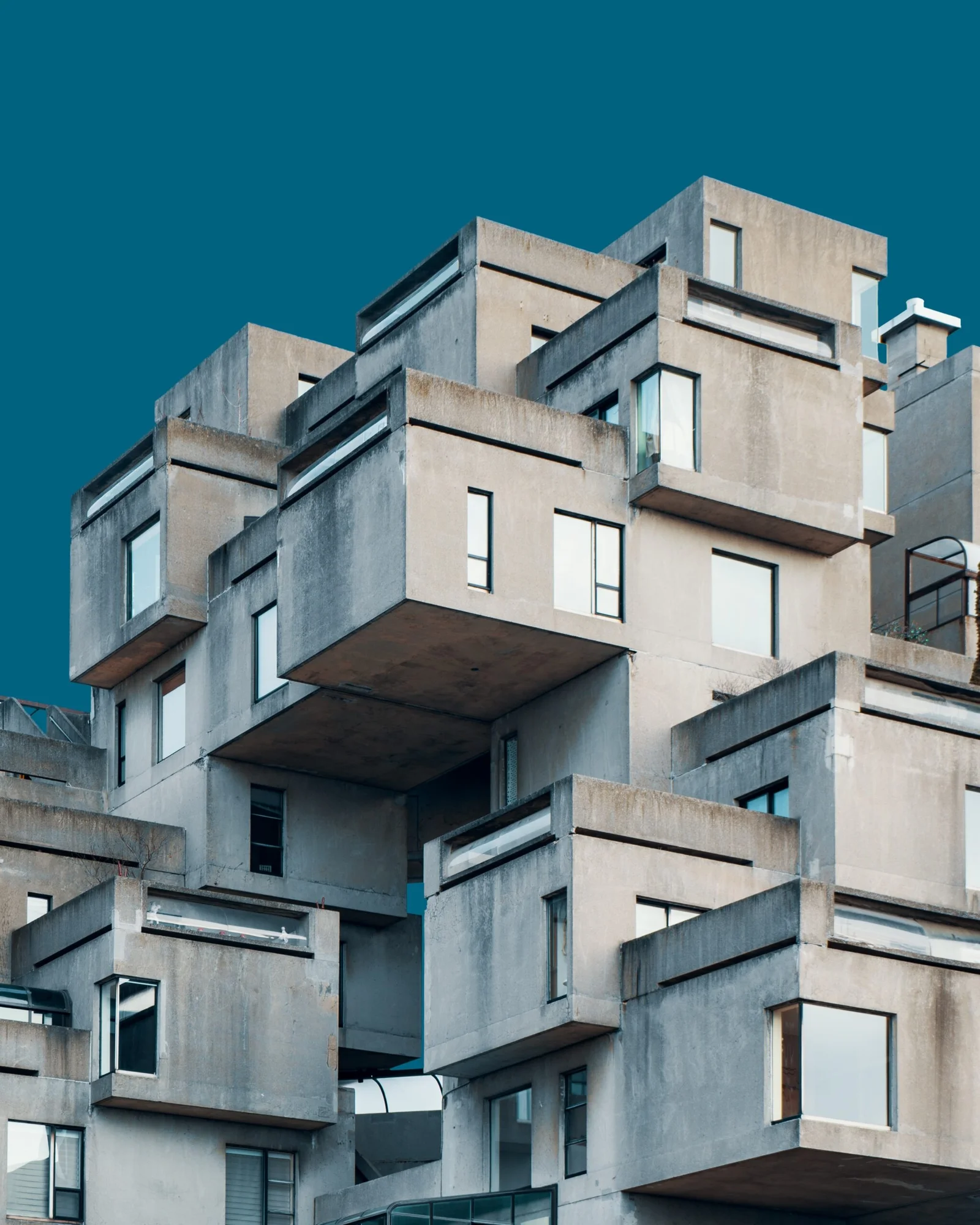
Habitat 67, Montreal, Canada. Architect: Moshe Safdie
In the following decades, many brutalist buildings suffered from a lack of maintenance, and their austere appearance led to growing unpopularity by the late 20th century. Utopian projects became, in the collective imagination, symbols of urban dystopia. As a result, from the 1980s onward, brutalism fell out of favor, and many of these structures were either demolished or faced the threat of destruction.
However, the core values of brutalism—simplicity, modularity, and material authenticity—are experiencing a resurgence today. A new generation of contemporary architects is once again drawing inspiration from this movement through neo-brutalism, reinterpreting exposed concrete and bold geometric forms while integrating modern concerns such as sustainability and new technologies. A heritage preservation movement has also emerged, with growing voices advocating for the protection of existing brutalist masterpieces, recognizing them as essential witnesses to recent architectural history.
Connection to My Work as a Photographer: Brutalism and Architectural Photography
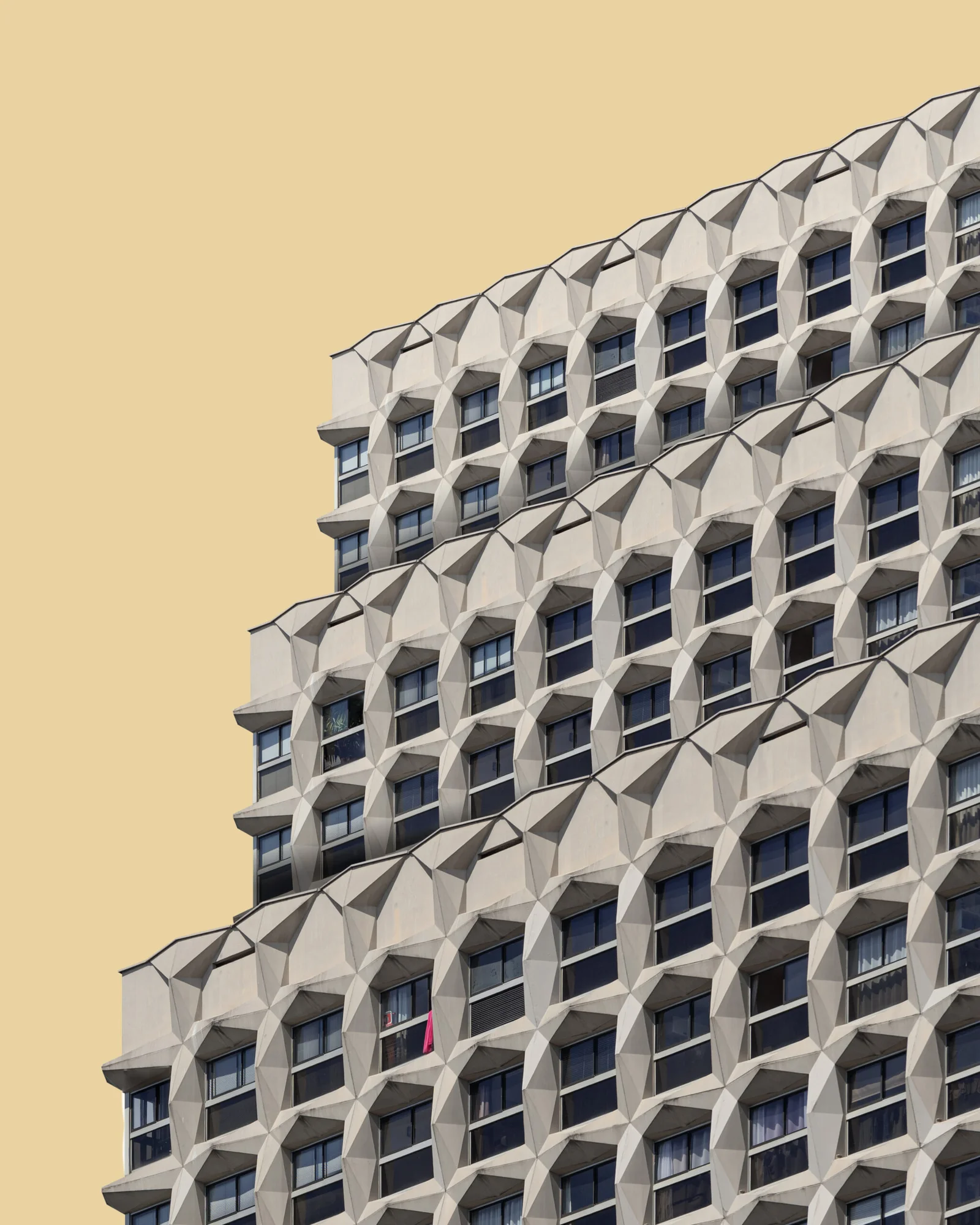
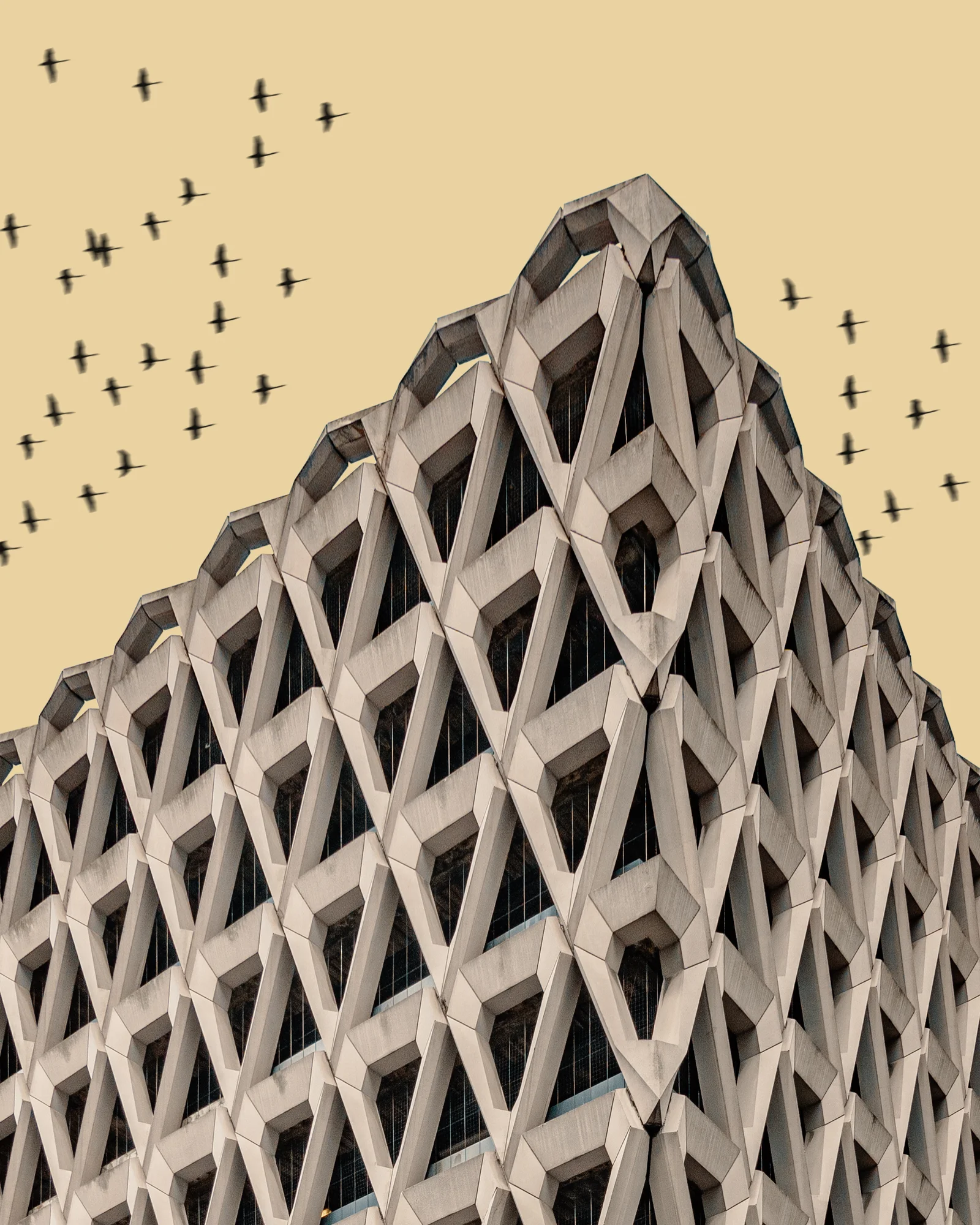
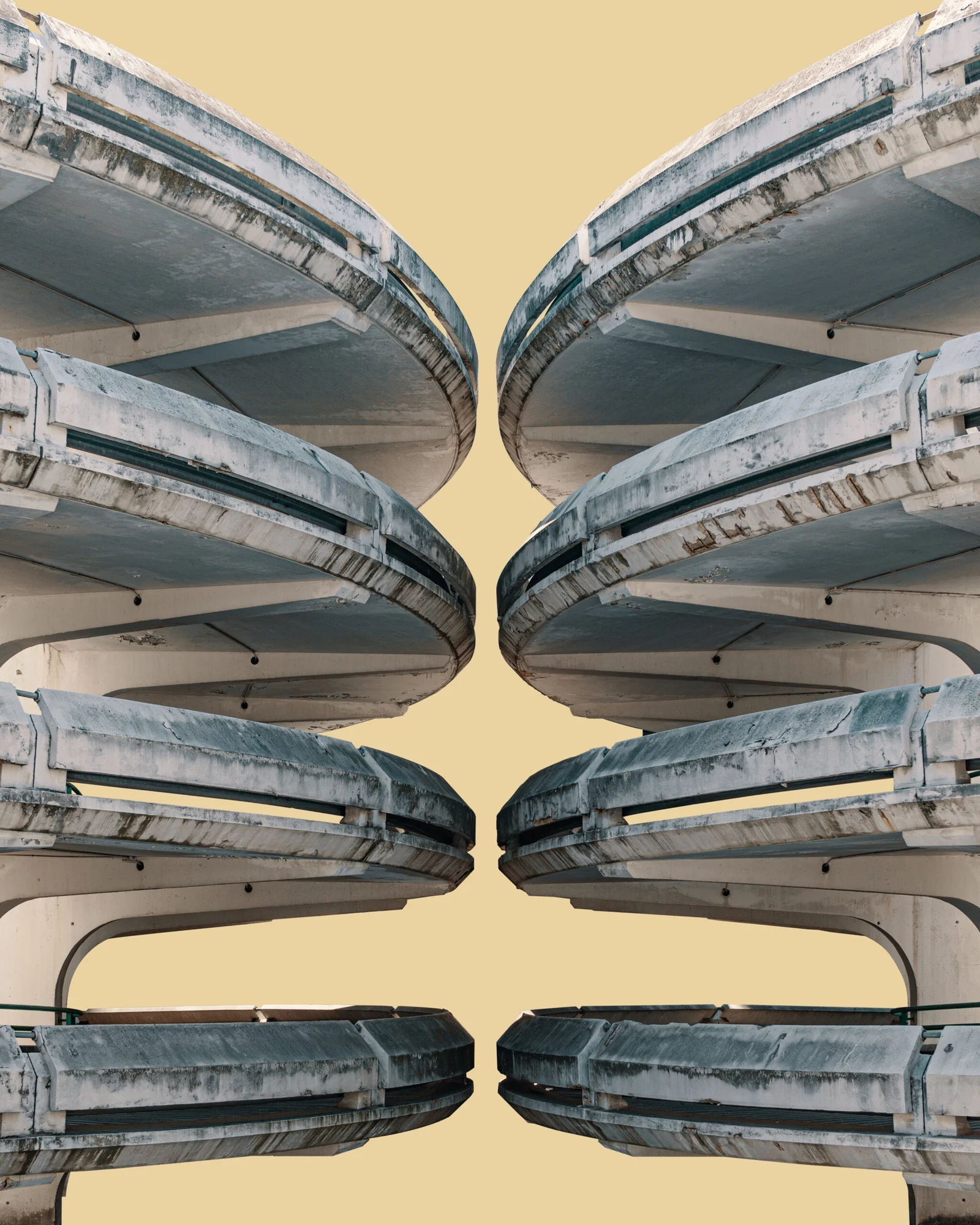
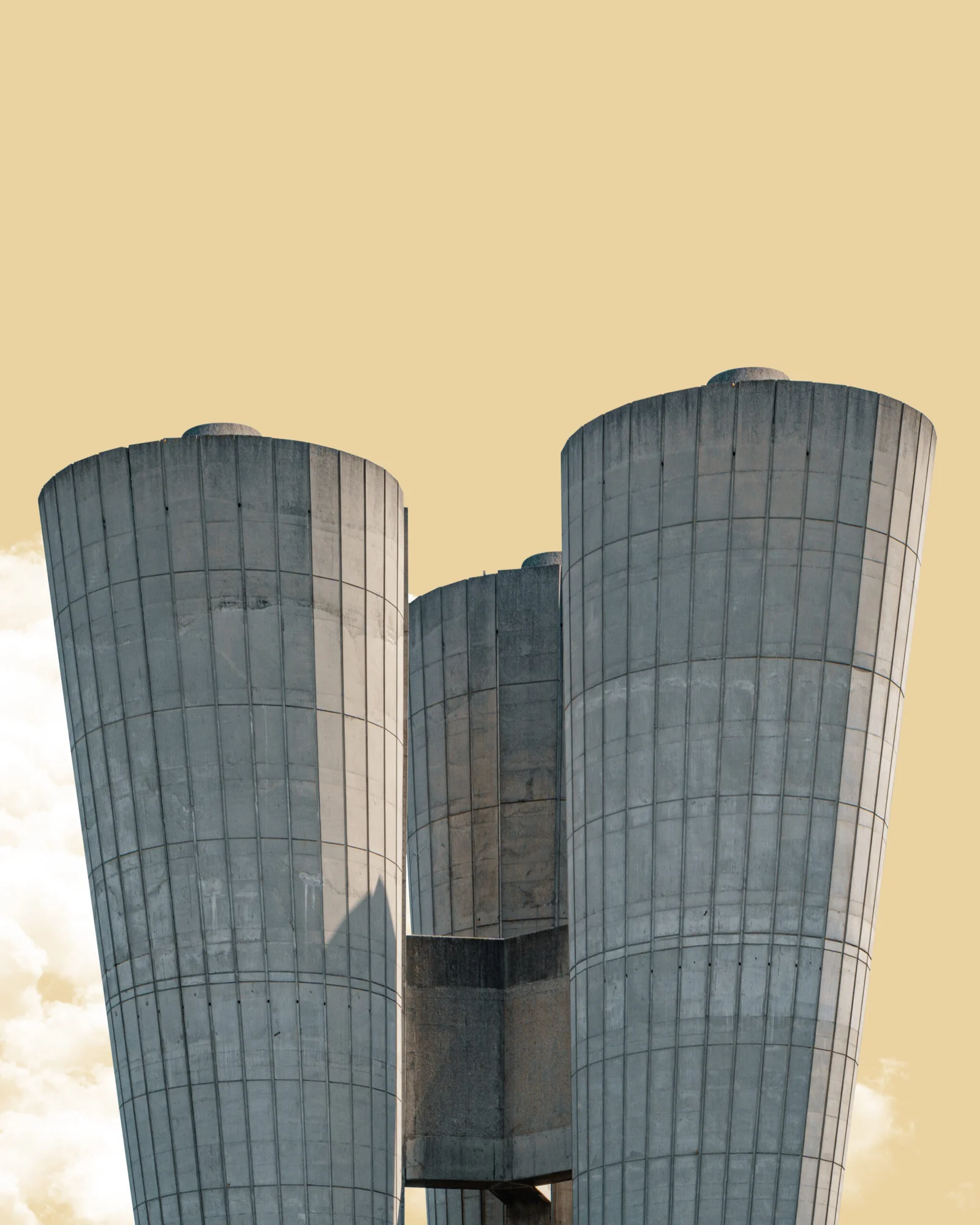
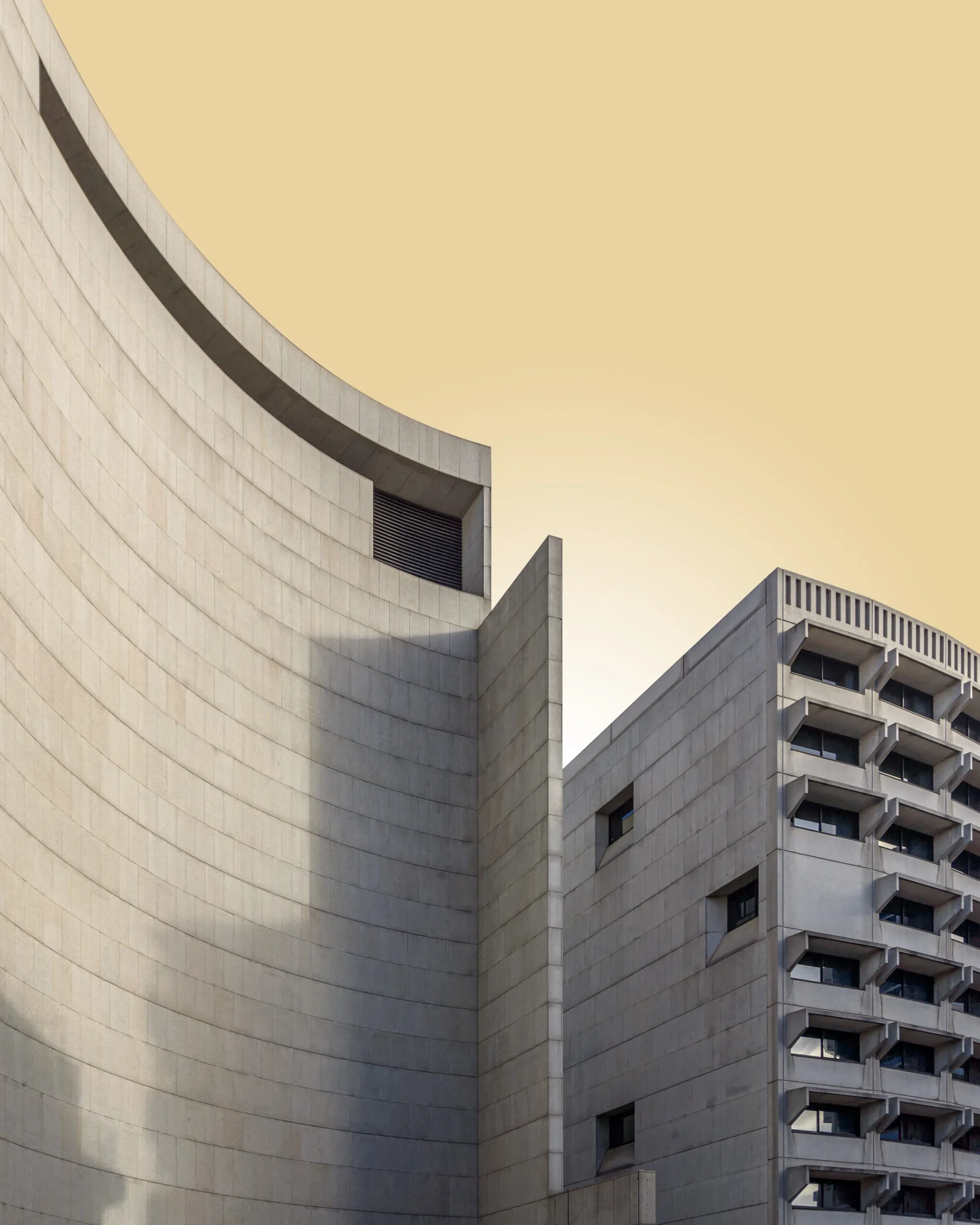
If The Brutalist glorifies brutalist architecture through the lens of cinema, the same approach can be applied to architectural photography. This is precisely what I strive to achieve in my recent artistic projects. In particular, I created a series titled “Lost Utopias”, dedicated to the vast concrete housing complexes of Île-de-France. My goal: to reveal the hidden beauty of these often-misunderstood brutalist structures. Just like Corbet’s film, which breathes new life into buildings on screen, I aim to elevate concrete towers and housing blocks through my camera lens. By playing with composition, natural light, and perspective, I seek to extract the innate poetry of these structures.
In my photographs, the brutalist buildings of the Parisian suburbs transform into abstract works of art. For example, a façade with honeycomb-like balconies or repetitive windows becomes a rhythmic, almost hypnotic graphic pattern. A concrete parking structure turns into a succession of planes and volumes playing with light and shadow. This photographic work aims to renew our perception: what once seemed gray and monotonous suddenly reveals subtle nuances, strong lines, symmetry—or, conversely, fascinating irregularities. This establishes a dialogue between architecture and imagery, similar to what we observe in The Brutalist. In the film, the camera acts as a fresh eye on László’s structure, infusing it with meaning and emotion. Likewise, architectural photography isolates details, freezes a perspective, and captures an angle to better tell the story of a building.
The connection between The Brutalist and my work is also thematic. Both question how we perceive these architectural remnants of the past. Are they merely the ruins of failed utopias, destined to be forgotten or demolished? Or do they hold an aesthetic and cultural value that deserves to be rediscovered? In “Lost Utopias”, I take a clear stance: by adopting a new perspective, these concrete blocks can evoke emotion and inspiration. Similarly, The Brutalist suggests that behind every construction lies a vision, an intention—one that may have been distorted over time. The film encourages a fresh look at brutalist architecture, one that fosters empathy for its creators and curiosity about its meaning. In this, architects, photographers, and urban enthusiasts converge: revisiting brutalism today is about rediscovering an overlooked part of our heritage—and perhaps drawing lessons from it to shape the future.
The Importance of Brutalism Today
Through The Brutalist and the examples discussed, one conclusion becomes clear: brutalist architecture continues to captivate and influence creative work well beyond its original era. Whether in film, photography, or new constructions inspired by it, brutalism remains a relevant topic in architectural discourse. Its significance today lies primarily in its role as a historical witness: these raw concrete buildings embody the utopias and contradictions of the second half of the 20th century. Preserving them—or at the very least documenting them—means safeguarding a vital part of our collective memory in urbanism and design.
For contemporary architects, revisiting brutalism provides an opportunity to reflect on the concepts of functionality, material honesty, and architecture’s social responsibility. In a world striving for sustainability and authenticity, brutalist principles—simplicity, the durability of concrete, and modularity—resonate in a new way. Of course, it is also crucial to learn from past mistakes: humanizing these large housing complexes, integrating them better into the urban fabric, and adapting them to the real needs of residents is an essential lesson.
For real estate developers and decision-makers in the construction industry, the brutalist legacy presents both a dilemma and a source of inspiration. Should these massive housing blocks and towers, often deemed obsolete, be demolished at the risk of losing a unique cultural heritage? Or can they be rehabilitated and repurposed, as seen with the renovation of the building at 3527 Rue de la Loi in Brussels (formerly brutalist towers converted into modern housing) or with certain brutalist universities that have been updated to meet ecological standards? Numerous examples demonstrate that with bold vision, the perception of concrete can be transformed: greening, colorization, and the creation of welcoming public spaces—all are strategies to give these massive structures a second life without compromising their architectural identity.
At the same time, architectural photography and cinema play a key role in shifting public perception. By highlighting the unique beauty of brutalism, they help foster its appreciation and encourage its reevaluation.
Project “City in the Air” by Arata Isozaki
In conclusion, brutalism is no longer just a historical chapter to be studied in architecture textbooks—it is a source of inspiration for both contemporary visual and built environments. The Brutalist, by weaving the fate of an architect into the fabric of this movement, invites us to rediscover the soul embedded in concrete. It reminds us that behind every building lies a vision of the world—with its hopes and its flaws. In today’s context, where we are rethinking construction methods in response to climate challenges, housing needs, and the pursuit of aesthetic meaning, revisiting movements like brutalism can be both insightful and inspiring. Like a towering raw concrete structure reaching for the sky, the brutalist legacy continues to cast both its shadow and its light on our present. It is up to architects, developers, and all those shaping the built environment to harness its strengths—to build a future that merges the power of the past with the dreams of tomorrow.
You’ve explored my analysis and reflections on The Brutalist and brutalist architecture. If this subject fascinates you as much as it does me, or if you’re interested in discussing photographic projects for your architectural works, feel free to reach out. Whether it’s to exchange ideas, collaborate on a project, or simply learn more about my work, I’d be delighted to hear from you.