
City in the Air – Rediscovering Arata Isozaki's Urban Utopia
A photorealistic reconstruction of 'City in the Air', the Metabolist utopia imagined by Arata Isozaki for Shinjuku in Tokyo, revisited in my UnBUILT series.
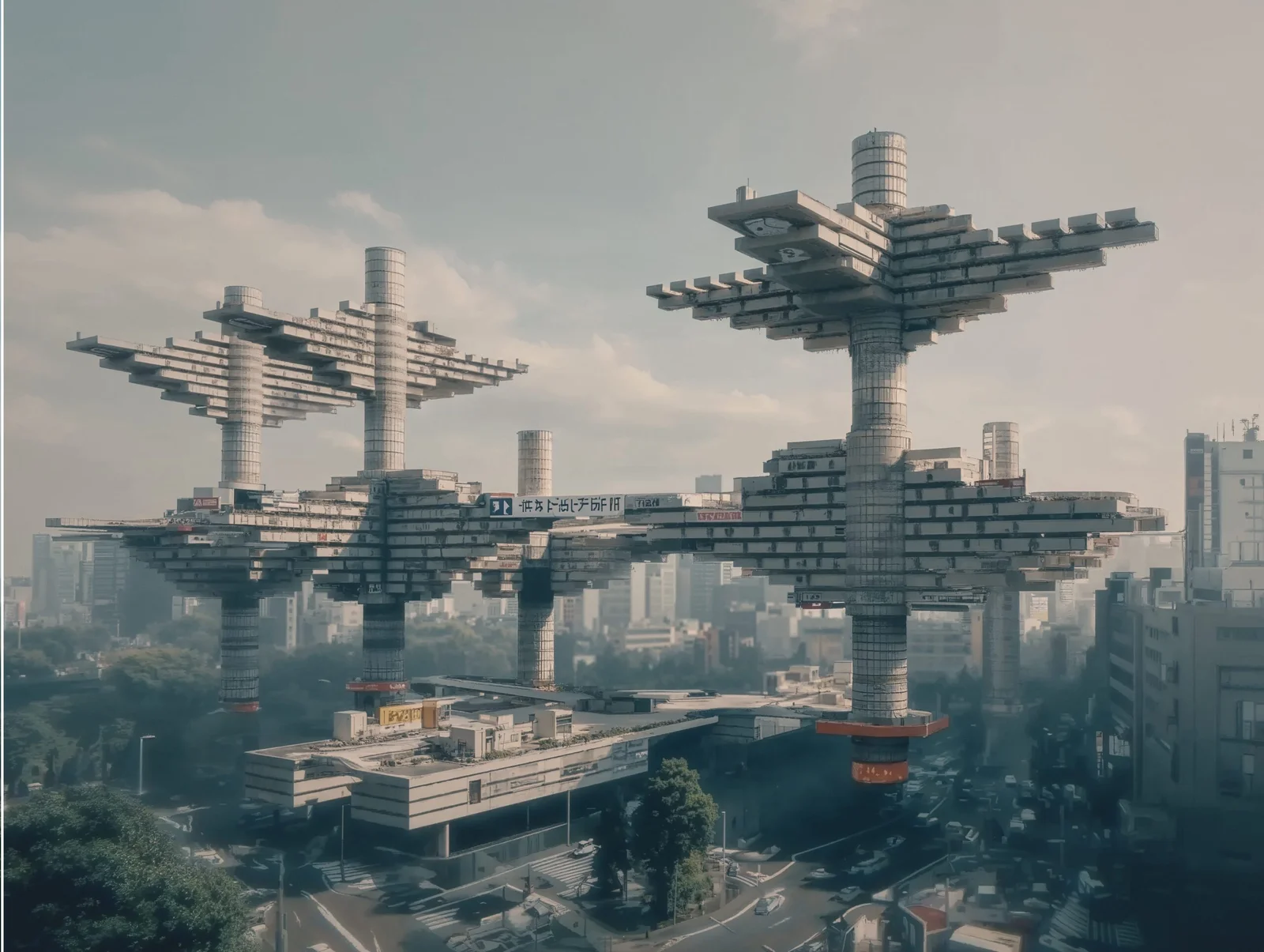
In the 1960s, at the height of the Metabolist movement’s ferment, the Japanese architect Arata Isozaki designed one of the most ambitious and visionary projects of his time: “City in the Air”. This project, conceived for the Shinjuku district in Tokyo, proposed a revolutionary solution to the rapid urbanisation of post-war Japan. Its aim? To stack layers of housing and infrastructure above existing urban areas, offering a bold response to the problems of density and lack of space.
This reconstruction extends my author’s eye on architecture, between documentation and art prints.
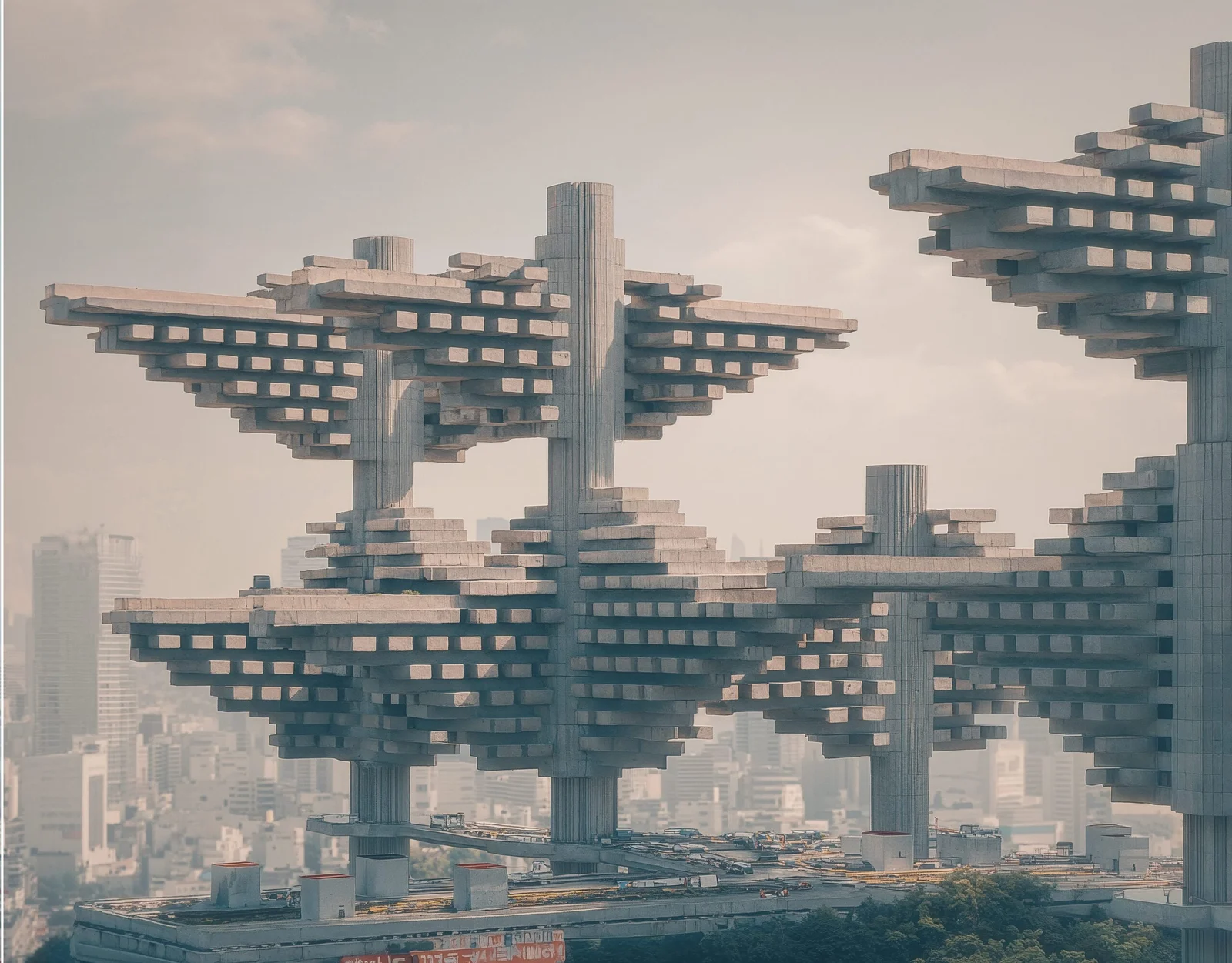
Photographic reconstruction © Pierre Châtel-Innocenti
The Audacity of a Suspended City
“City in the Air” envisaged suspended modular capsules, supported by gigantic structural columns distributed across the city. These capsules, intended to house dwellings, offices and infrastructure, formed a flexible and adaptable network, designed to evolve over time.
This concept fits fully within the spirit of the Metabolist movement, which sought to integrate urban planning into an organic and dynamic vision of the city, where each component could grow or be replaced, much like living cells.
Why Did the Project Never Come to Fruition?
Despite its conceptual brilliance, “City in the Air” never progressed beyond the model and sketch stage. Technological constraints, colossal costs, and the political and social challenges of the time made its realisation impossible. Nevertheless, this project remains a major source of inspiration, not only for architects but for all those who reflect on the future of our cities.
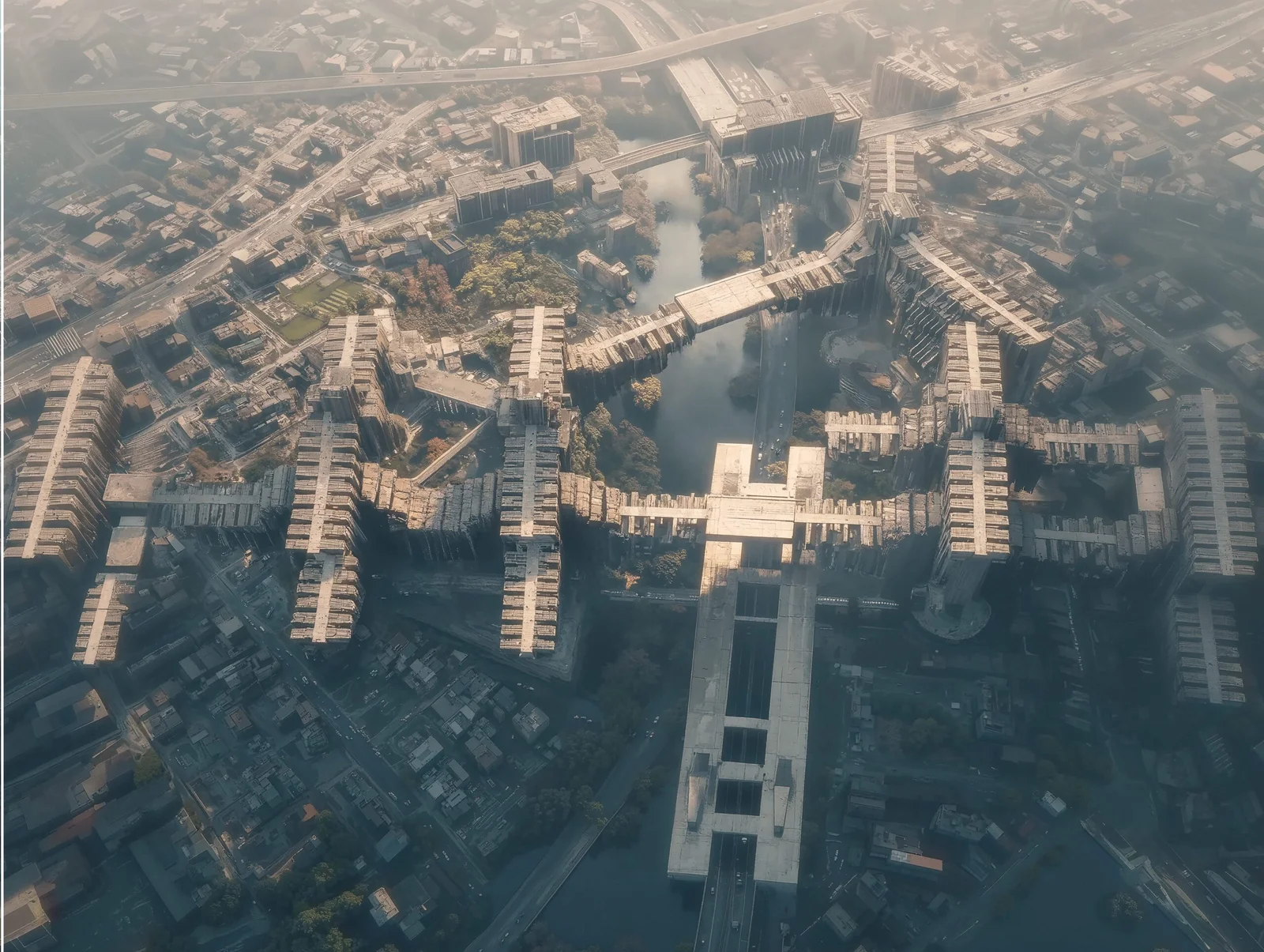
Photographic reconstruction © Pierre Châtel-Innocenti
Photographic Reconstruction: Bringing the Impossible to Life
As part of my artistic series UnBUILT, I decided to revisit this ambitious project and imagine what “City in the Air” might have looked like had it been built.
Using Arata Isozaki’s original sketches and models, combined with artificial intelligence tools and advanced digital editing techniques, I recreated a photorealistic vision of this urban utopia suspended above Shinjuku.
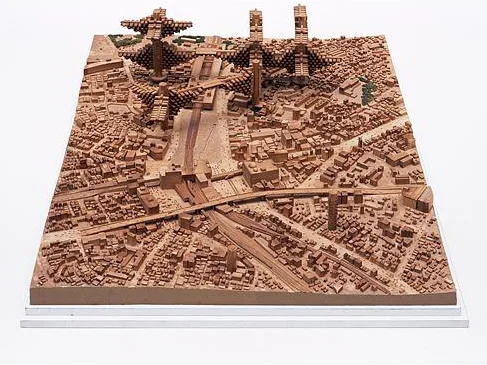
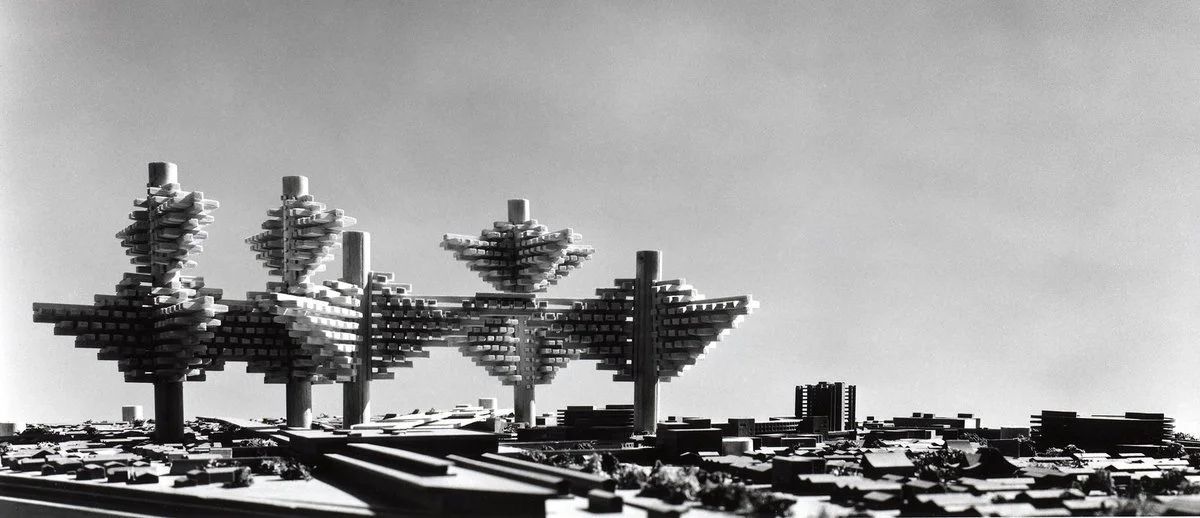
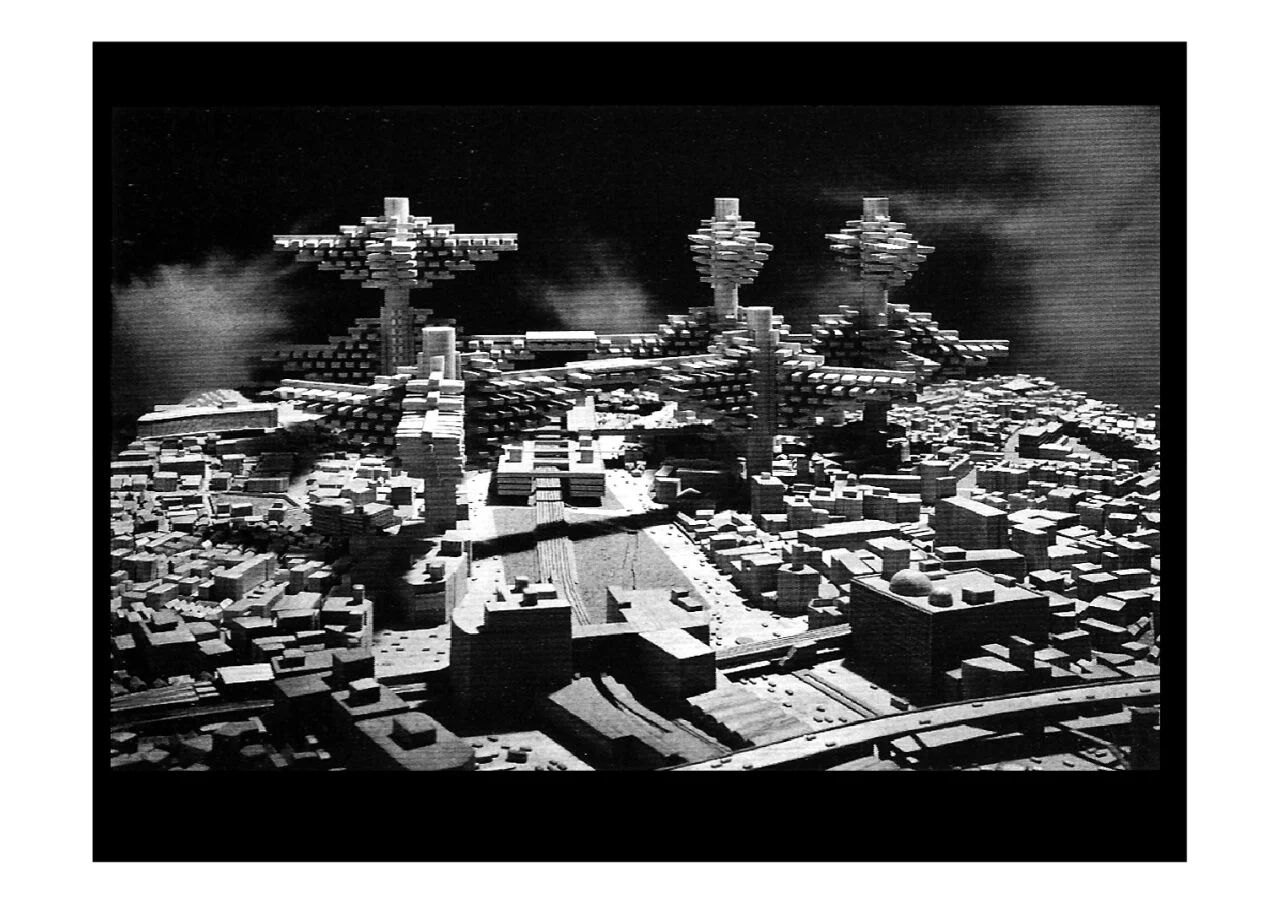
Model © Arata Isozaki & Associates
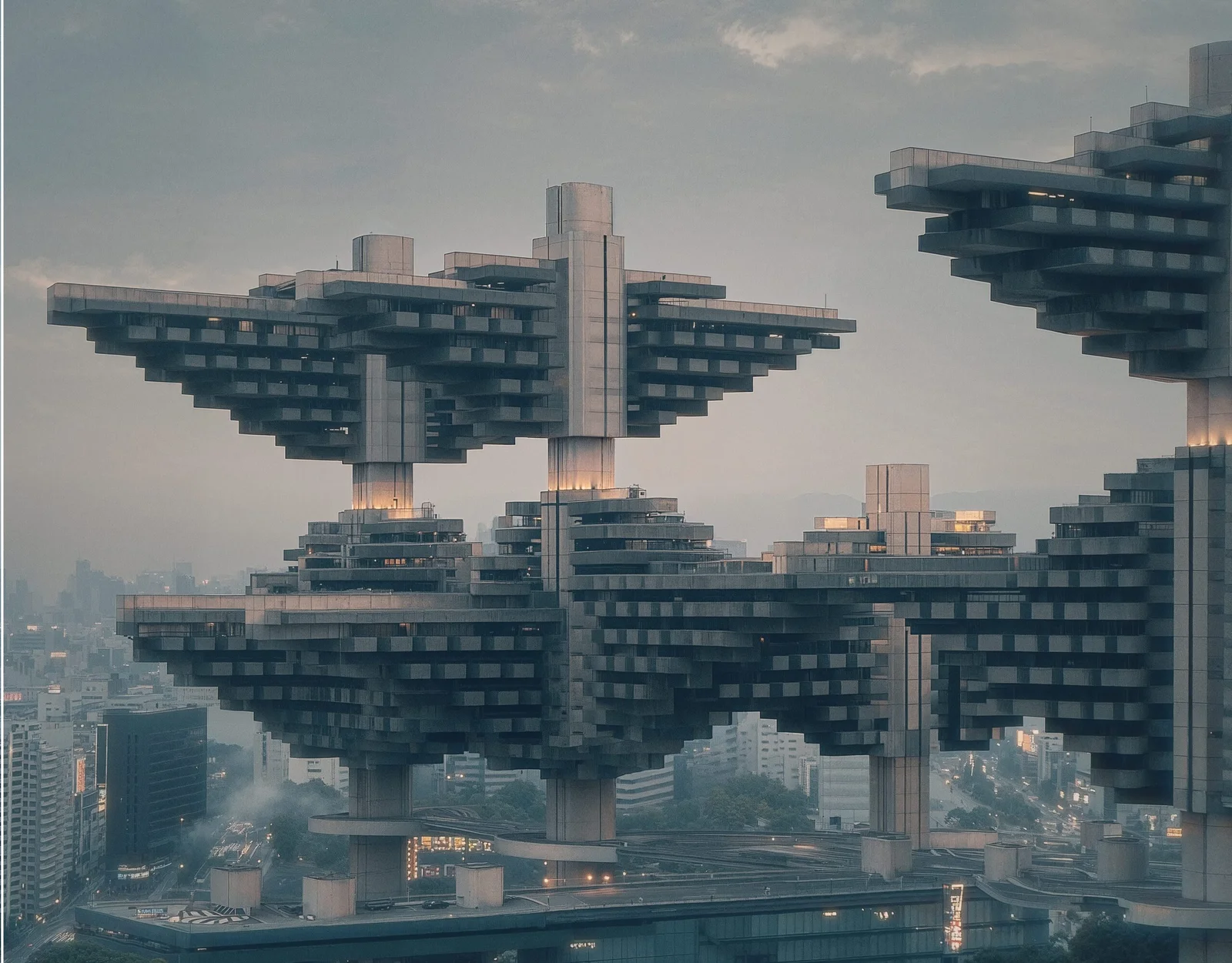
Image © Arata Isozaki & Associates
Image © Arata Isozaki & Associates
The reconstruction highlights the tensions between modernity and tradition, and questions how such visionary concepts might fit into our contemporary cities.
Photographic reconstruction © Pierre Châtel-Innocenti
Why Is This Reflection Essential for Architects?
As an architectural photographer, I am interested in how concepts and utopian visions influence not only the way we perceive urban spaces, but also how we imagine and build them.
The UnBUILT series invites architects and urban planners to rethink the impact of unrealised projects on the history and future of their discipline. These projects are not merely dead ideas: they are provocations, inspirations and, sometimes, solutions.
Explore UnBUILT and Let’s Imagine the Future of Architecture Together
Are you an architect looking to collaborate on projects exploring the impact of architectural utopia or showcasing your work?
👉 Discover my other work from the UnBUILT series
👉 Get in touch for artistic collaborations, photographic reportage, or to imagine new concepts to document together.