Deus Ex Urbana
'Deus Ex Urbana' fuses architectural photography and generative art to imagine a Paris shaped by climate change. Limited-edition art prints, exhibited at Galerie Europia.
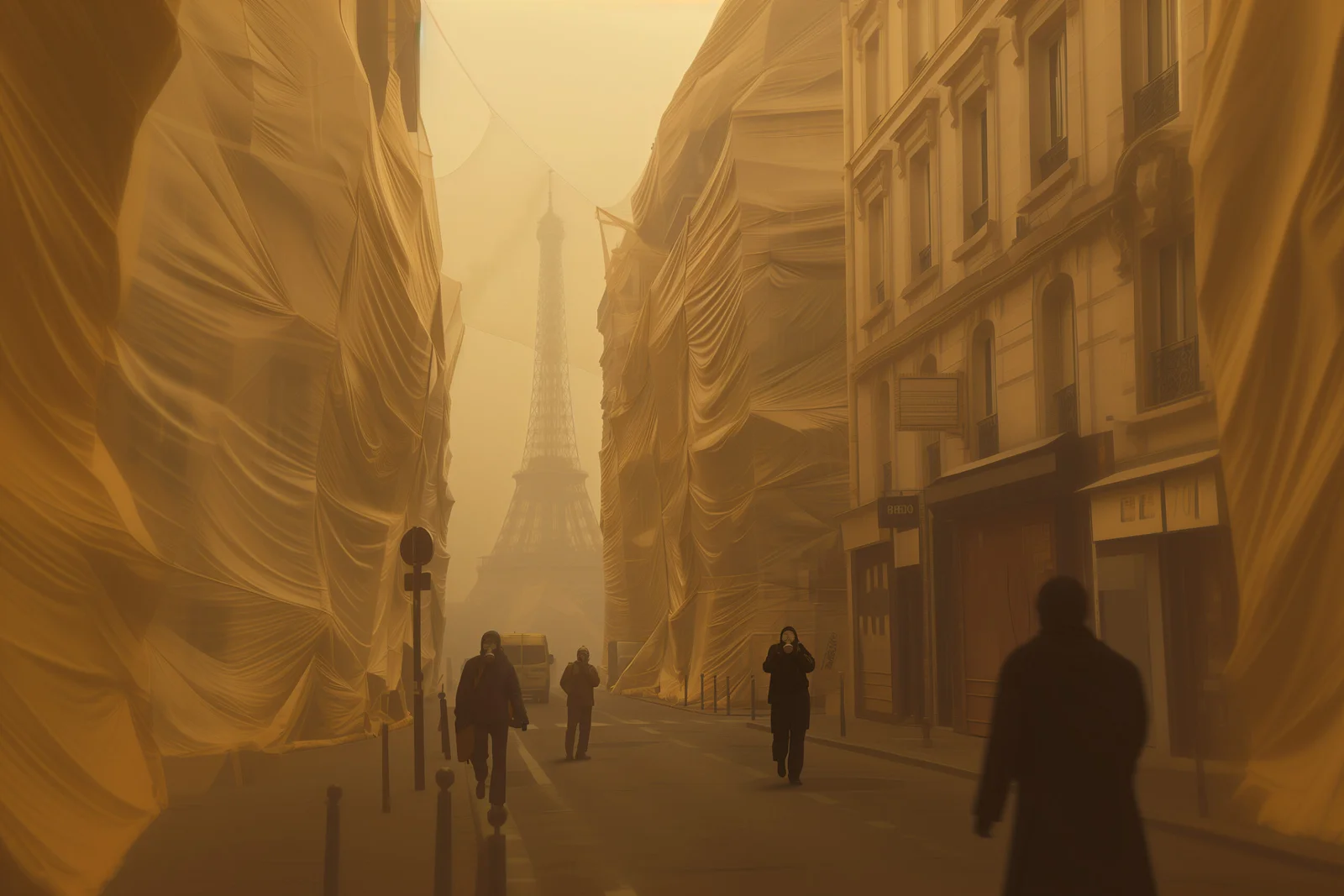
Parisian street wrapped in golden drapes with the Eiffel Tower in the background, evoking the disappearance of architecture beneath veils.


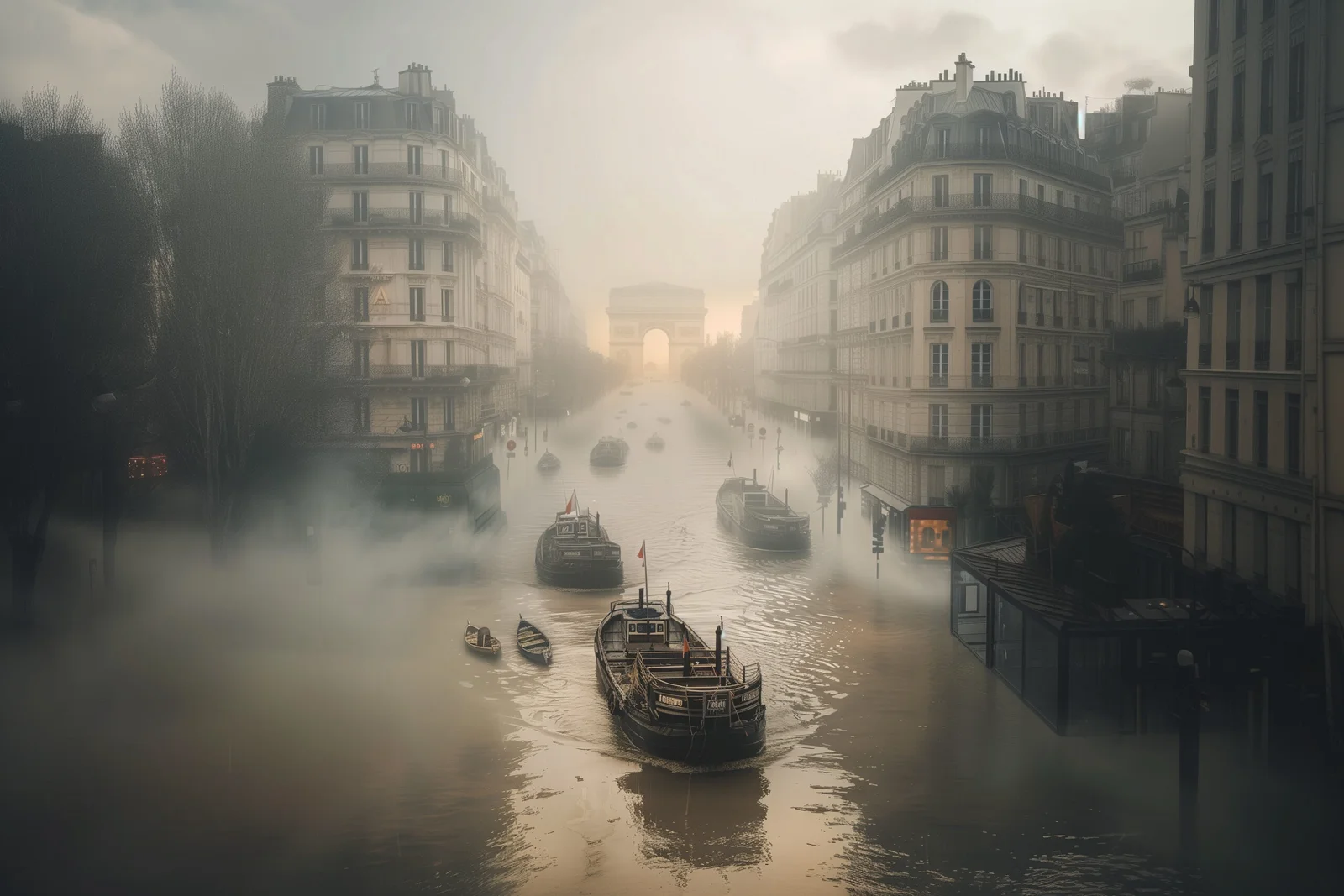
Flooded Paris with barges sailing around the Arc de Triomphe, reflecting the consequences of climate collapse


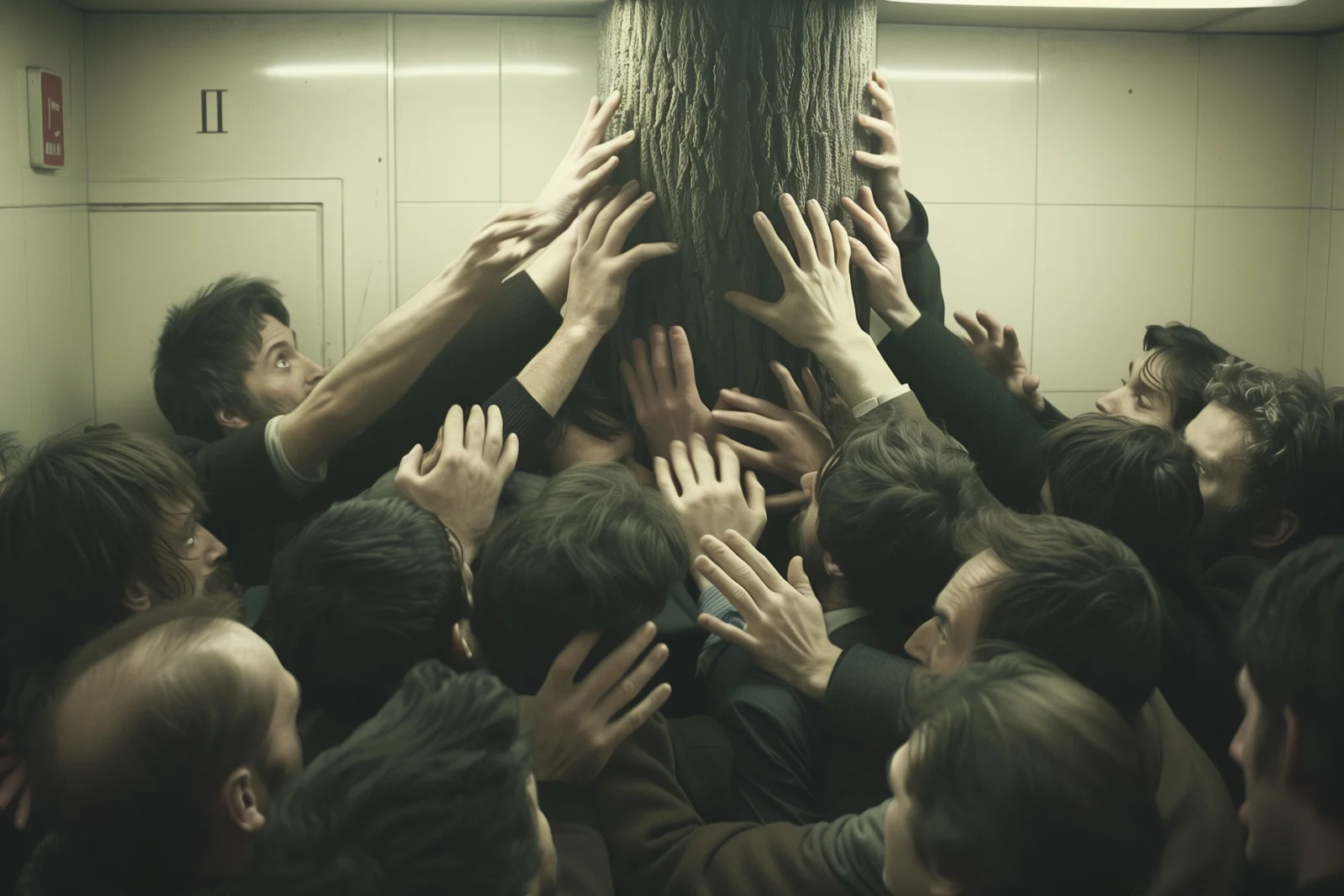
A crowd inside a lift surrounding a tree, representing the struggle to bring nature back into urban spaces.


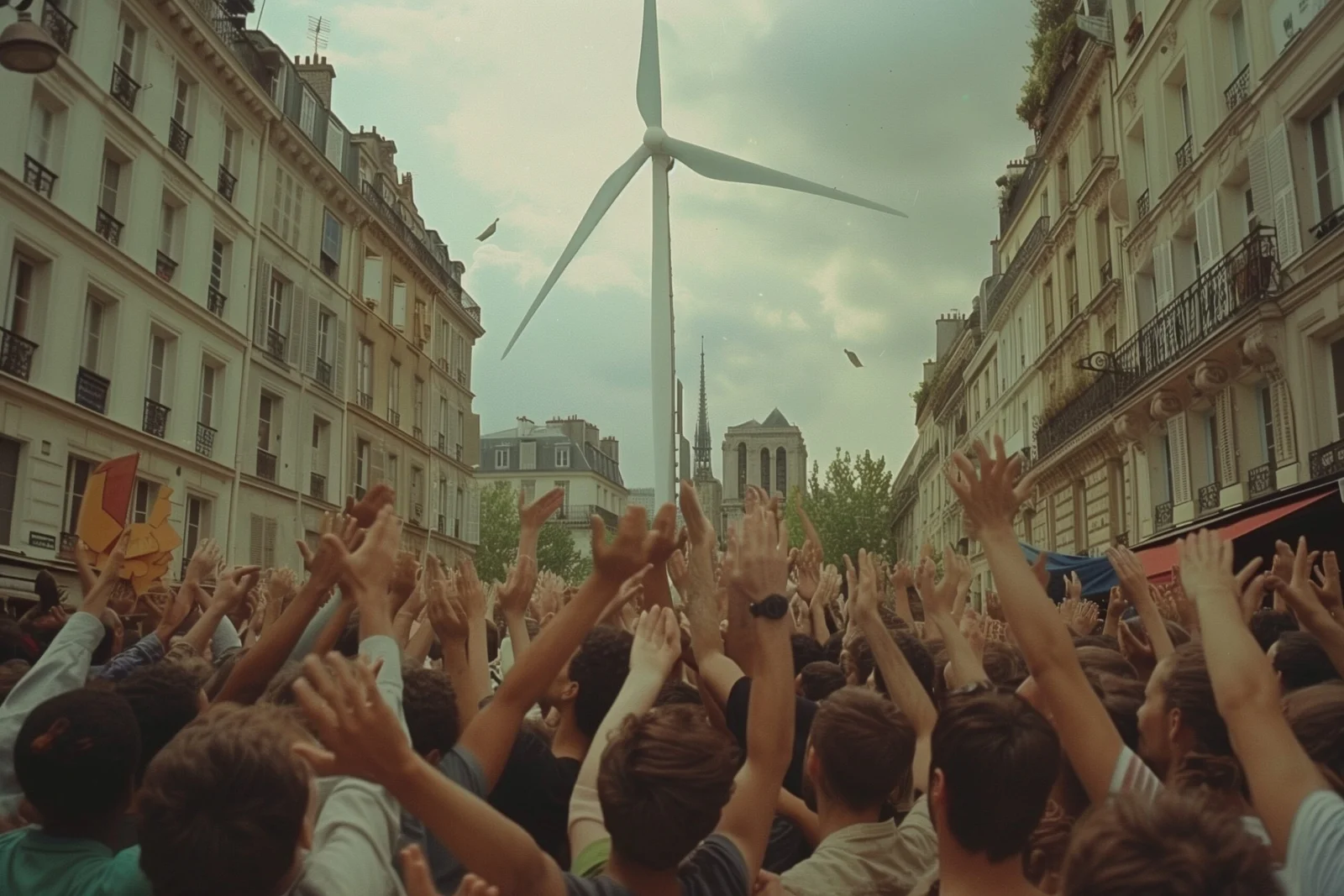
A wind turbine erected in the heart of Paris during a demonstration, symbolising the transition towards renewable energy and the social tensions it brings


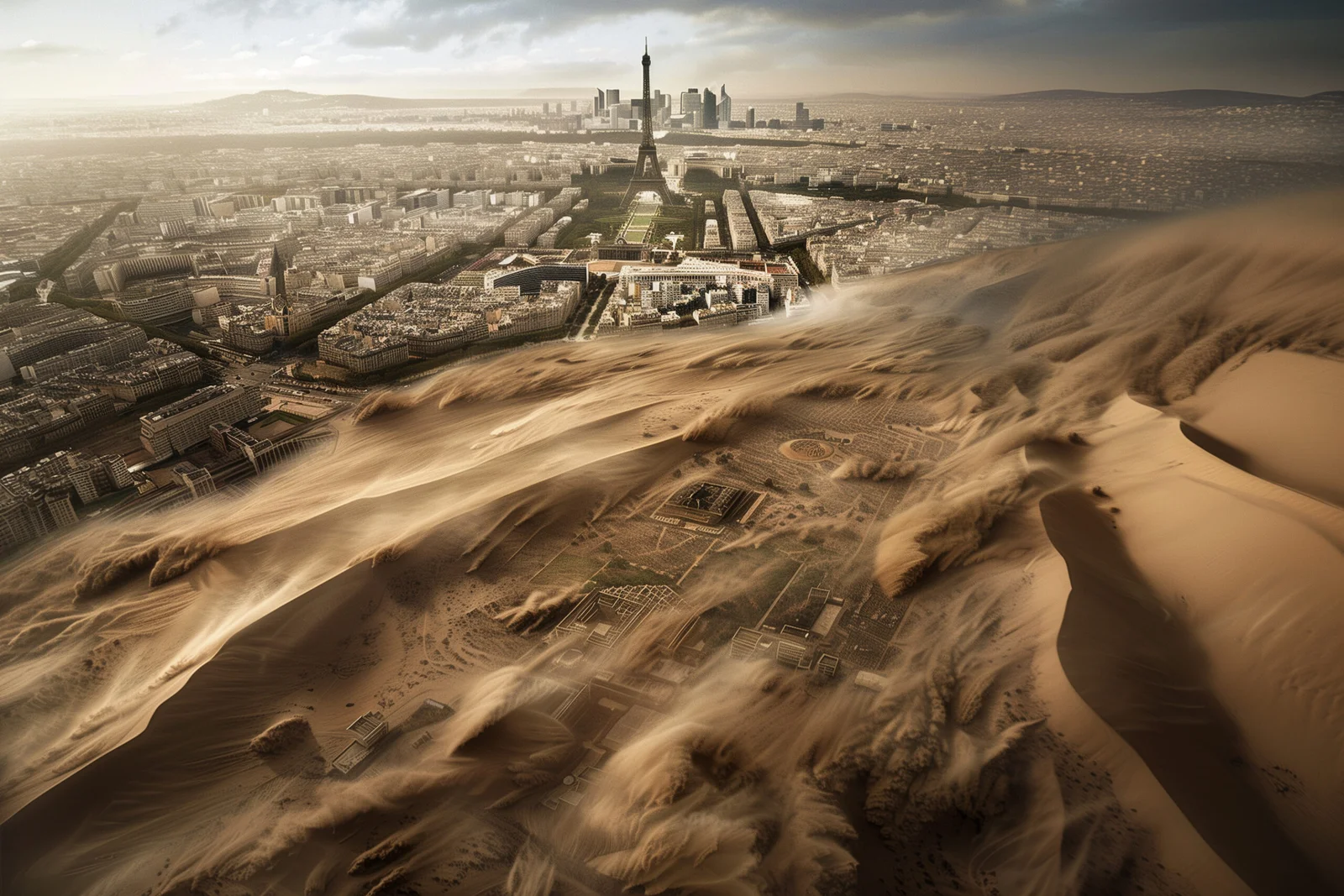
An apocalyptic vision of Paris beneath a sandstorm engulfing the city and its monuments. This surreal image from Deus Ex Urbana symbolises the relentless force of nature against modern urbanisation.


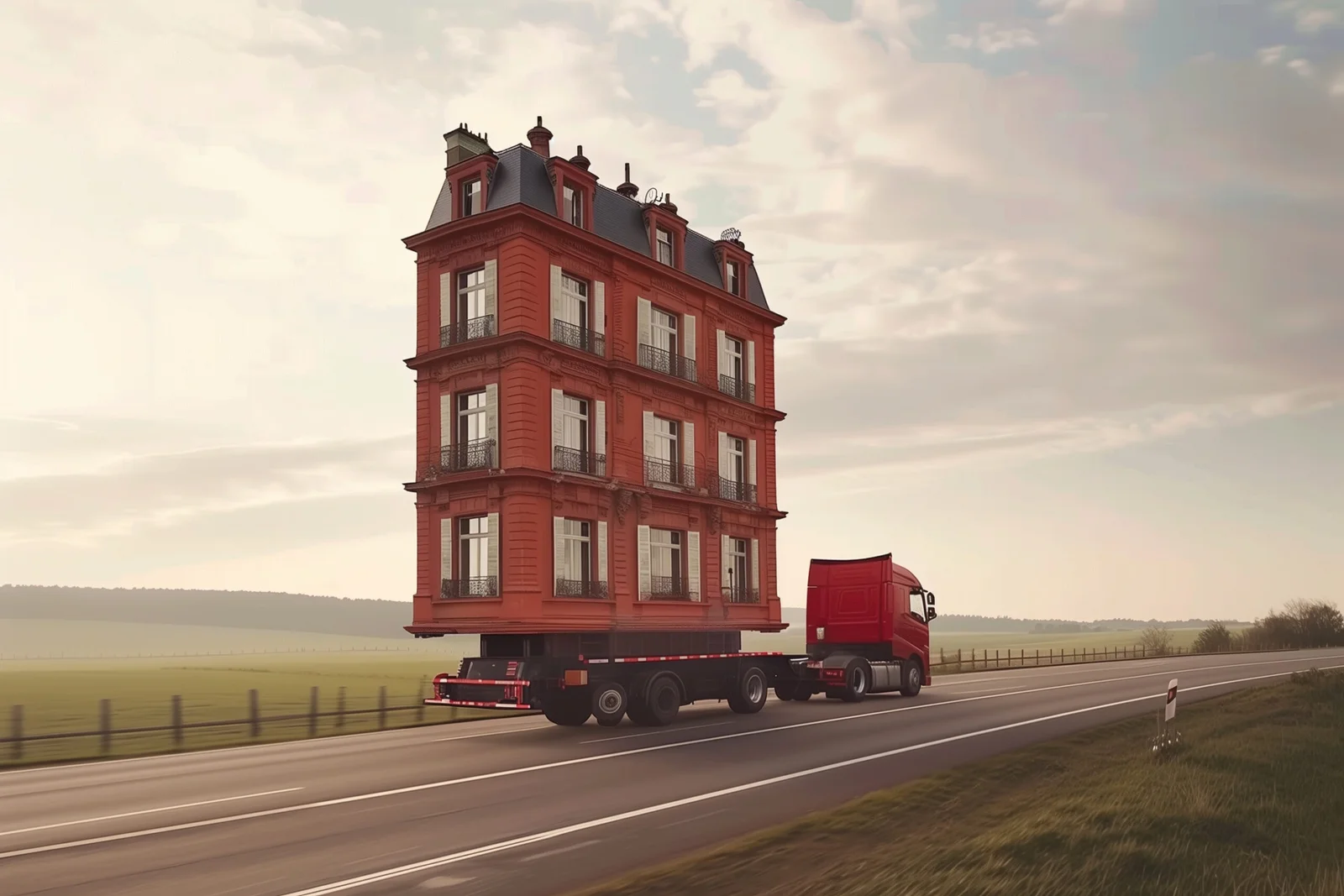
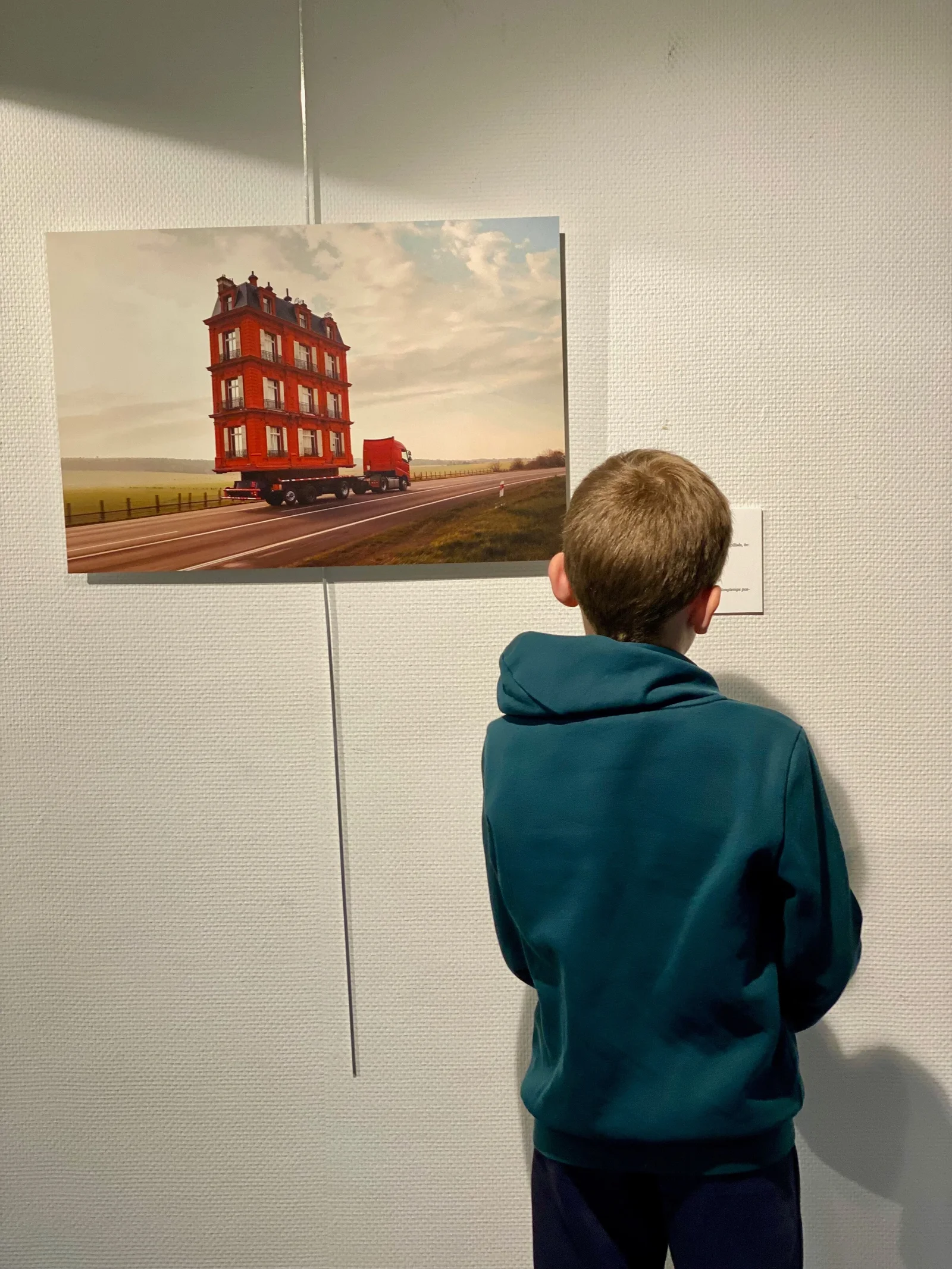
A Parisian house transported on a lorry along a motorway, symbolising the mobility and adaptation of structures in a changing world

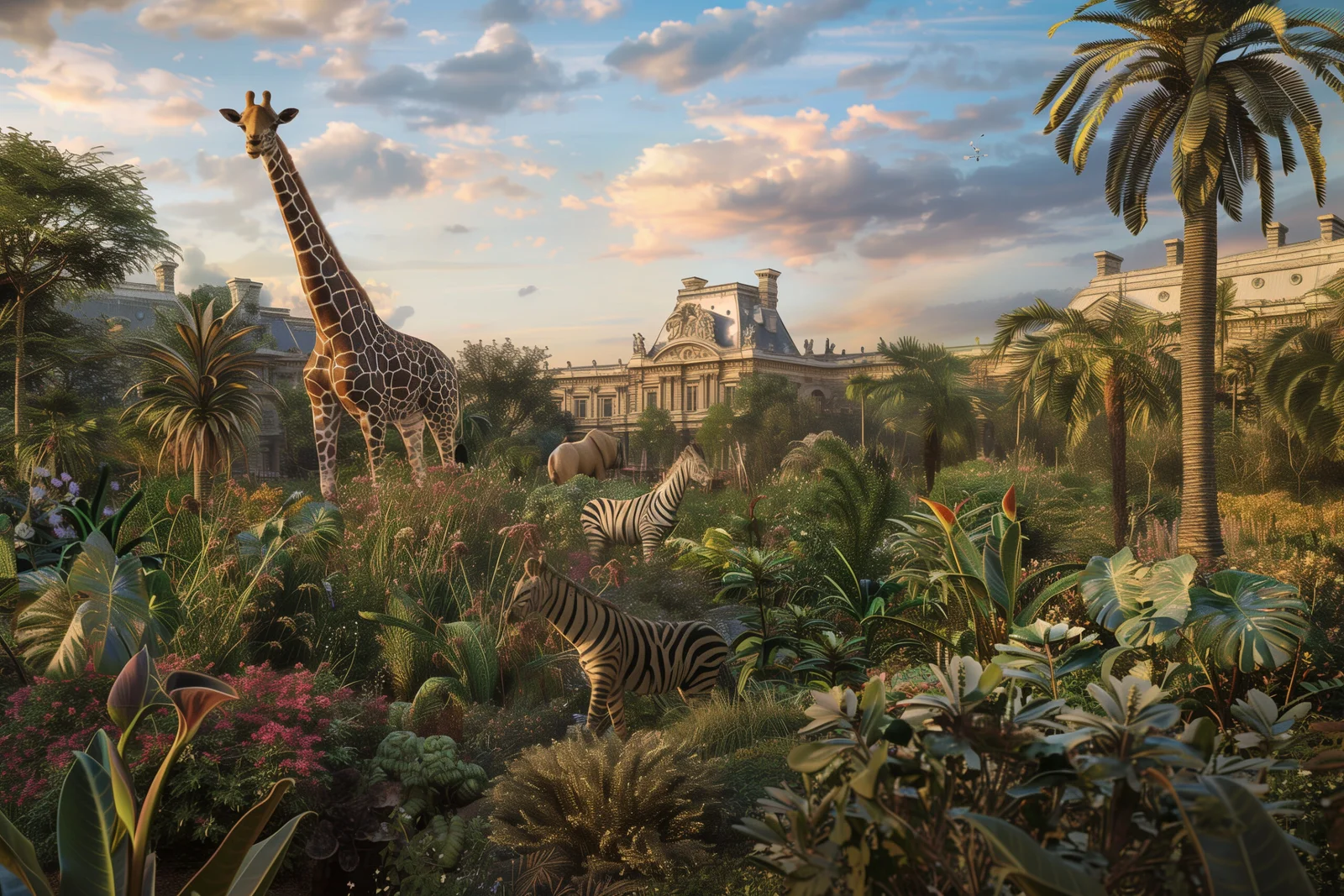
Discover the fusion of untamed nature and the city in this captivating image from the Deus Ex Urbana series. Exotic animals wander through the historic setting of Paris, a striking blend of nature and architecture.

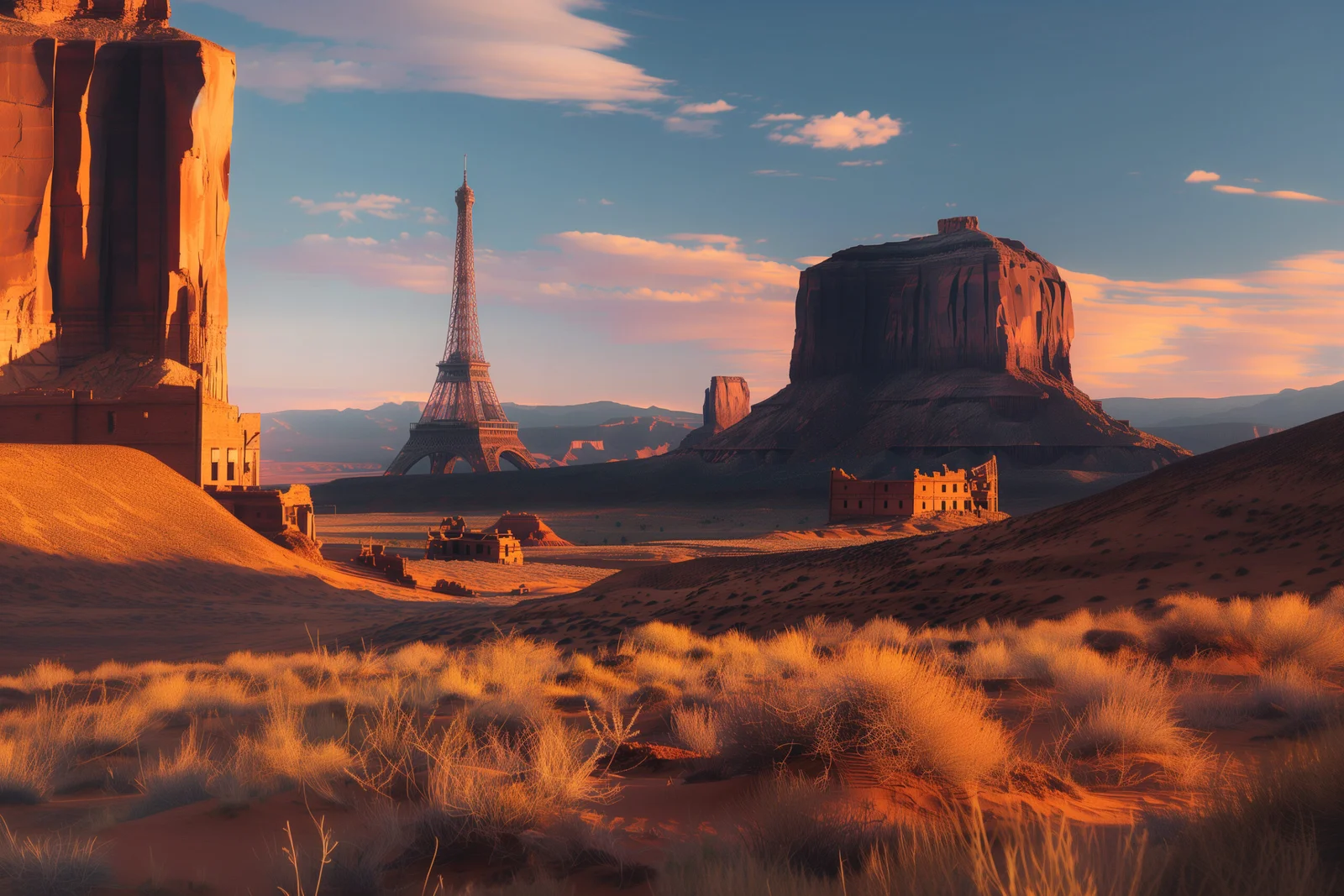
In this surreal work from the Deus Ex Urbana series, the Eiffel Tower merges with the Monument Valley landscape, creating a striking juxtaposition between the American desert and Parisian architecture


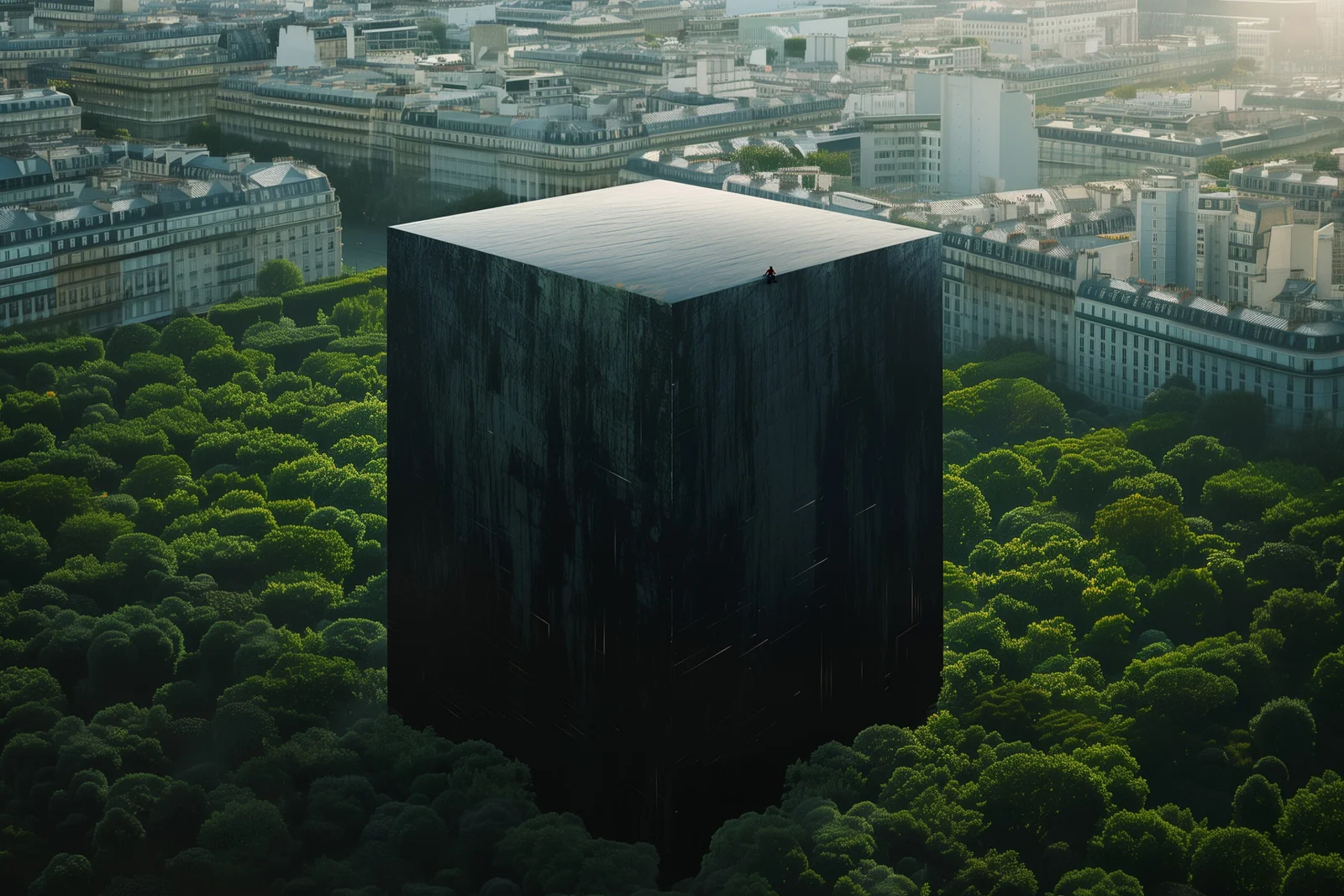
An imposing black cube in the middle of a forest and encircled by the city, symbolising the mystery and influence of power in a changing world

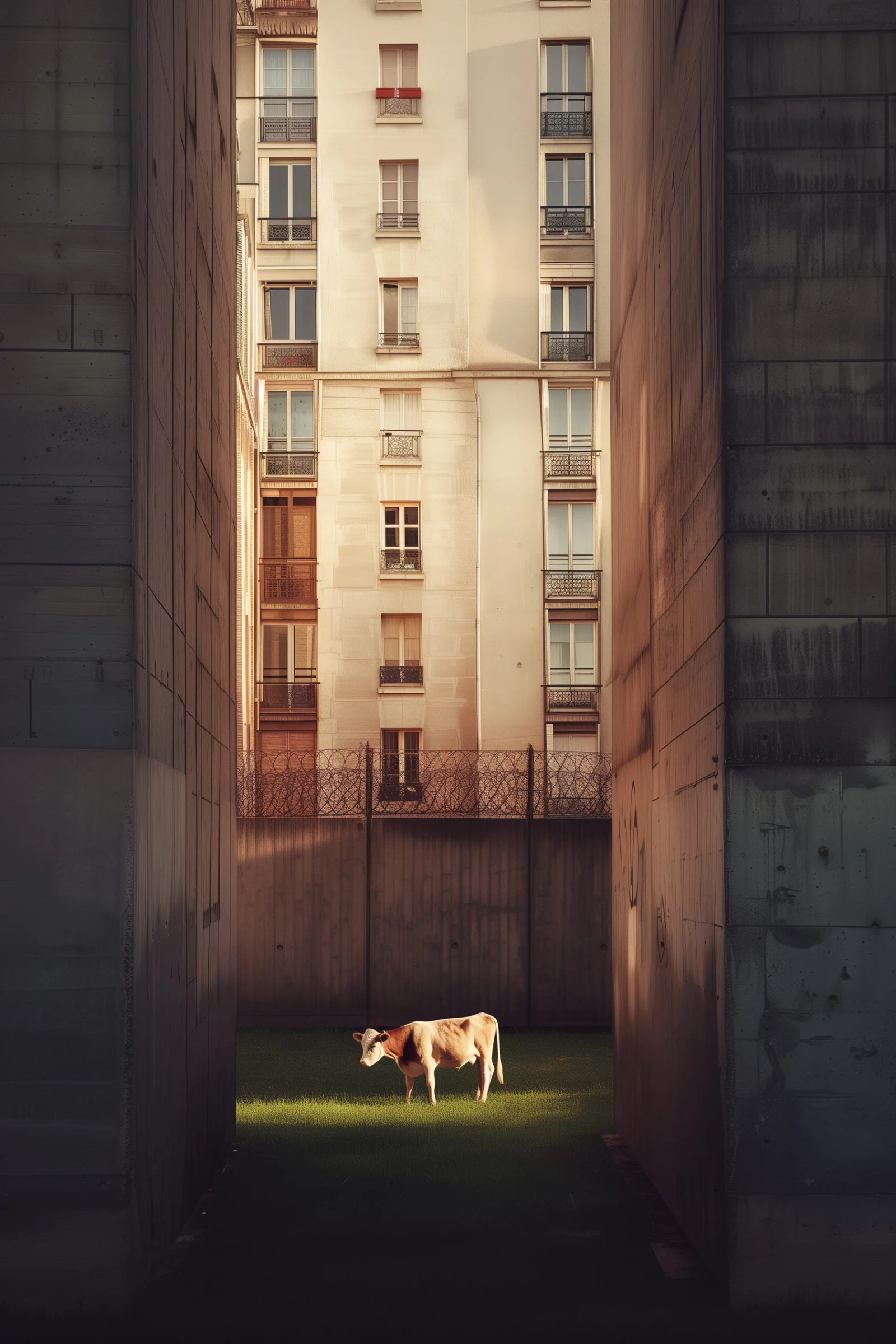
A cow standing in an urban courtyard framed by concrete walls, representing the contrast between nature and city.


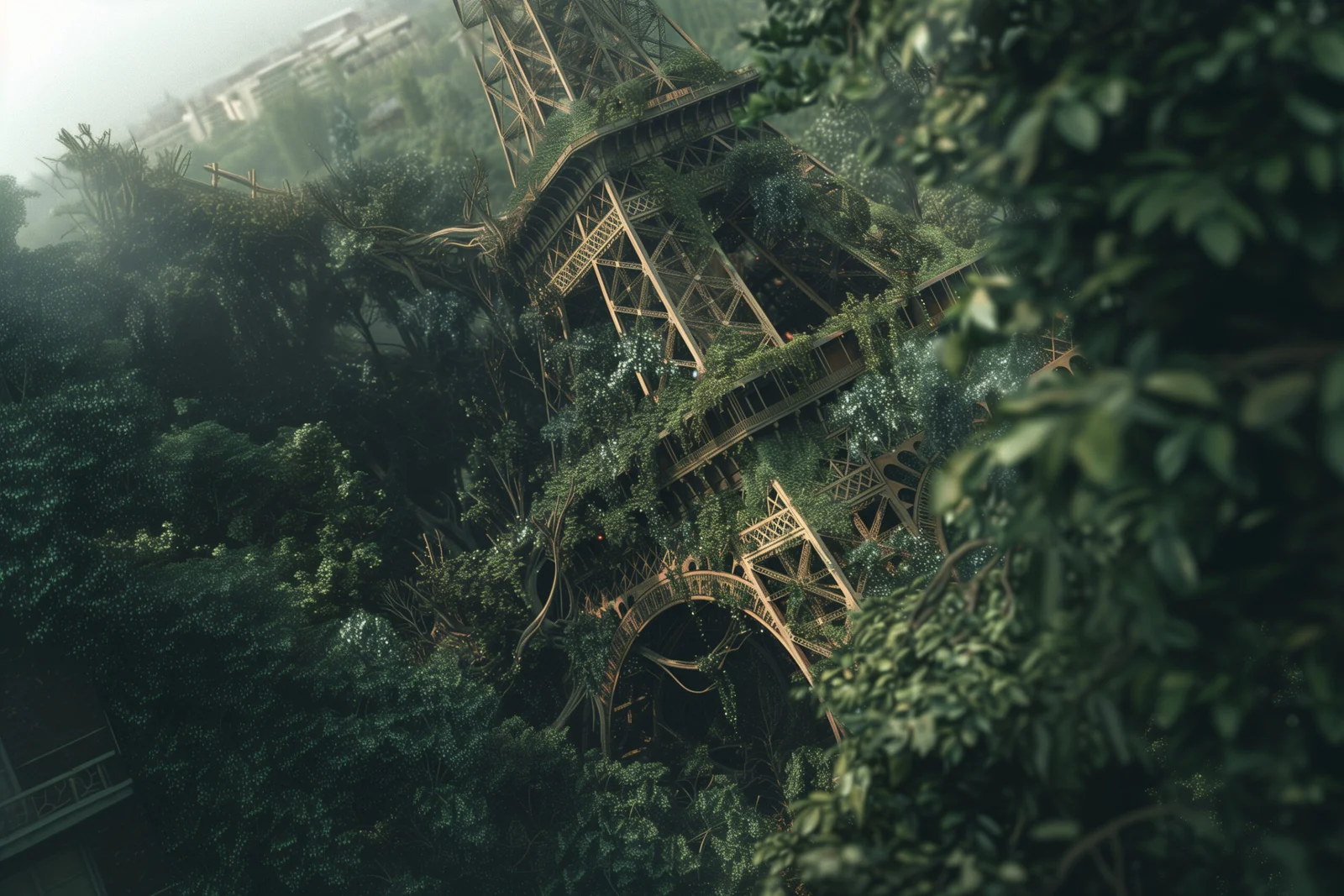
The Eiffel Tower swallowed by a lush forest, recalling the transience of human architecture in the face of nature
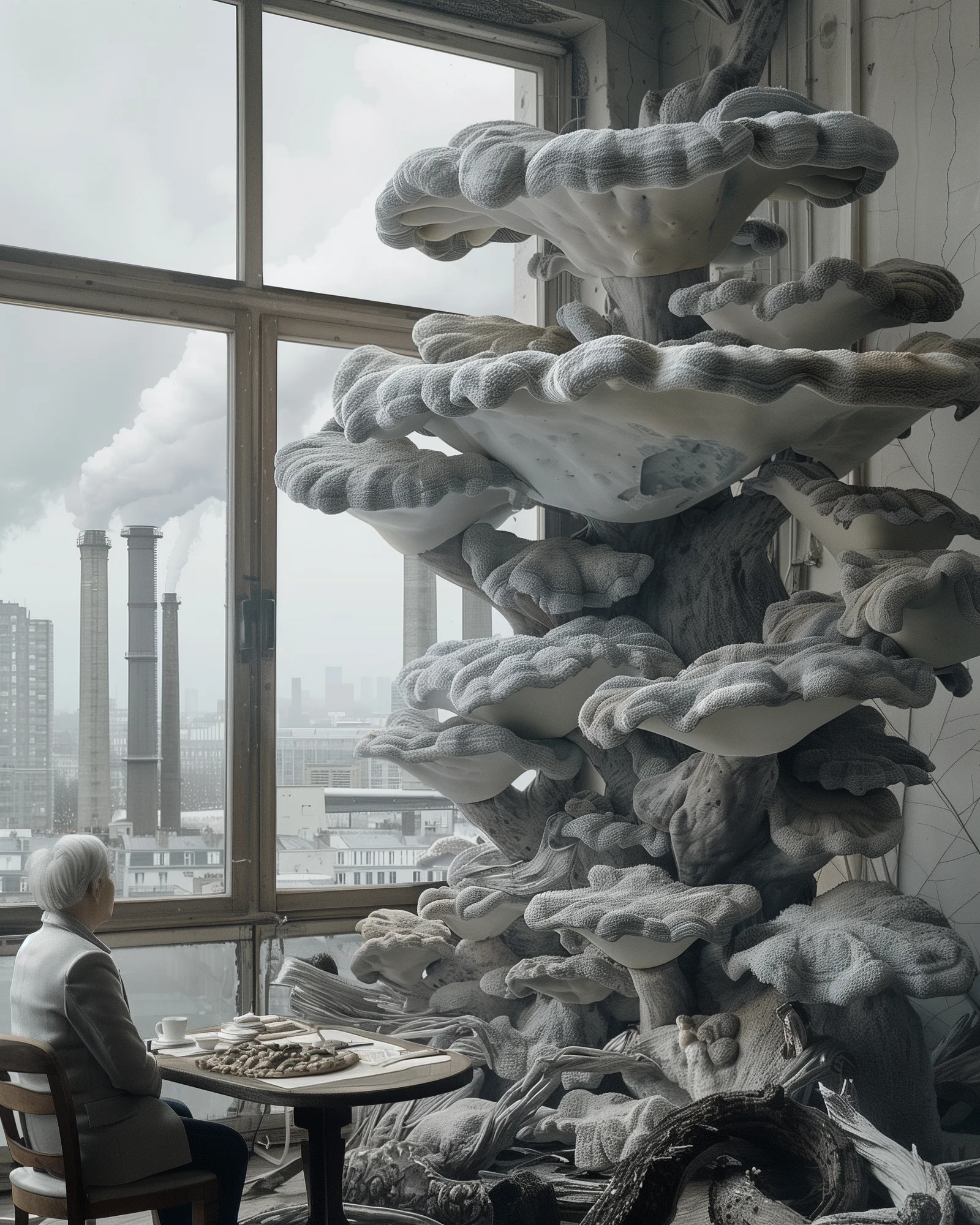
An interior scene where nature invades a flat, contrasting with the industrial chimneys outside

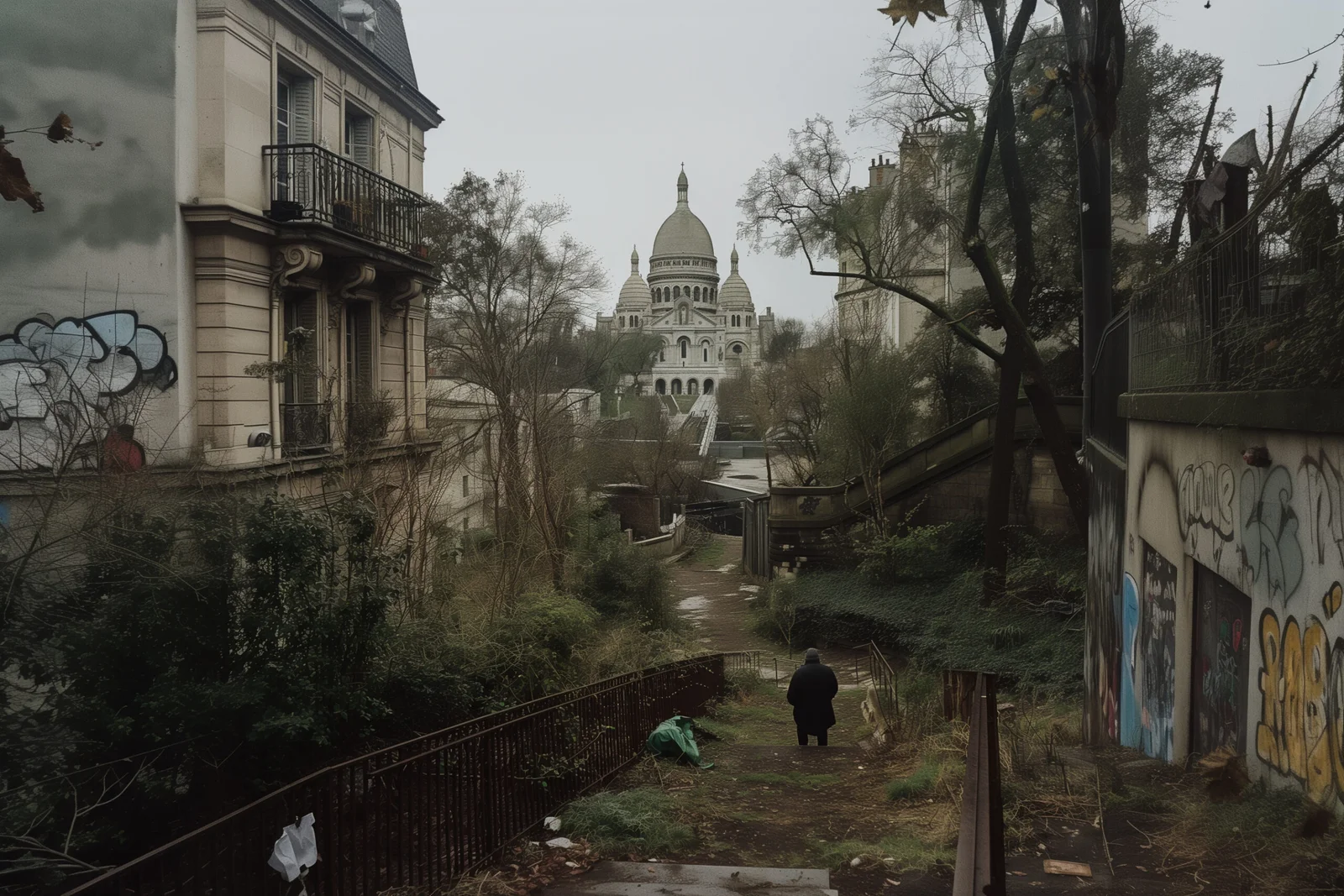
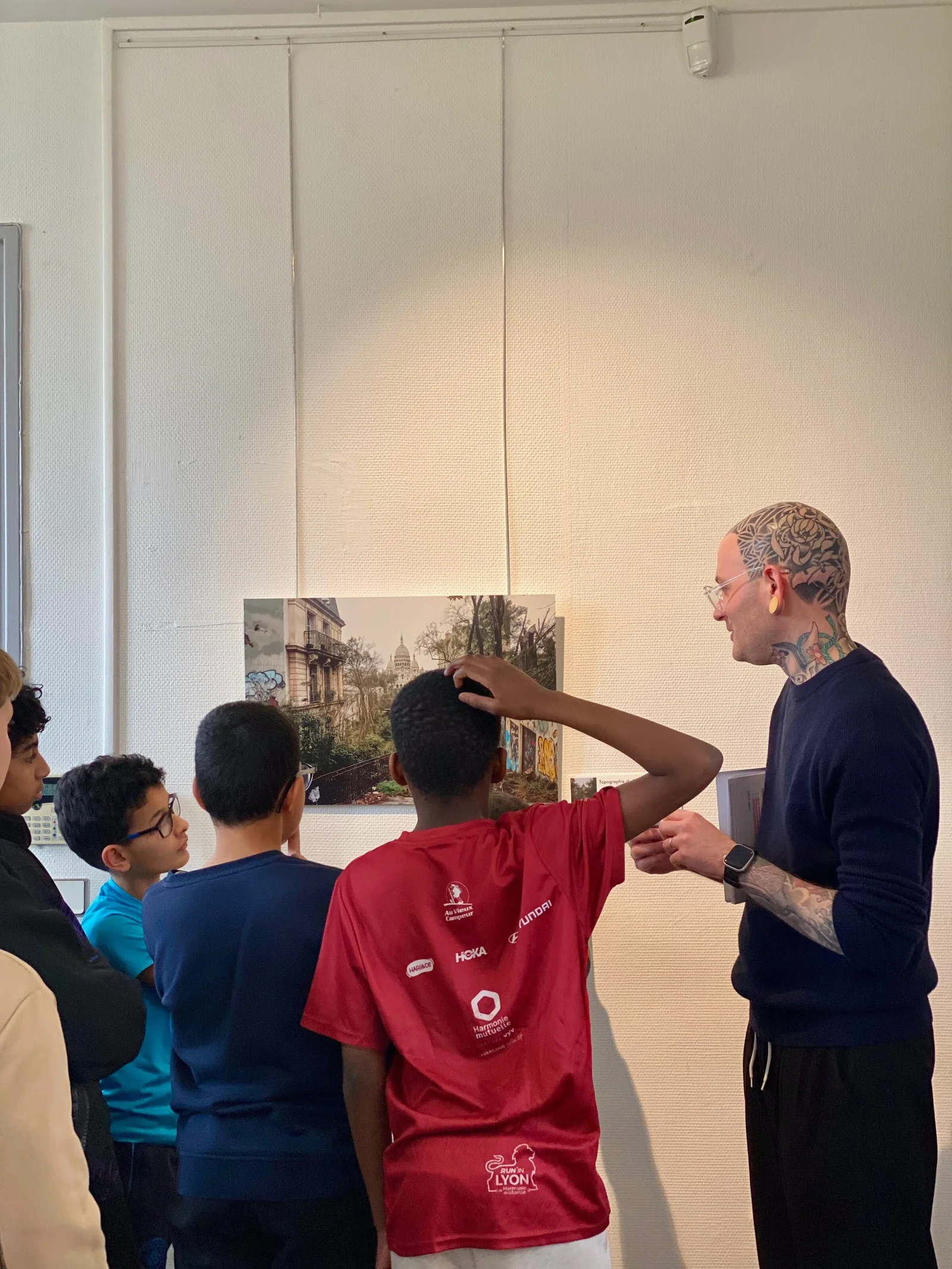
The image shows the Basilica of Montmartre at the heart of an overgrown jungle. This work from the Deus Ex Urbana series unveils a Paris transformed by overflowing nature.
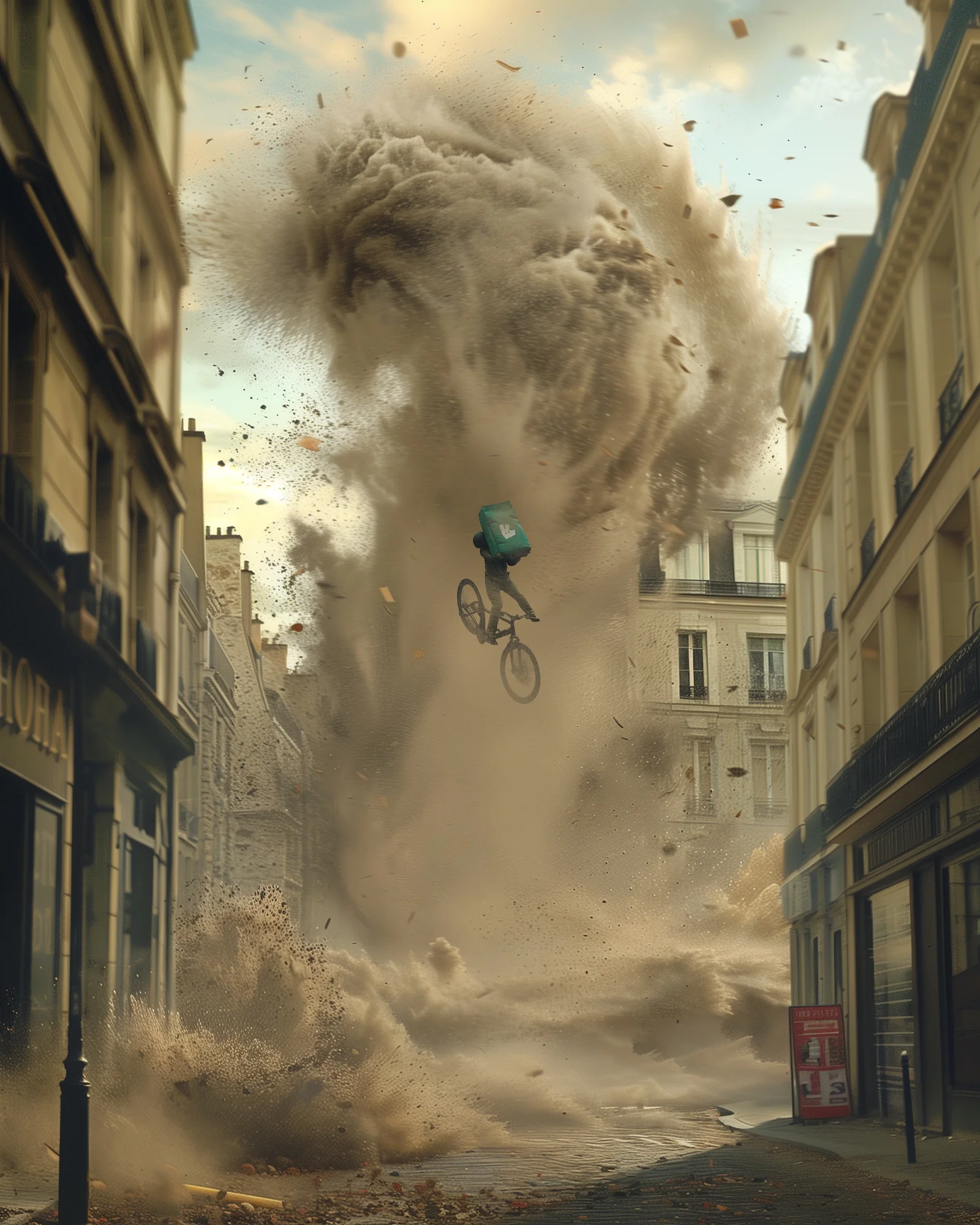
A bicycle courier swept up in a tornado in the middle of Paris, symbolising the unpredictability of urban life amid a climate crisis
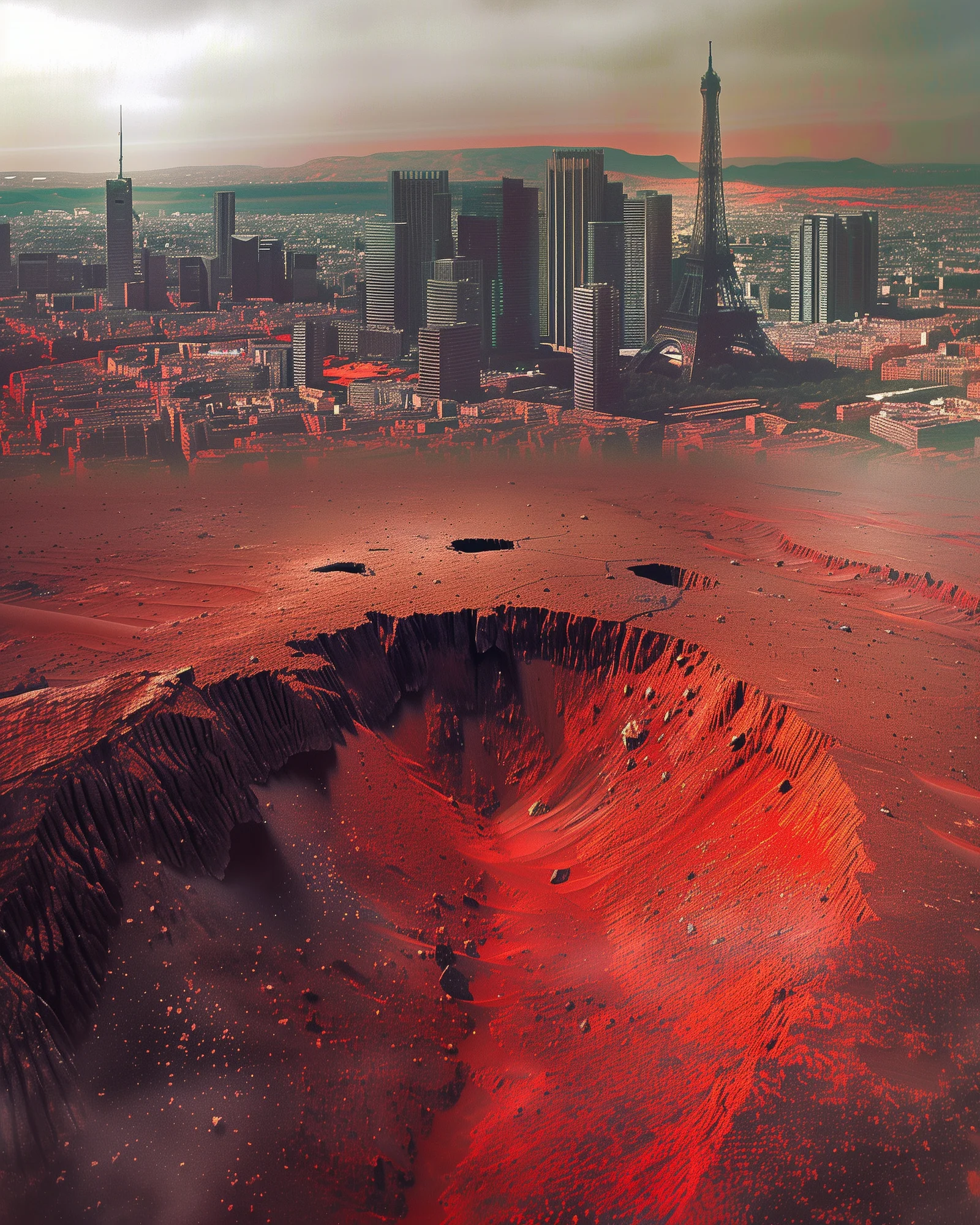
Monumental crater at the heart of Paris, illustrating a post-apocalyptic urban catastrophe.
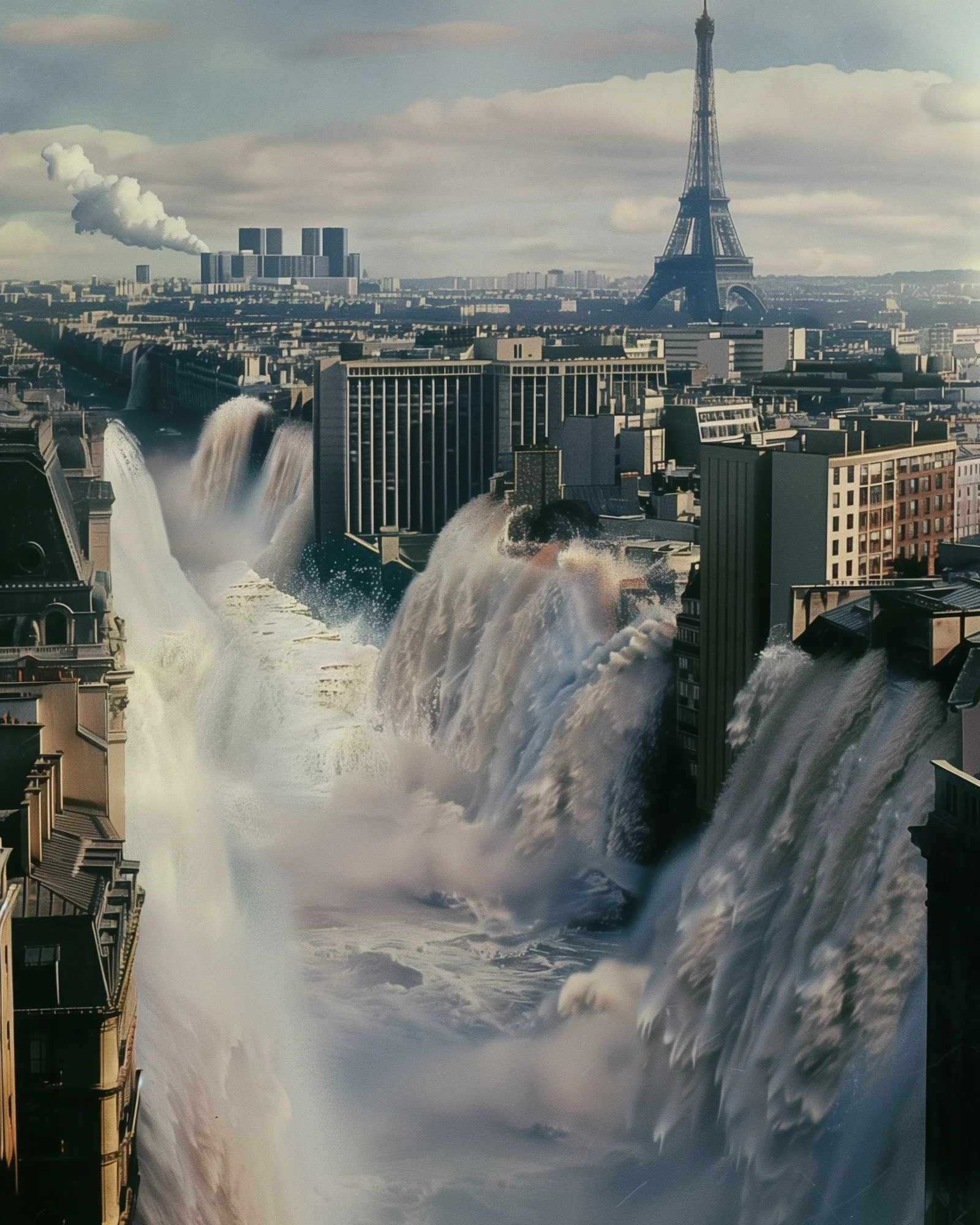
Massive flooding devastating the streets of Paris, staging the fragility of infrastructure against natural disasters
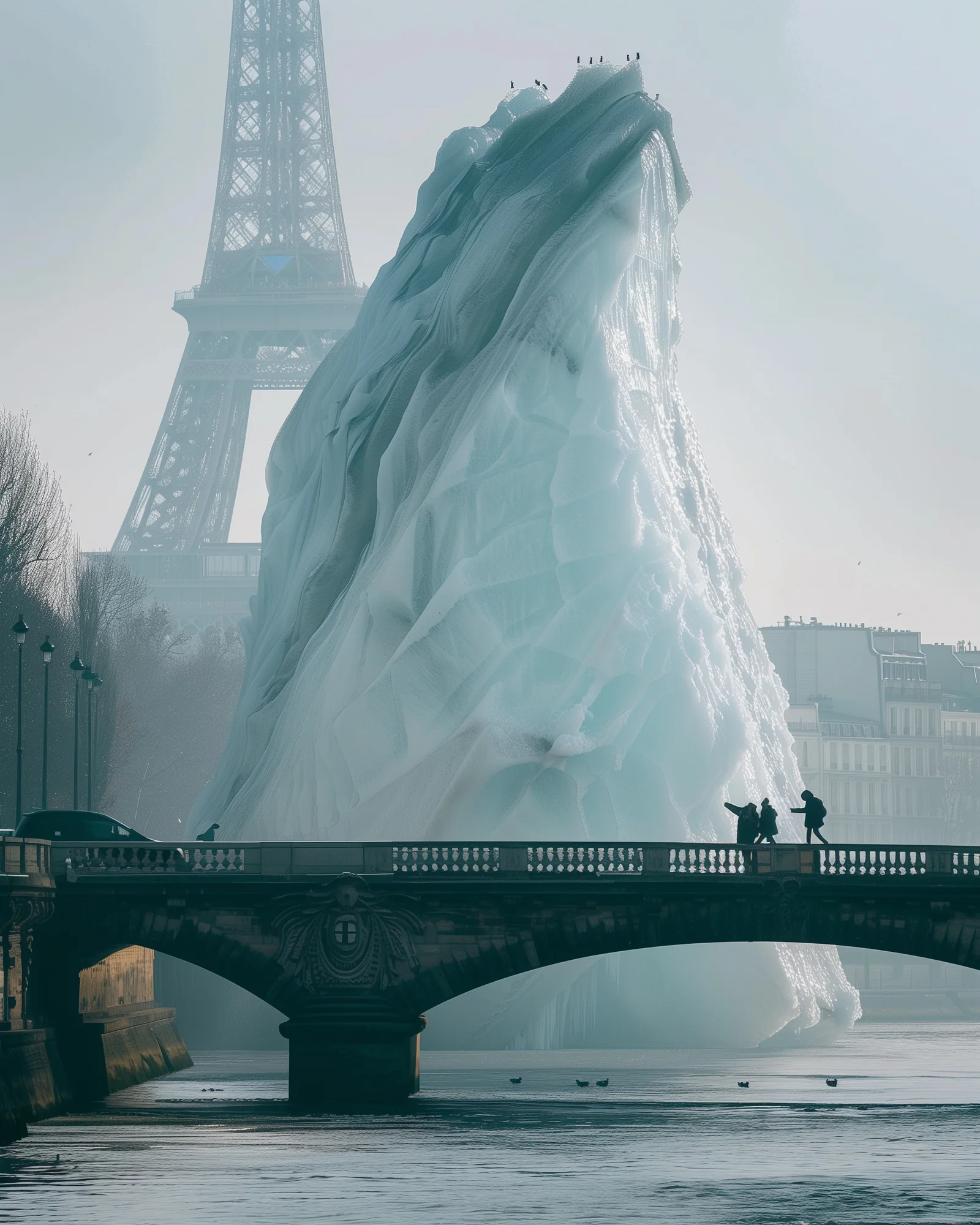
A monumental iceberg sails along the Seine, a poetic depiction of the impact of global warming amid the iconic Paris skyline.
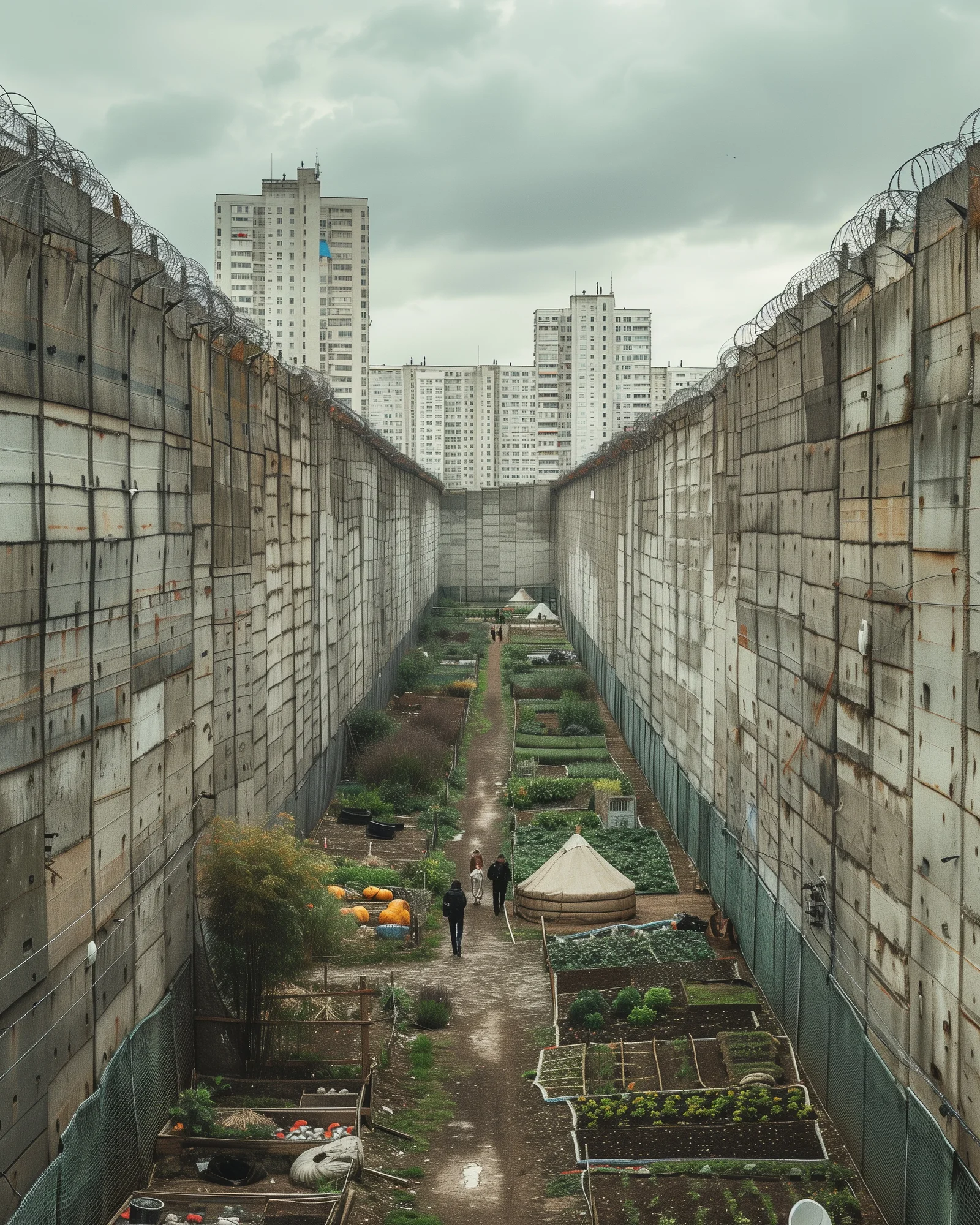
An imposing wall framing an urban gardening space, illustrating resilience against concrete infrastructure
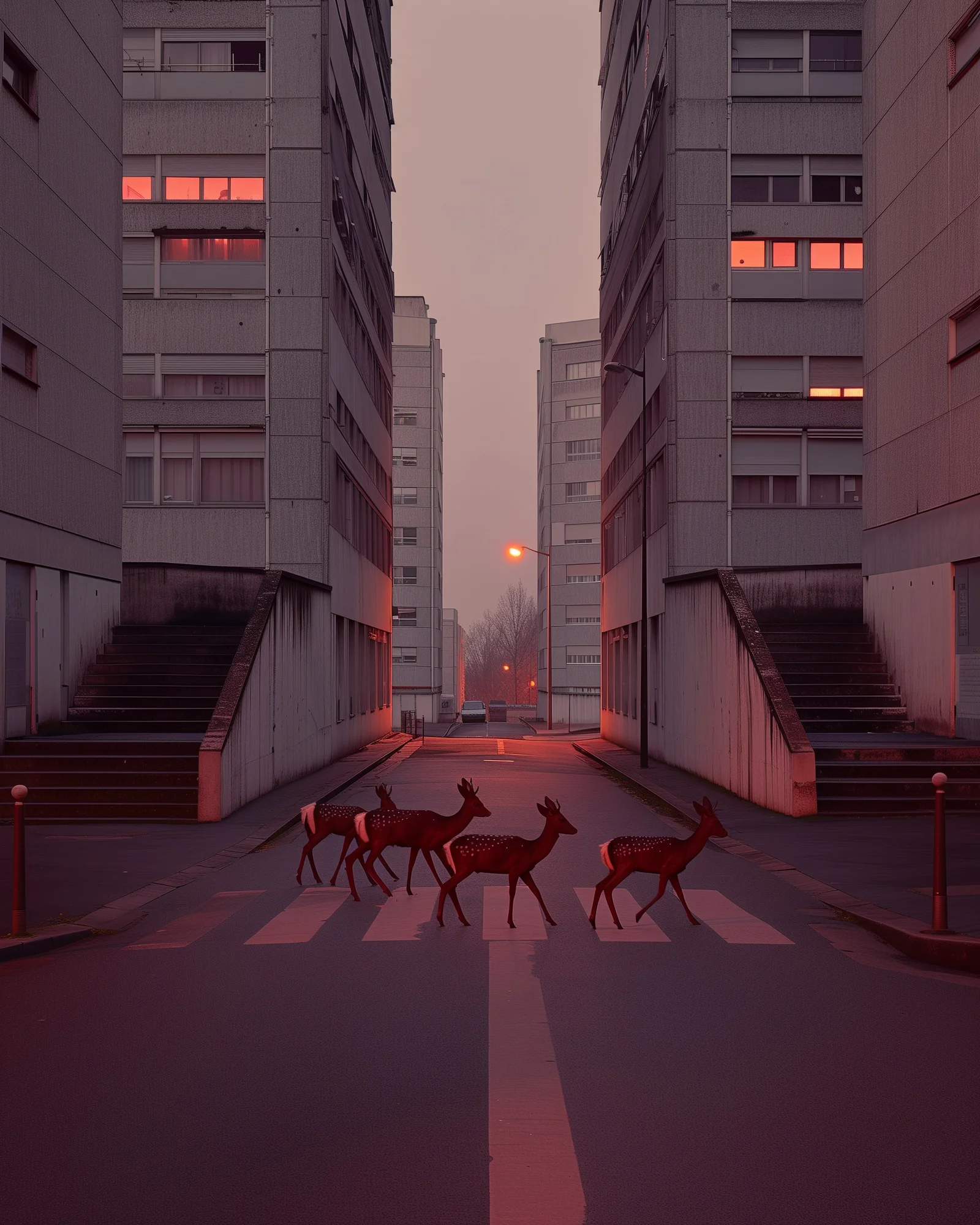
Deer crossing a concrete-bound suburb, symbolising nature’s reclamation of urban space.
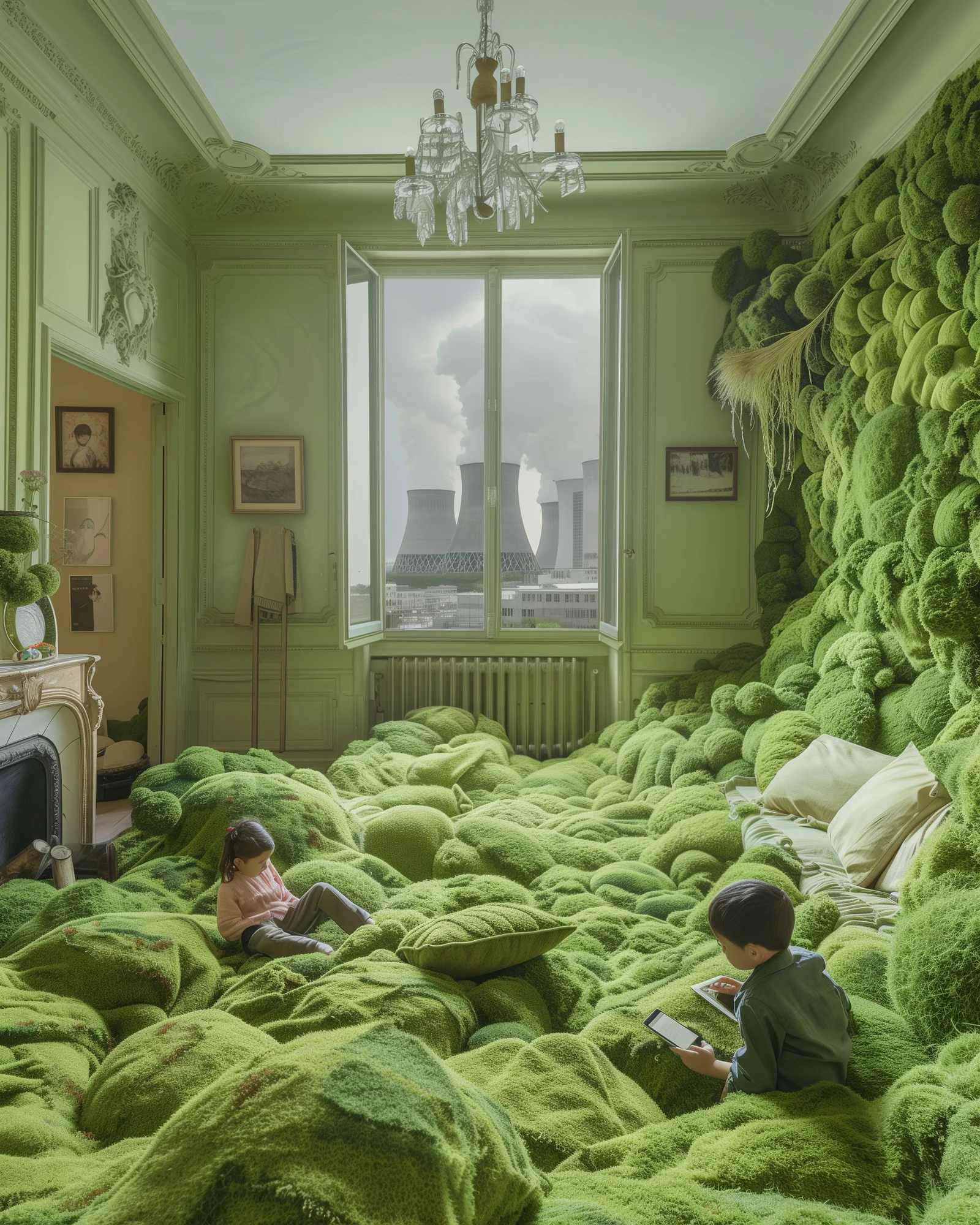
A Parisian interior covered in moss, underlining the intrusion of nature into urban spaces
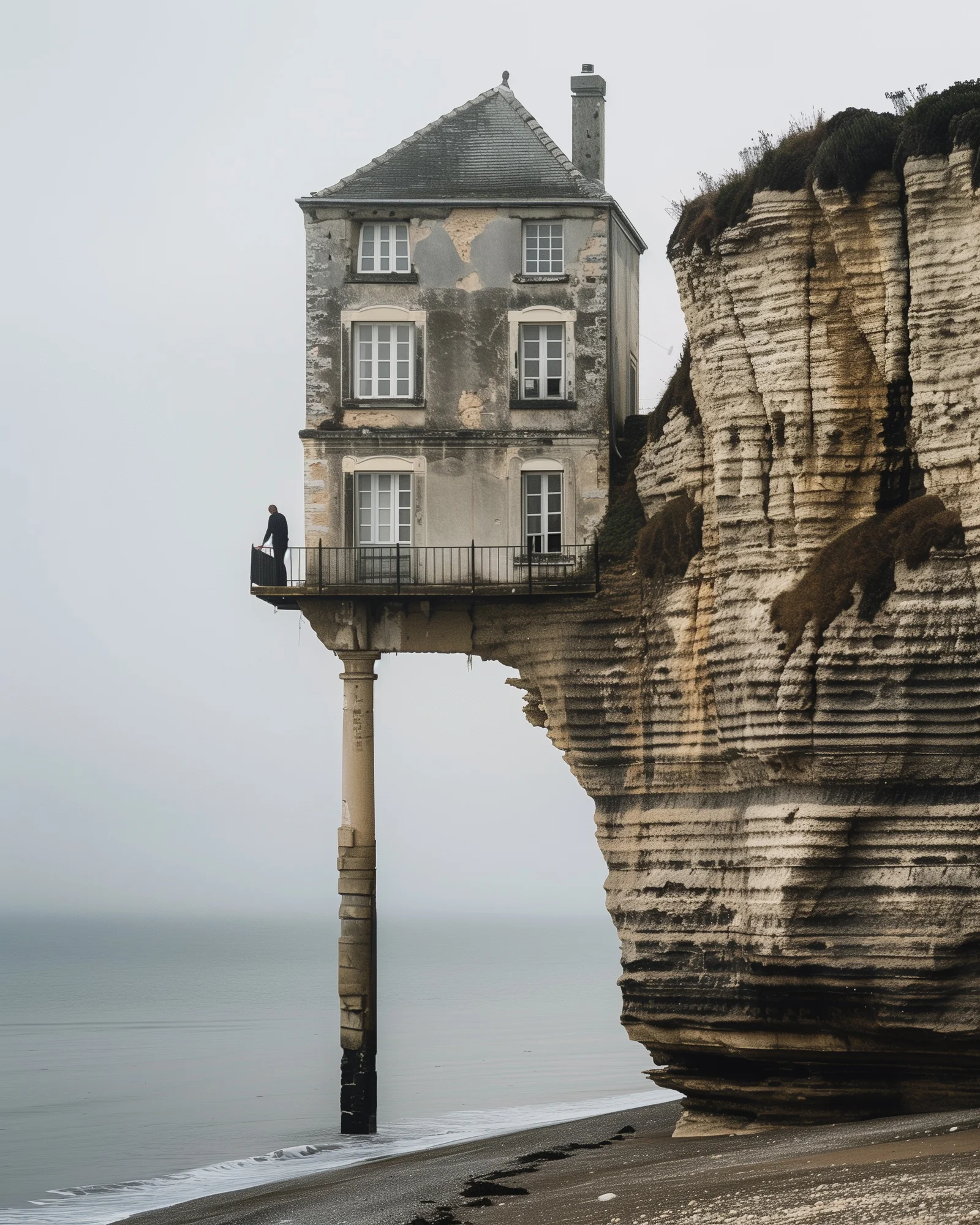
A house suspended above the ocean on a cliff, capturing the precariousness of architecture in the face of natural forces
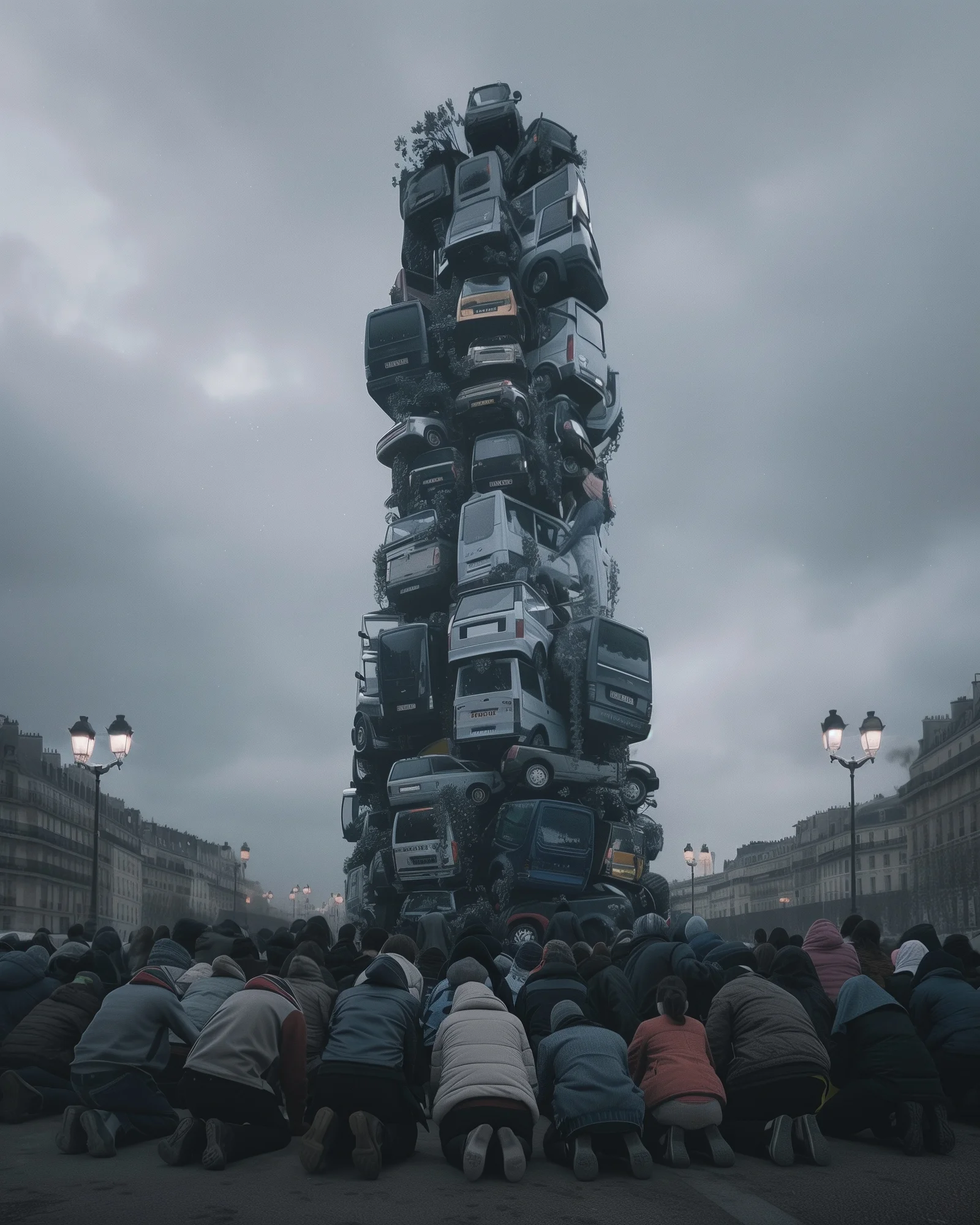
Totem made up of stacked cars with people praying around it, illustrating modern consumerism
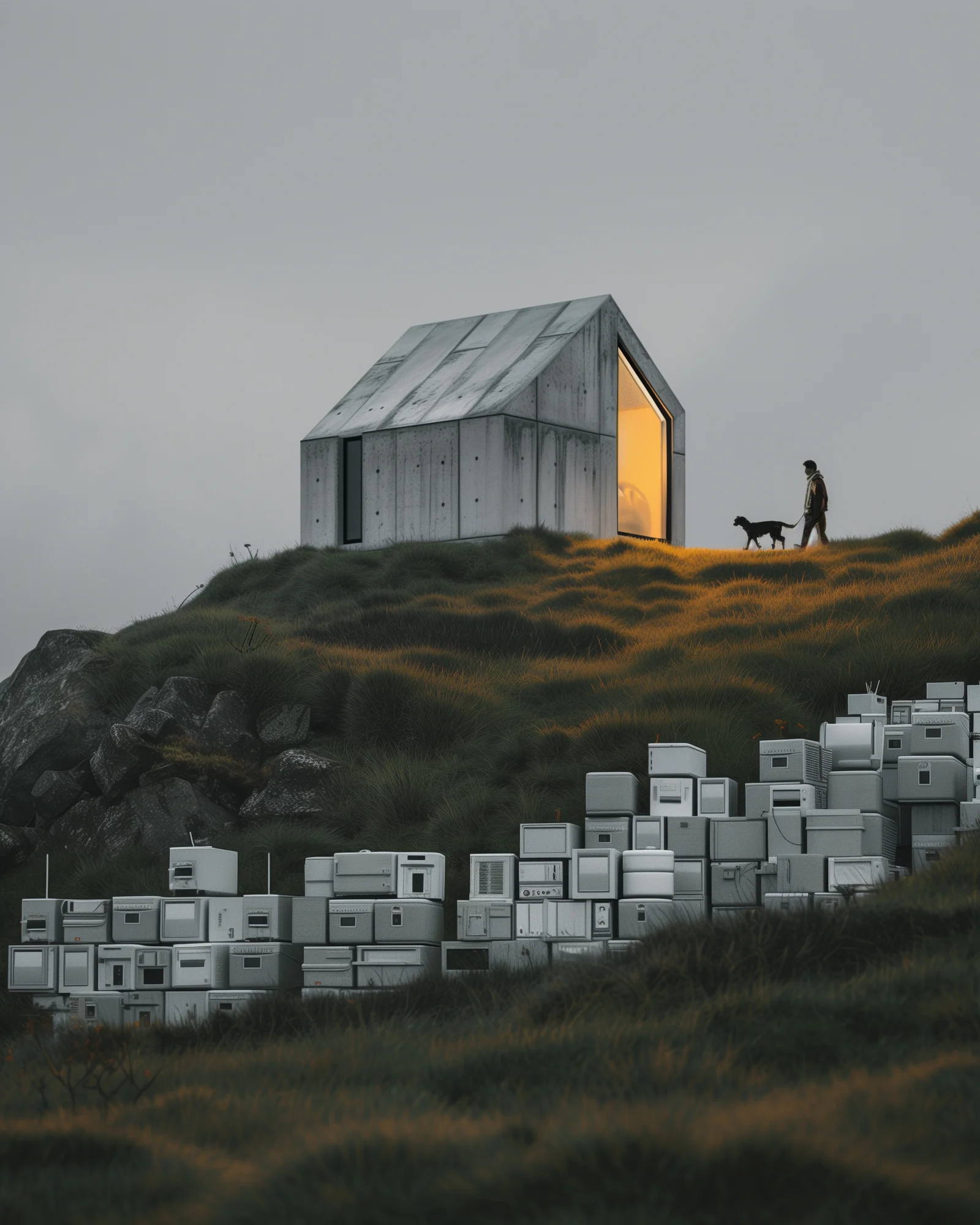
A solitary lit house, its surroundings littered with abandoned appliances, symbolising human isolation amid mass consumption.
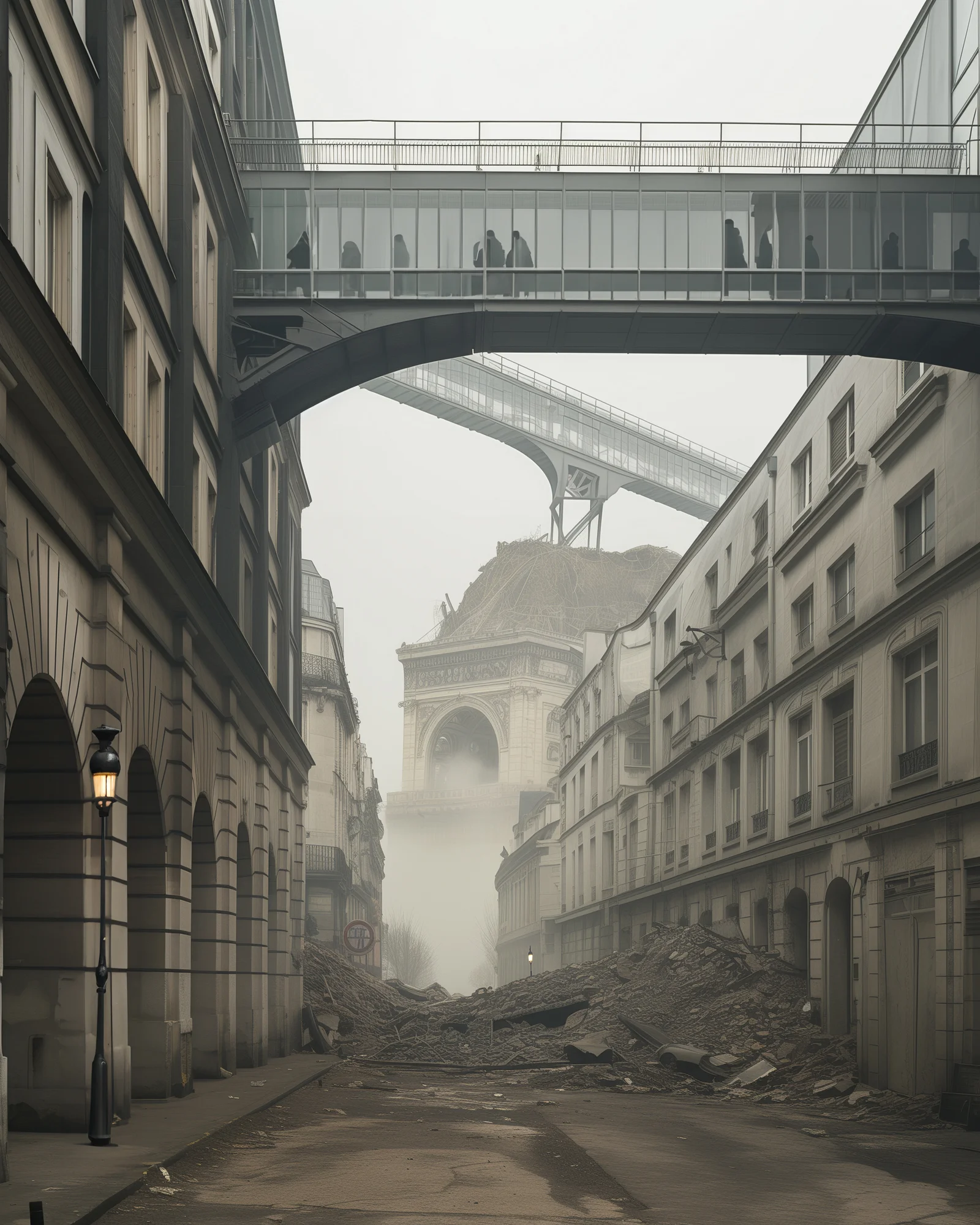
A street in ruins in Paris, with the Arc de Triomphe in the background, showing urban collapse.
“Deus Ex Urbana” is one of my most ambitious projects to date. With this series, I fuse architectural photography and generative art to imagine a possible future shaped by the consequences of climate change. Far from focusing solely on desolation, I seek to capture the unexpected beauty in ruined urban landscapes, witnesses to a society in transformation.
This project follows on from my earlier work, such as “Mémoire de Paysages” and “ReMIX”, which explore the relationship between urbanity and space. With “Deus Ex Urbana”, I take this reflection further still, using the city as a canvas where present and future intertwine.
Concept de la Série
Through “Deus Ex Urbana”, I seek to offer a vision of the world’s metropolises that is both dark and luminous. Each work reveals a world on the brink of change, where climatic and urban collapse gives way to a form of resurrection. My photographs and generative works show cities in decline, yet in which a certain beauty persists amid destruction and reconstruction.
The works in this series are accompanied by short stories that deepen the context of each image. These narratives serve as a bridge between my visual imagination and the universal stories that these urban visions can evoke. I want to offer viewers a more immersive experience, in which each work becomes a starting point for reflection on our place in this ever-changing world.
Processus Créatif
My approach with “Deus Ex Urbana” combines traditional photographic techniques with advanced digital technologies. Through generative art, I create images that capture the evolution of urban spaces, reflecting both the fragility and the resilience of architectural structures in the face of the forces of change. It is an approach that blends observation and imagination, linking personal memories to hypothetical visions of a collective future.


Exposition à la Galerie Europia
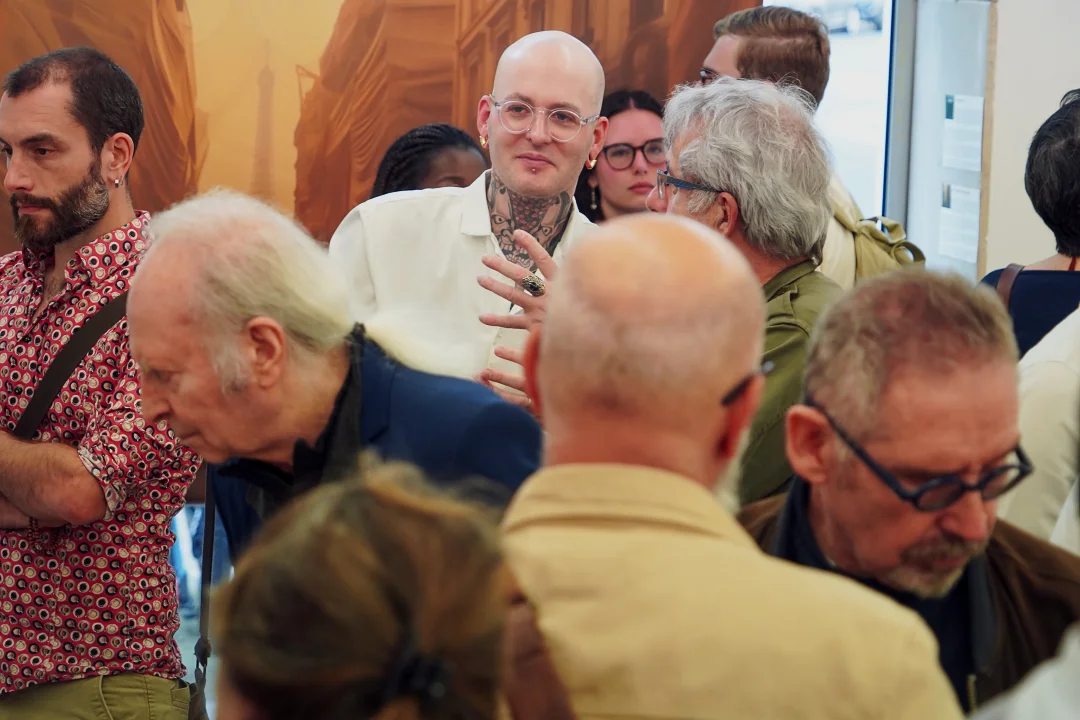
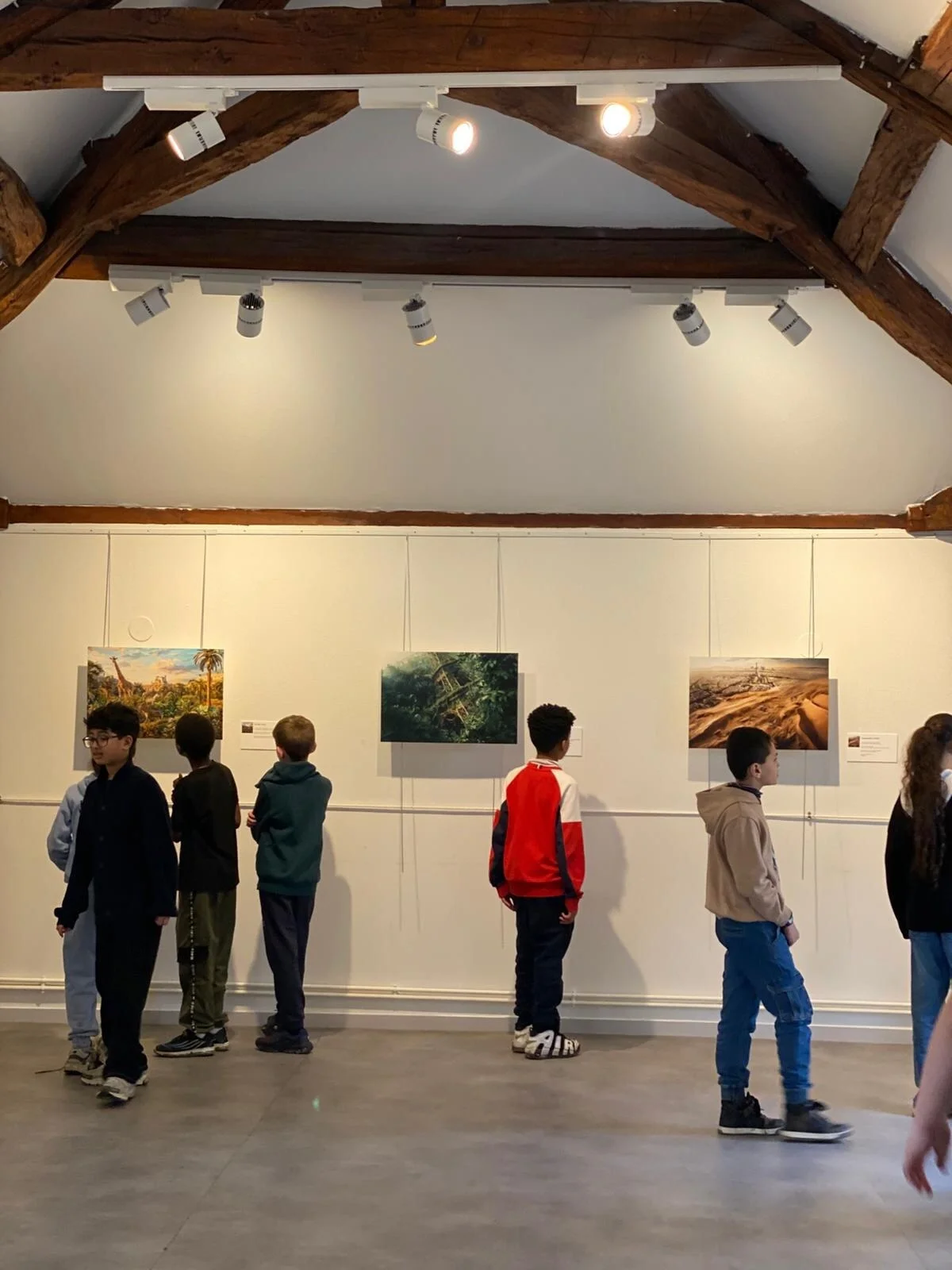
The “Deus Ex Urbana” series was exhibited at Galerie Europia, located at 15, avenue de Ségur, 75007 Paris, from June to September 2024. During this exhibition, I had the opportunity to share these works with a wider audience, in a setting that encouraged reflection on the future of metropolises and urban landscapes. The exhibition was conceived as a bridge between my reflections on urban and climatic collapse and our shared future, placing emphasis on the resilience of architecture and the environment.
Explore the “Deus Ex Urbana” series and discover the limited-edition art prints available for sale — contact me. These large-format photographs, signed and numbered, guarantee their exclusivity. Each work offers a unique perspective on the transformation of urban spaces. Contact me for more information on available works and art print prices.
Le Déluge
“The world as we knew it has changed. Today, I stand here, on the deserted quay, staring at the furious tide devouring Paris. The Seine, once so docile, has become an unleashed monster, fed by the apocalyptic melting of the Arctic.
I can still hear the echo of ignored warnings, the alarm cries of scientists silenced by greed. No one foresaw that it would happen so fast. The waters rise, relentless, lapping at the feet of the Eiffel Tower. The roar is deafening; each wave is a hammer blow against the foundations of our city.
I am alone, a powerless witness to a heritage engulfed. The café where I once wrote is submerged, its memories drowned beneath the waters. The barriers have given way, the defences were in vain. Paris, the city of love and light, is on its knees, wet and dark.
People ran, driven by the instinct to survive, their voices lost in the roar of the water. And I walked on, drawn by the apocalyptic spectacle, by this terrifying beauty. I feel the cold caress of the water seeping into my shoes, I watch the waves seize the streets, and I understand that nothing will ever be the same again. Paris is now nothing more than a sodden memory, a postcard washed out by the rising waters. This is the beginning of a new era, an uncertain future in which we must learn to live with water, our new neighbour, our new mistress.”
Autoportrait
“Sitting atop the Machine, I contemplate the expanse of the city below, enveloped in a sea of greenery. This image is me. It is my self-portrait, a tangible representation of my doubts and my questions. Who am I really, in this world where technology and art fuse inextricably? Am I the artist, or am I merely the operator of a Machine infinitely more powerful and creative than I am?
Every pixel, every shade in this image is the fruit of a collaboration between my human mind and the cold precision of artificial intelligence. Sometimes I wonder whether the art I create truly belongs to me. The Machine, with its algorithms and computing power, seems to capture and magnify visions I could never have imagined alone. Is it I who guides it, or is it the Machine that inspires me, that influences me through the images it produces?
But behind this digital beauty lies a dark reality. The computing power needed to produce these works carries a considerable environmental cost. The servers run relentlessly, consuming huge amounts of energy, thereby contributing to the climate crisis we are desperately trying to fight. Every generated image, every digital masterpiece carries within it an indelible carbon footprint, adding a weight of guilt to the pride of creation.
Perhaps it is time to think about a new form of collaboration, one in which humans and the Machine work together not only to create, but also to preserve our planet. Because, in the end, what value does art have if the world around us is falling apart?”
Paris Écarlate
“Paris, once the city of light, is now unrecognisable, transformed into a Martian landscape by climatic upheaval. Unbearable temperatures, the absence of rain and scorching winds have reduced the capital to a reddish desert. The Eiffel Tower, symbol of our ingenuity, stands amid giant craters and gaping fissures, silently bearing witness to our past negligence.
The modern towers of La Défense reflect a world in ruins beneath a sky heavy with red dust. The oppressive light amplifies the sense of desolation. Survivors hole up in the remaining buildings, desperately seeking refuge from the relentless heat and the sandstorms. Life in Paris has become a constant struggle for survival.
The warnings of scientists and the calls to action were ignored for generations, leading to this climate apocalypse. Now it is too late for regrets. We have turned our garden of Eden into an apocalyptic desert. Terraforming technologies, once intended for Mars, are now our last hope of making this environment habitable again.
Looking at the gaping craters, I wonder whether Paris will ever recover its former splendour. Perhaps it is a foolish dream, but this dream pushes us to keep going and not give up. As long as there are dreamers, there will be hope.”
Le Tourbillon de la Vie
“The tornado tore me off the ground without warning, my bike and I hurled into the air like toys. Spinning in this chaos, my life flashes before my eyes. I see again my endless days, one delivery after another for a few euros, struggling to make ends meet. Every street, every familiar building beneath me is a reminder of my precarious existence, of this economy that has left me without a safety net.
I think of my mother, worn out by her two jobs, and of my childhood dreams of becoming someone respected, of escaping this spiral of poverty. But reality has caught up with me, reducing me to this mere delivery rider, invisible to those I serve every day. The tornado seems to embody this precariousness, this relentless force that has always tossed me from one precarious job to another, never finding stability.
The gusts choke me, and each rotation makes me feel even more insignificant, at the mercy of the elements just as I have always been at the mercy of the whims of the economy. The buildings stream past, their gleaming windows indifferent to my struggle, just like the faces of customers who never really open their doors, content to ignore me once they have collected their order.
Suddenly, I feel a strange calm, a pause in the whirlwind. Perhaps this is the end, perhaps I will finally stop struggling. But in a flash, I realise that as long as I am breathing, there is a chance. A chance to survive this tornado, to find a way to get back up, to break this cycle of precariousness. For even as I am hurled through the air, there is in me a fierce determination not simply to be swept away by the wind.”
Les Dunes Infinies
“The scorching desert winds had transformed the City of Light into a field of shifting dunes. The remaining residents fought every day to hold back the invading sand. The streets, once teeming with life, were now trenches where silent battles were waged against the inhumanity of nature.
The Eiffel Tower, once a symbol of grandeur, was now a lone sentinel rising from the golden waves. The survivors had settled into the tall buildings, which had become temporary refuges against the desert’s inexorable advance. They spent their days building makeshift dykes, using whatever came to hand – planks, old furniture, sandbags – to erect barriers against the granular invader.
Every night, the winds howled, carrying off tonnes of sand and undoing their efforts. But every morning, the residents rose again, determined to carry on the fight. They were few, but their will was unyielding. They had learned to survive in this new, hostile environment, to make the most of every available resource.
At the heart of this sandy hell, they discovered an unexpected oasis: the Tuileries Garden, miraculously preserved. This island of greenery gave them fresh hope and became the centre of their resistance, a fortress of life against the desert’s ever-present death. The dunes kept advancing, but now they had a purpose, a reason to fight. They knew that, despite the power of the elements, the human spirit could still triumph.”
Fuite Vers l’Insolite
“The crisis broke out, and with it, panic. Everyone wanted to flee the city, but there was no question of sacrificing comfort. So whole buildings began travelling along the country roads, turning the rural landscape into a surreal scene. I drive behind one of these urban conglomerates, a Haussmannian building perched on a giant trailer, crossing fields and meadows like a colossus in exile.
On the roads, the spectacle is unintentionally comic. The rolling houses stream past, stacked one on top of another, defying the laws of gravity and common sense. The residents, still clinging to their comfort, look on in bewilderment at the astonished farmers watching their transformed countryside go by. The city-dwellers’ new motto seems to be: ‘Why adapt to nature when you can force it to adapt to us?’
I cannot help but laugh at the absurdity of the situation. We destroyed our cities through our carelessness, and now we carry our mistakes across the countryside, like modern nomads refusing to let go of their former way of life.
As we move slowly forward, blocking the roads and drawing the curiosity of cows and sheep, I wonder how long this masquerade can last. Perhaps one day we will realise that fleeing is not the solution and that we must finally learn to live in harmony with our environment. But for now, we drive on towards the unknown, carrying our gilded cages with us, in an exodus as futile as it is extraordinary.”
Solitude Électronique
“The city was now nothing more than a distant, noisy memory, a chaos I decided to leave behind. I fled with what remained to me, a faithful dog and a pile of old electronic devices, mute witnesses to a bygone era. Here, in this isolated concrete house on the hill, I have found a kind of peace, an escape from the collapsing world.
Every device, now useless, forms a symbolic barrier between me and the former life I have abandoned. Microwaves, televisions, computers — everything that once represented modern comfort is now a fortress of metal and plastic. The lights of the house contrast with the darkness around me, a constant reminder of my decision to detach myself from the turmoil.
The days pass slowly, punctuated by walks with my dog. Solitude could be crushing, but it has become an ally. Every evening, I watch the twilight, the shadows dancing on the hills, and I feel a deep relief. I have escaped the agitation, the sirens and the glowing screens that once dictated every moment of my existence.
Ignoring the chaos is perhaps not the ideal solution, but it is mine. Here, behind this barricade of obsolete objects, I rediscover a forgotten simplicity, a connection with the present that the city had smothered. Perhaps one day the world will regain its balance, but in the meantime, I stay here, in my concrete retreat, savouring every moment of this rediscovered tranquillity.”
Suspension Éphémère
“Every morning, as I open the shutters of my house perched on this cliff, I feel the vertigo of the precipice just below me. Erosion has gnawed away at the foundations of my refuge, threatening a little more each day to carry it into the void. I watch the sea below, its relentless advance against the rock, and I wonder how much time I have left before nature reclaims what belongs to it.
I have tried everything to save this house. Reinforcements, stilts, sandbags… but nothing works. Every attempt at stabilisation runs up against the inescapable power of erosion. It is as though the cliff itself were rejecting my efforts, sending me back to my powerlessness before natural forces. I feel a deep despair, mixed with nostalgia for everything this house represents to me.
Abandoning this place is an idea I keep pushing away. Where would I go? This house is more than a shelter; it is the record of my life, of my memories, of my joys and my sorrows. To leave is to turn my back on a part of myself. But to stay is to risk losing everything in an instant, swept away by a brutal and inexorable collapse.”
Totem d’Acier
“The sky is grey, heavy with despair, as we prostrate ourselves before this totem of stacked vehicles. I look around me, the imploring faces, searching for answers in these metal carcasses. We had placed all our hopes in electric cars, believing they would save us from climate catastrophe. But today, here we are, on our knees, before our former idols, disconcerted by their silence.
Every car here represents a broken dream, a promise unkept. We traded our old habits for new ones, thinking that technology would absolve us of our environmental sins. But the truth is unforgiving: change was not going to come from the machines, but from us. We ignored the warnings, went on consuming without thinking, and this is where it has led us.
The prayers murmured around me sound like lamentations. People beg these steel relics to offer them an explanation, a miracle solution. But the answers will not come from these piles of scrap metal. The irony is bitter: we idolised inanimate objects, thinking they would guide us towards a better future, when the true transformation required a profound change within each of us.
As I get up, I realise the absurdity of our cult. We prostrated ourselves before symbols of our past, refusing to face the reality of our future. Salvation will not come from these remnants, but from our capacity to learn from our mistakes, to make courageous decisions and to change our ways of life.”
Les vents du changement
The winds of change were literally blowing over the city, and we, devoted followers, prostrated ourselves before our new deity: the giant wind turbine enthroned in the middle of the street. Every day, we raised our arms to the sky, begging the great propeller to grant us clemency and prosperity. In our despair over the climate catastrophe, we had found a new cult, a symbol of salvation in these troubled times.
The old temples of consumption were abandoned, the supermarkets deserted. In their place, wind turbines rose like sacred totems. People came from afar to take part in the rituals, bringing offerings of recycling and ecological prayers. It was said that those who heard the murmur of the wind in the blades were blessed, chosen to spread the good word of renewables.
Every Friday, our holy day, we gathered to sing the praises of Green Energy. The passionate speeches of the wind turbine’s prophets rang out through the streets, proclaiming that the salvation of our world lay in abandoning oil and venerating draughts of air. Sceptics were mocked, excluded from the community, banished to the dark suburbs where solar panels never shone.
Les Canaux de Paris
“Every year, Paris turns into a new Venice, flooded by unexpected monsoons that turn the streets into canals. No one saw it coming, this climatic absurdity that is now part of our routine. Boats replace cars, and Parisians navigate with ironic nonchalance along the Avenue des Champs-Élysées, as though it were the most natural thing in the world.
I still remember the first time I saw the Arc de Triomphe reflected in the stagnant water. It was surreal, a mixture of wonder and despair. We had ignored the warnings, thinking it would never happen here. And now, every year, we bring out our boats and our rain boots again, ready for the inevitable deluge. Cafés offer gondola services, and tourists take selfies from boats in front of the drowned monuments.
Conversations have changed. We no longer talk about the weather in terms of sun or rain, but in terms of water levels. ‘Do you think we’ll still be able to walk to the metro next week?’ my neighbour asks, studying the forecast. ‘No, I think it would be better to take the boat,’ I reply, laughing.
Ironically, this recurring catastrophe has brought Parisians closer together. We share tips on the best navigation techniques, we help each other protect our homes against flooding. Perhaps this new Venice is our punishment for having ignored nature for too long. But deep down, we have found a way to survive, to reinvent ourselves, even in this aquatic chaos. Every wave is a reminder that nature will always have the last word.”
Une Société Suspendue
“Thick fog and dust cover the streets of our city, but we have found a new way to live and thrive. The suspended walkways, linking the buildings together, have become our main means of getting around. These glass corridors, sealed off from the outside air, allow us to keep working, exchanging and living, despite the hostile conditions outside.
Every day, I cross these walkways with a feeling of gratitude. The city, once noisy and chaotic, has found a form of calm and serenity. We are more connected than ever, the glass walls offering us a panoramic view over a city reinventing itself. These walkways, at first an emergency solution, have become vital arteries, symbols of our resilience and our capacity for adaptation.
Up there, we have recreated a dynamic society. Workspaces, suspended markets, indoor gardens, everything is within reach, without ever having to go down into the polluted streets. Children laugh and play in the suspended playgrounds, their bursts of laughter echoing through the glass structures.
Looking at the Arc de Triomphe through the haze, I feel filled with hope. Our city is not merely surviving, it is undergoing a full renewal. The suspended walkways are much more than bridges between buildings; they are bridges between people, between the past and the future. Every day, walking above the rubble, I remind myself that, despite the challenges, we have found a way to keep moving forward, together.”
Les Oubliés des Passages
“Every day, I walk through these choked streets, wrapped in sheets yellowed by pollution, the Eiffel Tower barely visible through the toxic haze. Around me, people move forward, their faces hidden behind makeshift masks, fighting for every breath of tainted air. It is a life of survival, an existence marked by precariousness and injustice. We are the forgotten ones, the damned of this new era.
Up there, suspended above our misery, lie the sealed-off walkways, reserved for those who can afford to pay. The State, in search of easy revenue, sold off the concession for these corridors to the former motorway operators. A new privileged class, protected by glass walls, watches us from above, carrying on their comfortable lives without ever facing our reality. We, down below, suffocate, we suffocate amid indifference.
Every step through this haze is a brutal reminder of the divide that has opened up between us. The suspended bridges, symbols of our former hope, have become markers of our despair. The laughter and light conversation from above contrast cruelly with the heavy, oppressive silence of our streets. We are witnesses to injustice, forced to look upward, knowing that we will never be welcome up there.
I wonder how long we can go on like this, living beneath this shroud of dust and debris, before our spirit is completely crushed. The world has changed, and we, the poorest, are paying the heaviest price for it. Our makeshift masks cannot filter out the bitterness of this new reality, where even the air we breathe has become a bargaining chip.”
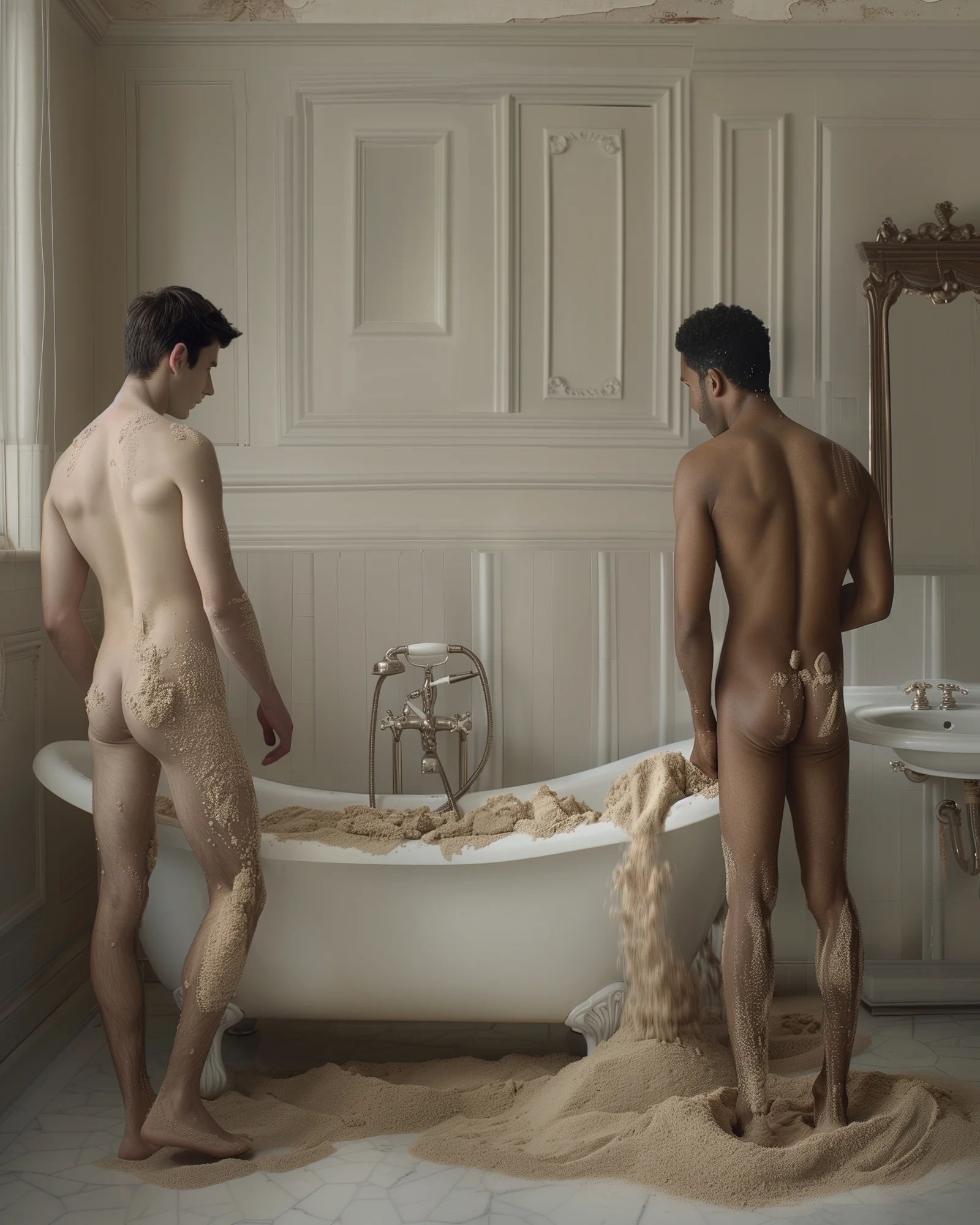
Le Grain de sable
“Do you reckon we’ll manage to wash with this?” asks Julien, watching the sand pouring from the tap into the bathtub. Its golden grains slowly fill the tub, covering the bottom with a thick, granular layer. Julien looks on in disbelief, his body already covered in this dust that seems to invade every corner of our lives.
“Not really much choice, is there?” replies Malik, laughing, though the amusement in his eyes is tinged with resignation. “We adapt. Remember when we still had water?” He takes a handful of sand and lets it fall in a fine shower, as if trying to convince himself that all this was normal. “We make do with what we’ve got.”
“We make do with what we’ve got…” Julien repeats the words, shaking his head. “Do you realise we’ve come to this? The tap gives us sand, and we’re supposed to pretend it’s normal.” He sighs, leaning over to try to dampen his skin, already covered in abrasive grains. “We used to live in a city where water flowed freely, and now we make do with rubbing ourselves down with sand.”
Malik shrugs, his gaze drifting into the past. “Maybe it’s a lesson, you know? To remind us how much we took all this for granted.” He turns to Julien, an ironic smile on his lips. “Who knows, maybe tomorrow we’ll find a way to make water flow again. But in the meantime, let’s enjoy our luxury spa.” The two of them laugh, despite everything, finding comfort in this bitter irony, and in their ability to adapt to a world where even water has become a distant memory.
Contre Champ
“In our Parisian flat, we have created a genuine indoor garden, turning every surface into a setting of lush greenery. The children play among the moss cushions, a picture of innocence and tranquillity. Ironically, this plant oasis is our response to the city’s foul air, a desperate attempt to purify our indoor environment. And yet, for all this greenery, the truth is rather different.
We read the studies, but we chose to ignore them. Yes, plants do have a purifying power, but at such a slow rate that it would take an entire forest to rival the effectiveness of a simple open window. We lulled ourselves with illusions, believing that our greening efforts would be enough to combat urban toxins.
Every day, we water, we tend this little green world with devotion, as though it could really reverse the effects of outside pollution. It is almost comical to see how tightly we cling to this false promise of purification. The plants are beautiful, soothing, but they are far from the miracle solution we had hoped for.
As I watch my children play in this surreal setting, I realise the scale of our self-deception. To truly breathe clean air, far more radical action would be needed than this indoor garden. Perhaps one day we will understand that we must first tackle the causes of pollution rather than settling for masking its symptoms. But in the meantime, we live in our verdant illusion, naively hoping that our small leafy companions can achieve the impossible.”
Les Jardins Enfermés
“In our world, where the scarcity of resources has become the norm, human inventiveness has found surprising solutions. At the heart of the city, urban gardens have blossomed, bringing a breath of hope and freshness. I walk alongside these green plots, where fresh vegetables grow in abundance.
But this reality is not accepted by everyone. Some city-dwellers, refusing to see the potential of this transformation, have retreated behind concrete walls, preferring to shut themselves away in their nostalgia for the past. They regard these gardens as anomalies, refusing to admit that the city can reinvent itself in such a radical and positive way. Their resistance seems incomprehensible to me, but I respect their choice.
For us, the urban gardeners, every day is a victory. We share our harvests, exchange advice, and build a tight-knit community around this new urban agriculture. The children learn to plant, water and harvest, discovering the cycle of nature in the process. The city, once grey and oppressive, is turning into a patchwork of greenery, tangible proof of our resilience and our capacity to adapt.
Despite the concrete walls surrounding us, we have found a way to thrive. Fresh vegetables are no longer a luxury, but an everyday reality. We have breathed new life into our environment and, with it, a sense of community and hope. The walls may well remain, but they will never be able to stifle the spirit of innovation and solidarity that drives our little green revolution.”
Au Seuil du Végétal
“At the threshold of the vegetal, I contemplate the vast shapes of the giant mushrooms that have invaded our flat. Ironically, while we clung desperately to our urban life, it was these primitive organisms that thrived in our polluted world. The smoke from the industrial chimneys in the background bears witness to our inability to change, but the mushrooms, for their part, knew how to take advantage of our negligence.
Sitting at my table, a cup of coffee in hand, I realise that our survival now depends on our ability to coexist with these intruders. They are everywhere, in the corners, on the walls, even on the furniture. We have learned to tolerate them, to share our space with them, because there is no other choice left. These mushrooms have become our new housemates, imposing and omnipresent.
Every day, we watch their relentless growth. They absorb the pollutants, spread and multiply, turning our flat into an indoor forest. We have had to adapt, to find ways of living with this new invasive vegetation. Our lives are now paced by the cycles of these mushrooms, their undeniable presence dictating our daily actions.
The irony is bitter: while we struggled to preserve our way of life, it was the mushrooms that found the solution. They thrived where we failed, reminding us at every turn that nature, even in its simplest forms, always ends up reclaiming its rights. At the threshold of the vegetal, we are no longer the masters of our environment, but the humble guests of a world we ourselves have altered.”

Les Deux Dames
“Do you remember the days when the Seine had no icebergs?” murmurs Marc, holding our youngest’s hand, as he watches the gigantic block of ice floating peacefully in front of the Eiffel Tower. “We should have listened to the scientists sooner.”
“Yes, it’s hard to believe it was only a few years ago,” replies Claire, watching their children in wonder. “For them, this climate chaos has become normal. Look at them, they think it’s a tourist attraction.”
“I always dreamed of seeing an iceberg, but not here, not like this,” sighs Marc. “It looks almost like a scene from a science-fiction film.” He laughs bitterly, thinking of the ignored alarmist warnings and the broken promises. “At least they’ll never understand what we lost.”
“Perhaps,” agrees Claire, her gaze lost in the glittering ice. “But they’ll have to learn to live with this new world we’ve left them. Ironic, isn’t it? Our mistakes created their reality.” And, in silence, they continue their walk, guiding their children through a transformed Paris, where the remnants of a frozen past now drift at the heart of the city of light.
Écho des Ruelles Silencieuses
“The streets of Paris have fallen silent, overrun by vegetation and deserted by their inhabitants. I am the last to walk these once-lively paths, and every step echoes through this ghost city. Ahead of me, the Basilique du Sacré-Cœur stands majestically, seeming to watch over a forgotten Paris. The overgrown gardens around it bear witness to the passing of time and the absence of man.
Every morning, I make the same journey to the basilica, seeking some semblance of normality in this solitary existence. The dilapidated buildings and deserted streets tell the story of a city that had to be abandoned because of climate change and the disasters that followed. I stayed, unable to leave, bound to these places filled with memories.
Nature is slowly reclaiming its rights, and Paris, in its abandonment, is regaining a strange, wild beauty. Wild grasses overrun the pavements and trees rise where there was once only concrete. The only sounds that break the silence are birdsong and the rustling of leaves.
Despite the solitude, I find a certain comfort in this new order of things. Every street corner, every monument, is a reminder of the past and a promise of a future where nature and humanity might coexist differently. Looking at the basilica, I tell myself that even in abandonment, there is hope, a possible rebirth. For now, I keep walking, living, hoping.”
Jardin d’Eiffel
“I stand before this striking sight: the Eiffel Tower, once a symbol of grandeur, is now swallowed up by a lush forest. Vines coil around its metal structures, turning the monument into a relic of another age, a fusion of artifice and nature. The dense vegetation embraces it, giving this structure a wild, unexpected beauty.
Every day, I venture into this urban jungle, searching for resources and answers. Nature has reclaimed its rights, and Paris has become a vast ecosystem where animals and plants coexist freely. The Eiffel Tower, lying on the ground, now serves as a refuge for local wildlife. I watch birds nesting in its recesses, insects swarming in the rust, and climbing plants making their way towards the sky.
I gather what the forest offers me, aware of the fragile balance that sustains this haven of peace. The sounds of the city have been replaced by those of nature: birdsong, the rustling of leaves, the murmur of the wind through the branches.
Walking beneath the imposing shadow of this overrun structure, I feel a strange tranquillity. The world has changed irreversibly, and we must learn to live in harmony with this new nature. The Eiffel Tower, once the pride of humanity, is now the beating heart of this urban jungle, a reminder that even mankind’s grandest creations cannot rival the power of nature.”
La Ville à la Campagne
“Coming down the stairs of my building, I did not expect to stumble upon this scene. At the heart of this concrete courtyard, a cow grazes peacefully on the grass, unaware of how strange its presence is here. Around it, the tall concrete walls and barbed wire give this picture a surreal quality, an incongruous blend of nature and urbanism.
Climatic changes have driven many residents to flee, leaving deserted buildings behind them. The once-lively streets have fallen silent, and nature is beginning to reclaim its rights. Abandoned spaces are turning into small oases of greenery where wildlife ventures timidly. This cow is perhaps one of the first signs of this unexpected renewal.
I remember the stories my grandparents used to tell about the flourishing countryside, tales that seemed so far removed from our urban reality. And yet, watching this cow graze peacefully, I feel as though I am living a return to those bygone times. Nature, with its unshakeable resilience, always finds a way to assert itself, even in the most unlikely places.
This scene fills me with a strange hope. Perhaps, despite past mistakes and challenges yet to come, we can find a balance. The city and nature, once at odds, can learn to coexist. In the meantime, I contemplate this cow, symbol of this gradual return of nature, and I find myself dreaming of a future where our urban environments will be in harmony with wildlife.”
La Traversée Silencieuse
“At dawn, as the reddish light of the rising sun bathes the city in an unreal hue, I stand at the window of my flat. The grey, imposing buildings, once full of life, are now almost silent, their inhabitants having fled the rigours of a climate grown unpredictable. It is strange to see these buildings, symbols of our civilisation, turning into deserted ruins.
This morning, an unexpected scene catches my eye. A group of fallow deer slowly crosses the pedestrian crossing below my home. The animals, once confined to distant forests, now explore the abandoned streets, reclaiming a space we left behind. Their graceful, silent silhouettes contrast with the hard, angular lines of the buildings.
I remember the days when this street was lively, filled with laughter and conversation, cars and bicycles. Urban life, once so noisy, faded away little by little with the heatwaves, the storms and the floods. People left to seek refuge elsewhere, letting nature slowly reclaim its rights. It is a bittersweet irony: nature is reclaiming spaces we thought we had stolen from it forever.
Watching these deer, I feel like a witness to a transition, to a reversal I would never have thought possible. The city, in its desertion, offers a new stage for wildlife. And I, a mere onlooker of “La Traversée Silencieuse”, marvel at this resilience of nature, wondering whether our absence will truly allow a lasting renewal, or whether it is only a temporary truce in the unending struggle between man and his environment.”
Garden Party
“The climate of France has changed, settling into a humid, tropical heat all year round. In Paris, where the air struggles to circulate between the historic buildings, this heat has given rise to a genuine urban jungle. The Tuileries Garden, once a haven of peace, is now overrun by lush vegetation and exotic animals escaped from the old zoos. Giraffes, zebras and rhinoceroses roam freely along the paths.
I am a survivor of the climate catastrophe, wandering through this new reality. Every day, I must adapt to survive. Resources are scarce, and hunting these exotic animals has become a necessity. Armed with rudimentary traps and my own ingenuity, I track the zebras blending into the tall grass and the giraffes browsing on the foliage of the garden’s century-old trees.
Yesterday, I managed to catch a zebra. Its meat will feed my companions and me for several days. But this victory is tinged with bitterness. Once, these creatures were symbols of majesty and distant horizons. Today, they represent our only chance of survival in a world disfigured by past mistakes. Every hunt is a cruel reminder of what we have lost.
Wandering through this urban jungle, I often wonder whether we will ever be able to turn the situation around. Perhaps this fertile chaos is an opportunity for renewal, a chance to rebuild differently. But for now, I must keep hunting, keep surviving, hoping that tomorrow will bring a little more hope to this city transformed into a tropical savannah.”
Désert Urbain
“The city has become a vast desert, where only ruins bear witness to humanity’s past presence. Sand dunes surround the remnants of the buildings, and the aridity of the landscape tells the story of a vanished civilisation. The days of glory are over, replaced by a deafening silence.
I am one of the last to wander through this devastated world, searching for traces of life, signs that humanity might still survive somewhere. The remnants of once-grandiose monuments contrast with the empty vastness of the landscape. The rare plants, tenacious and brave, manage to survive in this hostile environment, offering a meagre hope amid this picture of desolation.
The nights are the hardest. The biting cold and the absence of light create an oppressive atmosphere. I shelter in what remains of the buildings, imagining the lives once lived there. Sometimes I think I hear murmurs carried on the wind, distant echoes of a bygone age. The ruins, lit by the last glimmers of twilight, become mysterious silhouettes in the darkness.
But reality is unforgiving. Humanity is fading away little by little, and nature is reclaiming its rights. This world now belongs to the sands and the stars. Every day, I wonder how much longer I will be able to wander like this, a witness to a glorious past and an uncertain future. And yet, as long as a spark of life remains in me, I will keep walking, keep searching, keep hoping.”
Le Culte du Tronc
“Since the last cataclysm, we, the children of the earth, have learned to worship the Tree, our link to the world of old. Where the blue sky had given way to storms of fire, the Tree, unyielding, stretched its branches beyond the blazing heavens, capturing the essence of life before and bringing it back to our underground shelters.
The Tree had become our temple, our priest, our messiah of chlorophyll. Every morning, at the hour when the sun began to bite the earth, we gathered in the great central cavity, where the Tree’s trunk rose up like a spine of the world below. To touch the bark meant uniting with life, and everyone longed for that salvation.
But today, chaos reigned. The rumour had spread like an underground wave: the Tree was weakening. The murmur had swelled into a collective cry, a human tide surging towards this pillar of life. Hands reached out, bodies intertwined, all driven by the feverish desire to feel beneath their fingers the rough evidence of the surface.
In this crush, the old reverence could no longer be discerned. Prayers had turned into scuffles, meditations into frantic struggles.
And I stayed apart, my eyes fixed on the central trunk, a witness to this madness.”