
Broadacre City: A Decentralised Utopia by Frank Lloyd Wright
In the UnBuilt series, an exploration of Broadacre City, Frank Lloyd Wright's decentralised utopia, recreated in realistic images using AI.
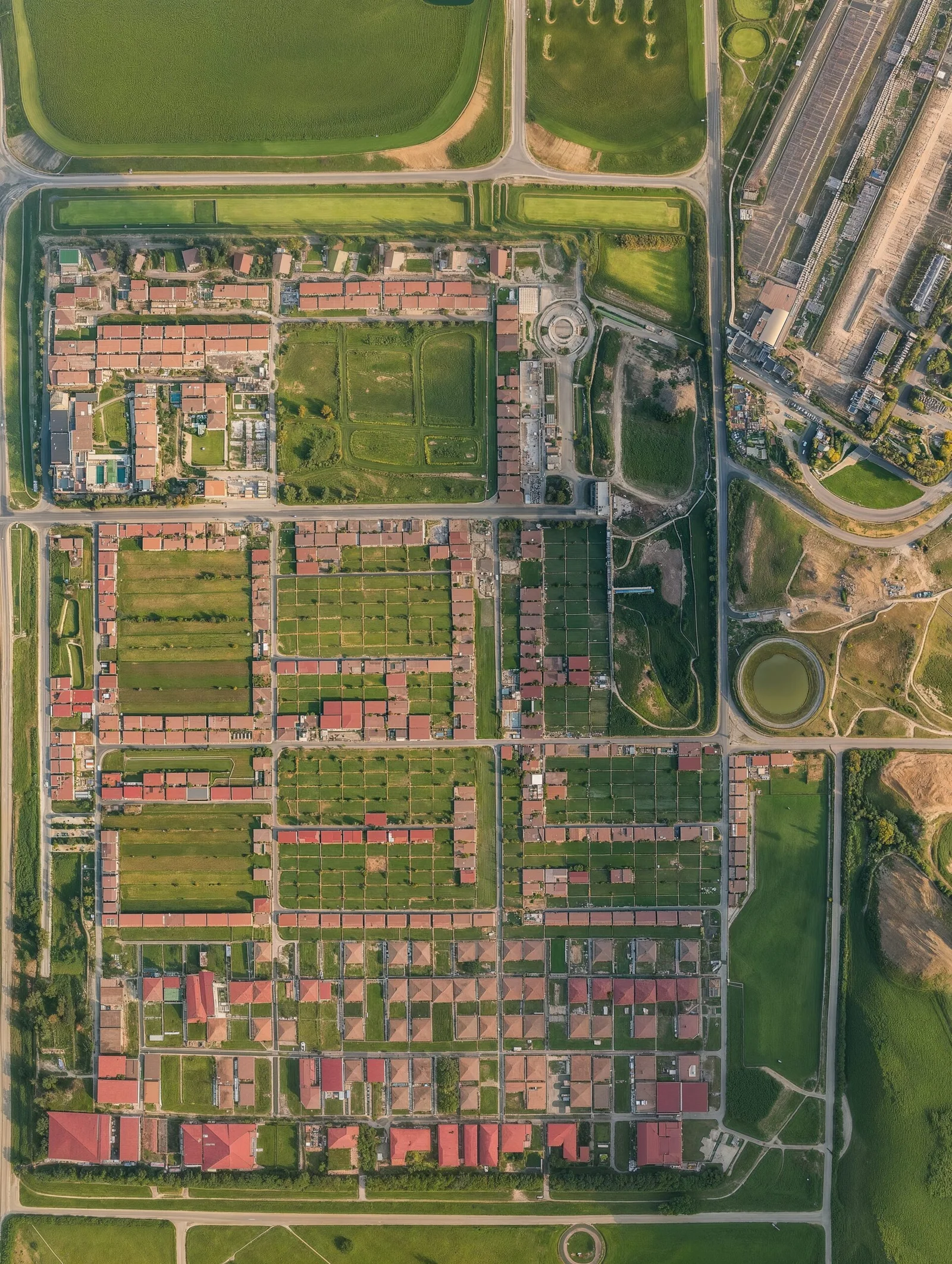
In this new episode of the UnBuilt series, we take a close look at Broadacre City, a revolutionary project designed by the visionary architect Frank Lloyd Wright in the 1930s. This model of a decentralised city, conceived as a radical alternative to traditional urban planning, has profoundly shaped the history of architecture and urban planning, even though it was never built.
This reconstruction extends my work as an architectural photographer, between documentation and art prints.
A Response to Industrial Urbanisation
Through Broadacre City, Frank Lloyd Wright firmly opposed the urban density and industrial centralisation that characterised the major cities of his time. In this utopian model, every family would have an acre (0.4 hectares) of land, fostering a self-sufficient life in harmony with nature. As he described it in his book The Disappearing City (1932), “the city of today is only one-tenth of what the city of the automobile will become.” He saw the automobile as a symbol of individual freedom, connecting every home to a decentralised infrastructure. (Frank Lloyd Wright Foundation).
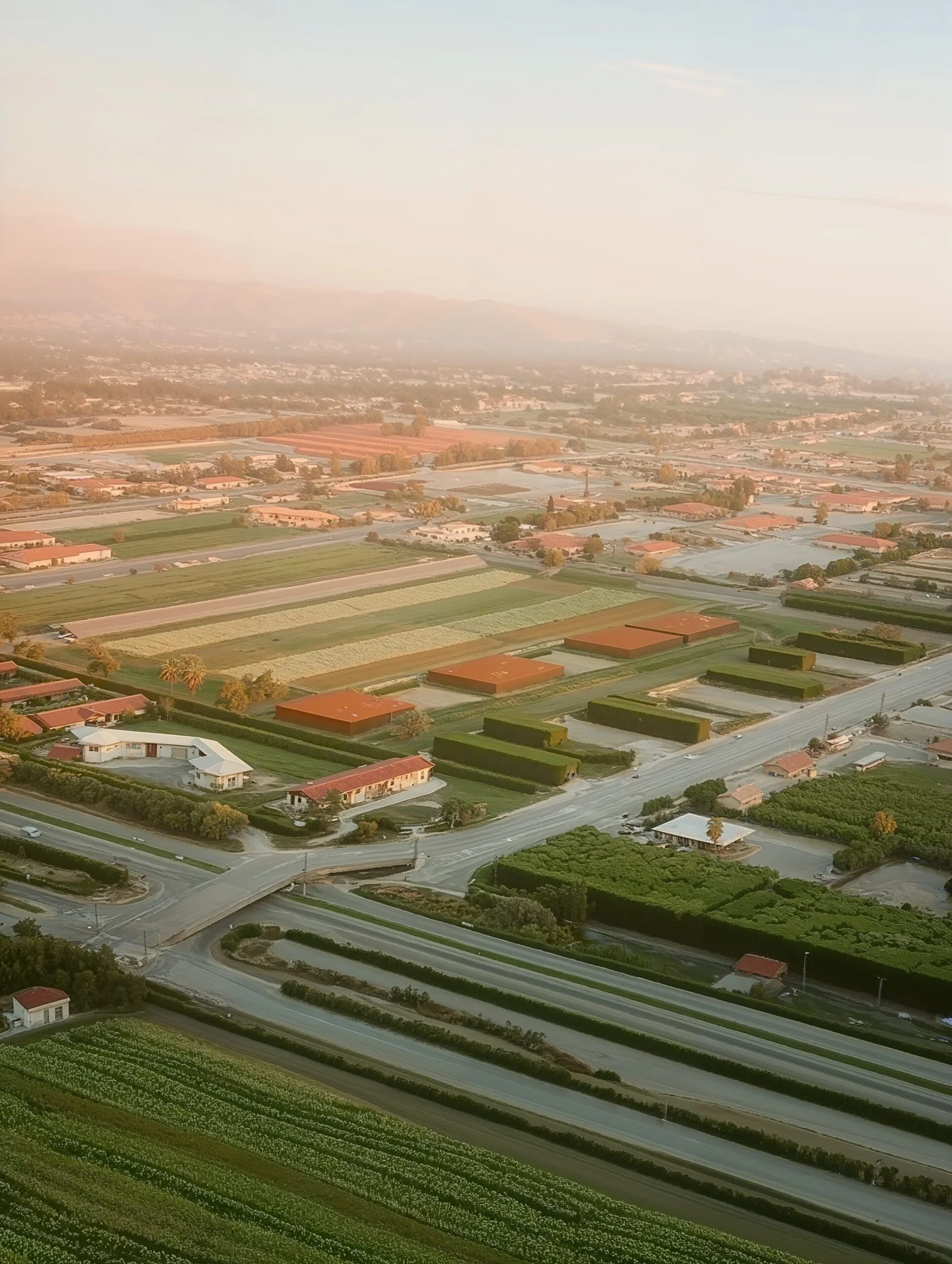
A realistic aerial perspective showing single-family homes surrounded by cultivated plots, linked by winding roads and framed by carefully structured green spaces.
Architectural and Urban Planning Principles
The Horizontal versus the Vertical
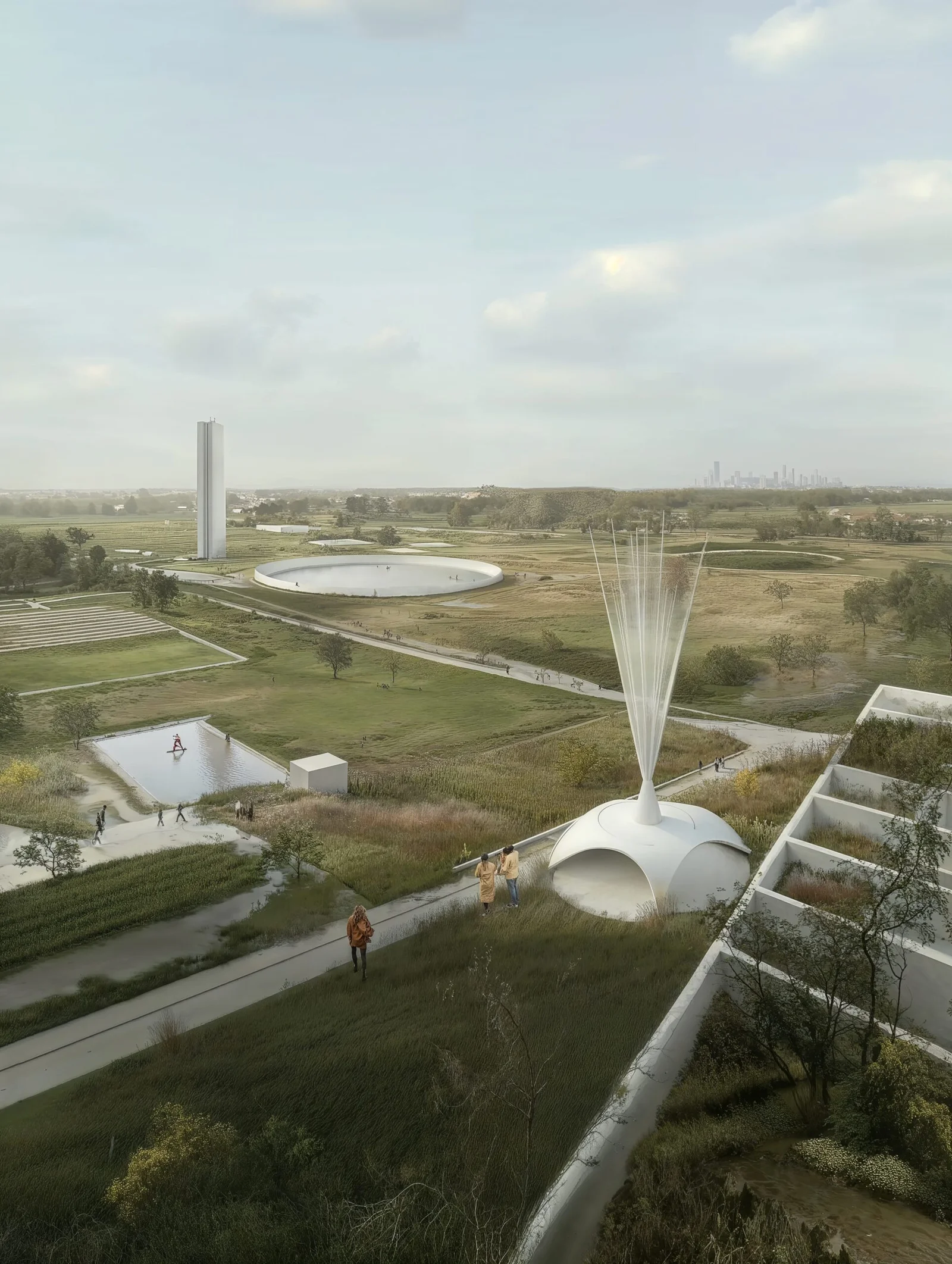
A realistic scene showing landscaped terraces combined with futuristic architecture, symbolising the balance between built space and nature, with residents enjoying their environment.
Wright opposed the verticality of skyscrapers, which he regarded as “artificial strangleholds.” In Broadacre City, horizontal architecture dominated. The individual houses, inspired by the Usonian Homes, were simple, functional and inexpensive, designed to blend into the landscape and reflect an organic architecture. (MoMA).
An Organic Integration
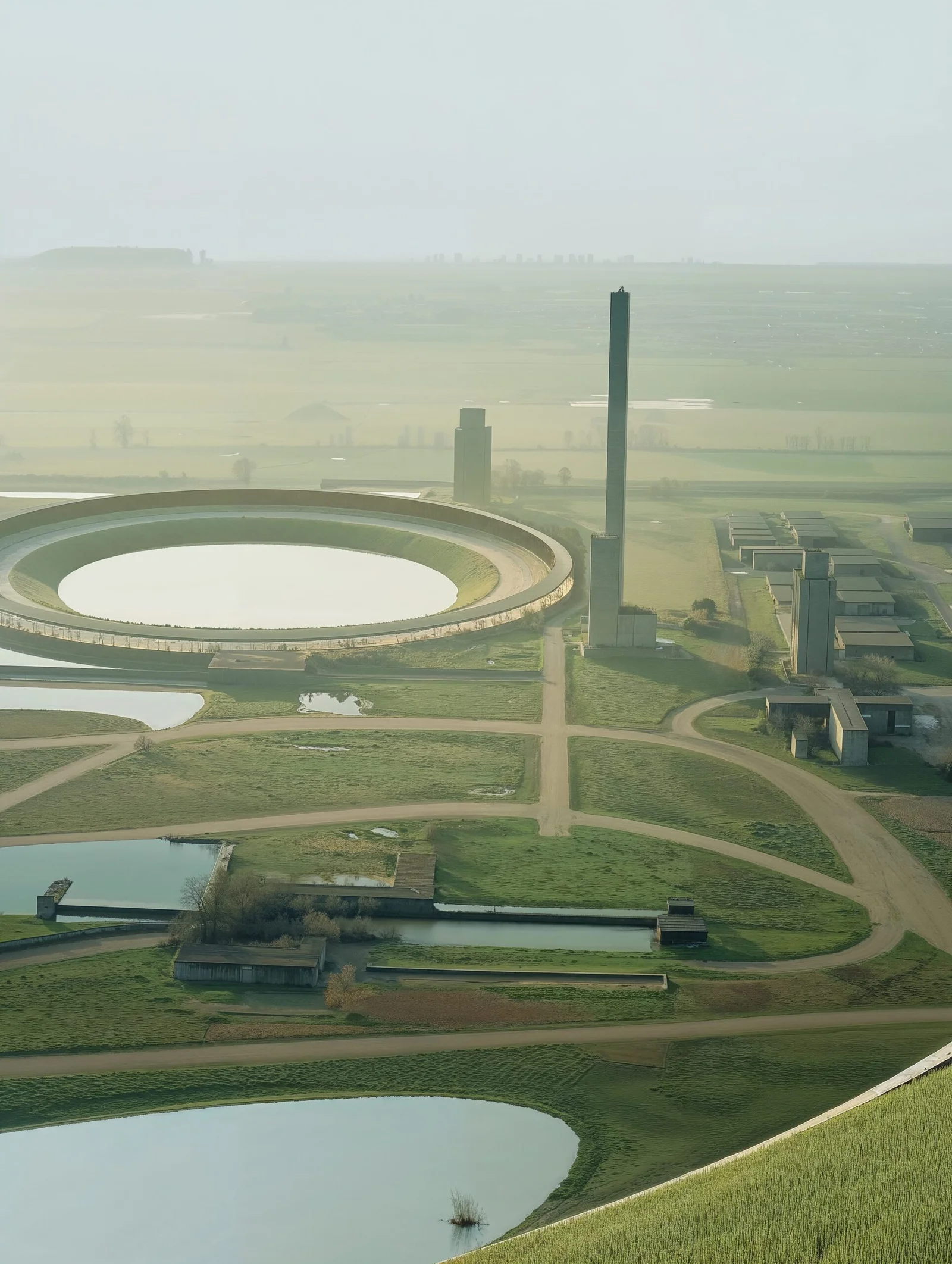
A view illustrating the coexistence of modernist buildings, a large public water feature and agricultural plots precisely organised within Broadacre City.
Each house had its own garden or plot of land, allowing for small-scale farming. These individual holdings were intended to strengthen food self-sufficiency and reduce dependence on centralised markets. Wright’s vision went beyond architecture; he advocated a genuine integration of indoor and outdoor spaces to improve quality of life.
Mobility and Transport
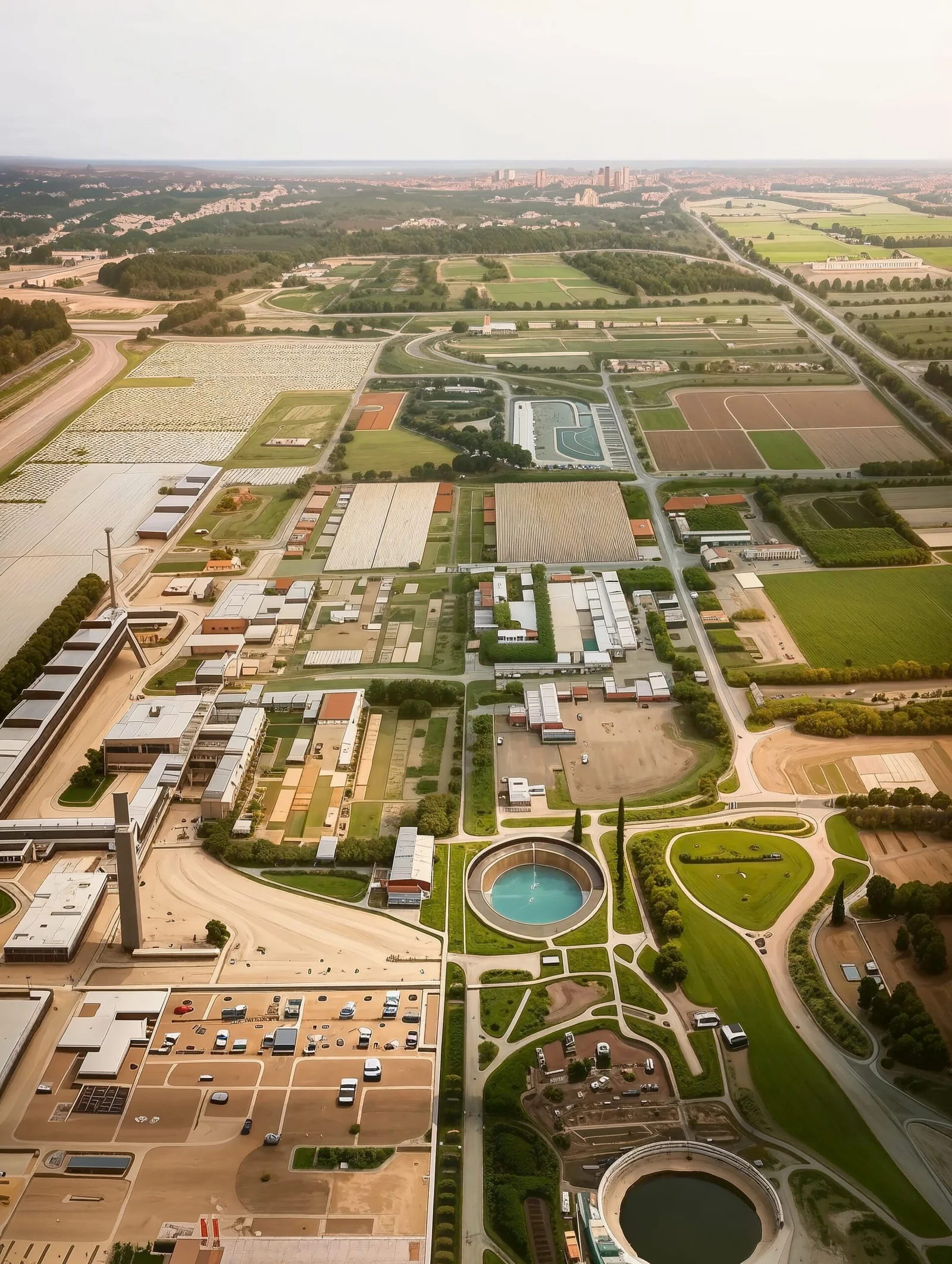
A panoramic view of a complex network combining residential zones, modernist infrastructure and interconnected roads, highlighting the decentralisation and integrated urban planning at the heart of Broadacre City.
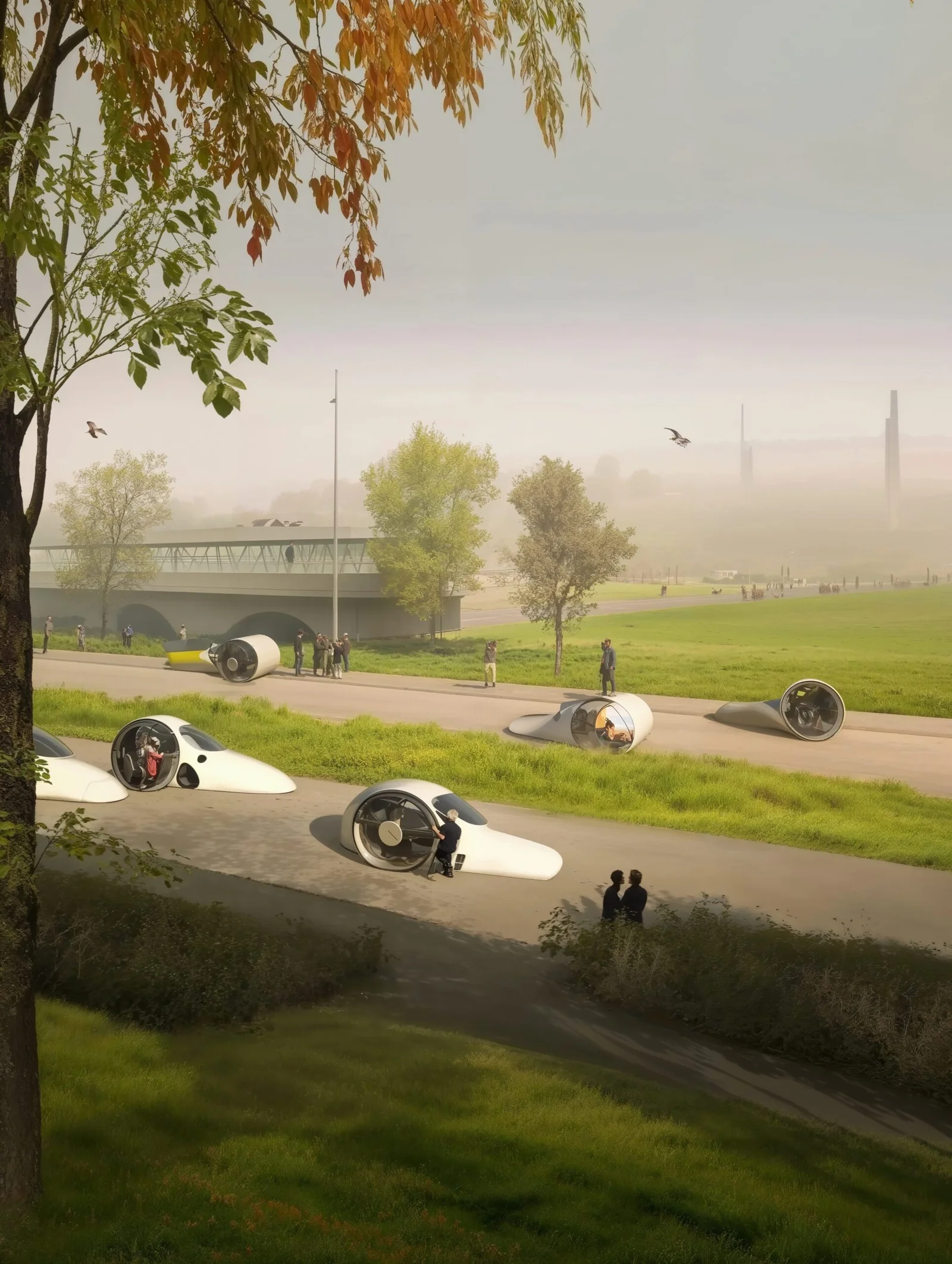
The central role of the automobile in Broadacre City reflects Wright’s futuristic vision. The roads were wide, winding, and perfectly integrated into the natural landscape. Unlike traditional cities, there was no central station or mass public transport system. Wright also anticipated the emergence of personal aircraft, providing platforms for landings. (Wikipedia).
A scene illustrating Broadacre City’s visionary transport system, with futuristic personal vehicles integrated into a green environment, highlighting the harmony between technology and nature.
A Vision Relevant to Today’s Debates
Although Broadacre City never came to fruition, its influence can be felt in modern concepts such as garden cities and eco-districts. The project raises essential questions about the viability of decentralisation, sustainability, and the role of architecture in building a fairer society. Furthermore, its model of coexistence between residential and agricultural spaces resonates with contemporary initiatives aimed at reconnecting residents with their environment.
A Visual Interpretation Through Artificial Intelligence
For this new episode, I was able to create original images using artificial intelligence tools. These visuals, based on Wright’s original models and drawings, offer a realistic and immersive interpretation of Broadacre City. They make it possible to explore this concept as though it had been built, highlighting the architectural details and spatial planning.
A Bridge Between Past and Present: My Work as an Architectural Photographer
As a photographer specialising in architecture, I strive to capture the essence of visionary projects, whether built or conceptual. The images generated for this article demonstrate how contemporary technology can bring unrealised projects to life, placing them within a modern visual context. If you are an architect or urban planner and would like to document your projects, whether in progress or completed, I invite you to explore my portfolio and get in touch to discuss potential collaborations.
Explore UnBUILT and Let’s Imagine the Future of Architecture Together
Are you an architect looking to collaborate on projects exploring the impact of architectural utopia or showcasing your work?
👉 Discover my other work from the UnBUILT series
👉 Get in touch for artistic collaborations, photographic reportage, or to imagine new concepts to document together.