
When in a project handover should you schedule the photo shoot?
Handover photography often fails for one simple reason: it gets scheduled too late. Here is how to align it with the real construction calendar instead of the communications one.
A question asked too late
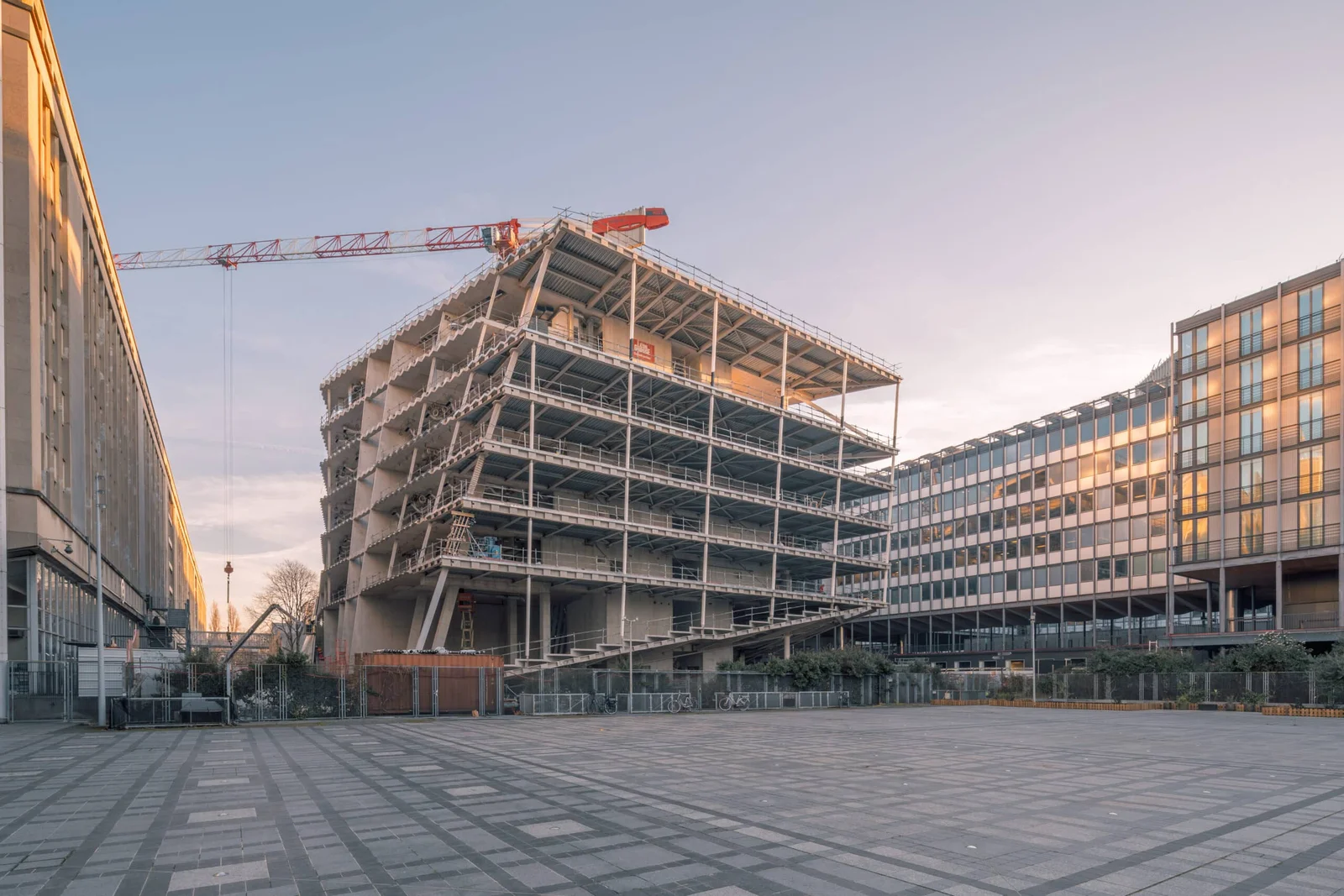
Most requests for a handover reportage land the same week the building is due to be delivered — sometimes the same week it needs to already be online, in a press kit or a competition file. By then the site is often still occupied by trades finishing last adjustments, floor protections have not been removed, final lighting has not been set, and the fine cleaning has not happened. Photography then becomes a race against conditions that are not yet in place.
The real question is not “when should we photograph the handover” but “at what point in the construction schedule does the photographic window actually open”. And that window almost never matches the contractual delivery date. It depends on the real state of the site, not on the date written into the contract or announced to partners in a press release.
This gap between the contractual date and the photographable date is rarely anticipated, because it does not concern the same teams: the site management runs a construction schedule, the communications team runs a publishing schedule, and the two are rarely connected early enough to organise a shoot under good conditions.
What the end of a construction phase actually changes for the image
A building finished on paper is not necessarily ready visually. Plastic protections, leftover material pallets, scaffolding mid-dismantling, temporary connections still visible — none of that is easy to retouch, and all of it costs post-production time that a different choice of date would have avoided. An image cluttered with leftover site elements needs far more digital cleanup than one taken on an already cleared site — and that time feeds back into the delivery schedule of the photographs themselves.
Conversely, a site still active but cleaned at the key points, with working lighting and areas cleared of anything unrelated to the project, gives cleaner images than a rushed handover. This is one of the points I explain most often on the FAQ page: a minimum of preparation — cleared spaces, working lighting, organised access — changes the outcome more than a day earlier or later relative to the official date.
This preparation does not depend on the photographer alone: it requires coordination with the fine-cleaning team, with the technicians setting the final lighting, and sometimes with the staff still installing signage or furniture. The earlier this coordination is planned, the sharper and simpler the photographic window becomes.
Three possible moments, three different logics
Shooting before opening to the public
This is the cleanest window: the building is finished but not yet occupied, operated or visited. Surfaces are unmarked, permanent signage is in place, furniture sits without the wear of daily use. This is the preferred moment for images meant to last — competition files, institutional books, specialised press.
It is also the moment when light can be chosen without operational constraints: no customers in the aisles, no service running in a restaurant, no staff moving through a reception hall. On a project like the one I carried out for Loro Piana on Avenue Montaigne, the blue-hour window was only available because the boutique was not yet trading — a timing impossible to get once commercial activity starts. That kind of slot, often very early or just before the official opening, cannot be negotiated afterward: it needs to be decided alongside the end-of-construction schedule, together with whoever manages access to the site.
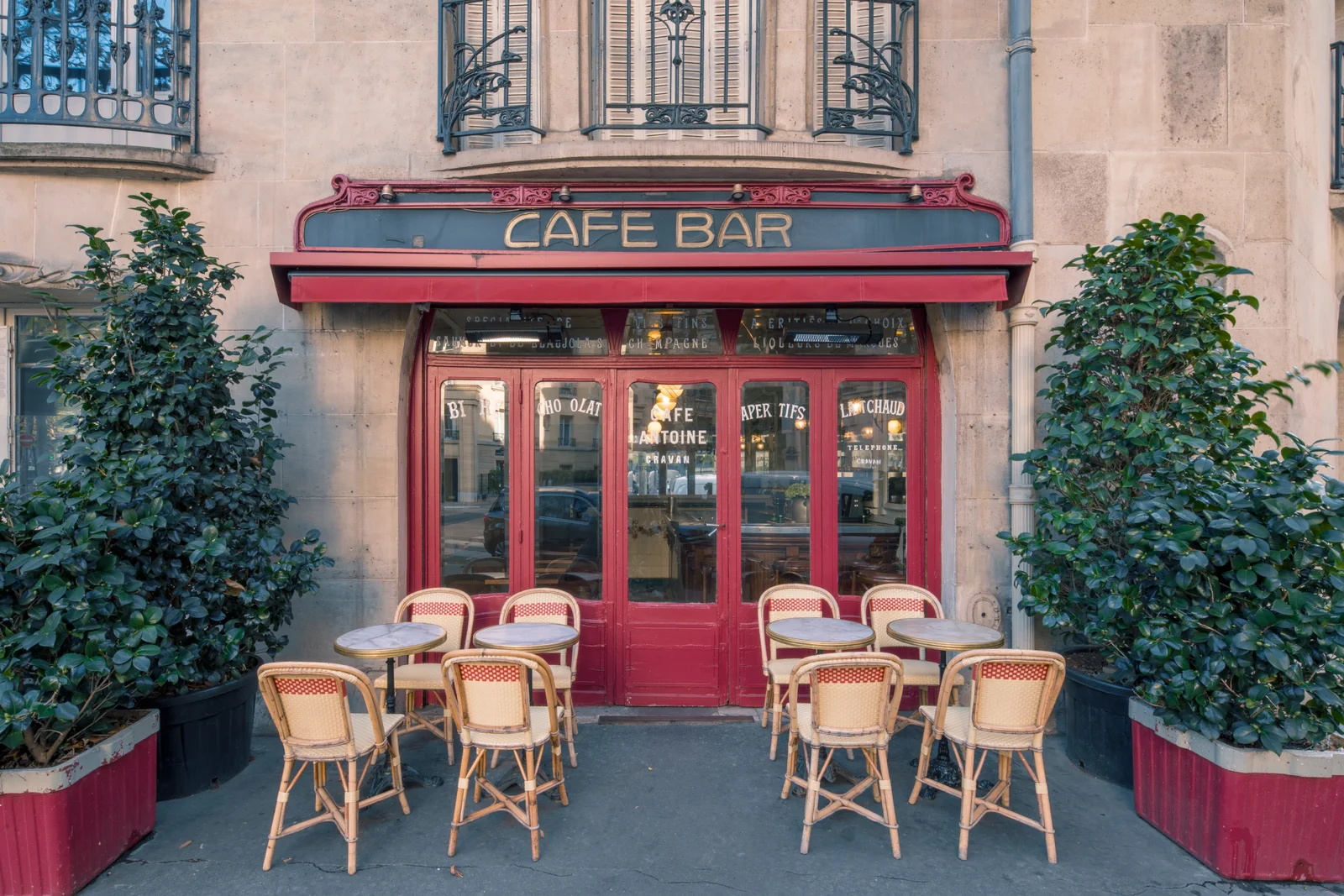
This pre-opening window is also the most fragile: a delay of a few days in the finishing schedule can make it disappear entirely if the public opening itself is locked to a fixed date. That is why it helps to build in some flexibility on the exact date from the start, rather than aiming for a single fixed day.
Shooting after a few weeks of use
Some places only make sense once lived in: a hotel needs some linen in place, an office needs a minimum of occupancy so it does not read as an empty set. This window suits communications that want to show a living place rather than an isolated architectural object — but it means accepting some unpredictability in the result, since the scene is no longer fully controlled.
This choice also means giving up a degree of immediate perfection: light traces of use become part of the image. For some clients, that is precisely what makes the result more credible to their audience — a restaurant that already looks alive convinces more than a set that is obviously empty of any human presence.
Shooting during construction itself
This is not the same request, but it deserves to be raised alongside the handover question: documenting construction phases produces material that handover photography cannot replace. A glass façade closing up, a concrete structure still visible before cladding, a site seen from the same vantage point months apart — these images exist only at that precise moment, and are missed later in any project record.
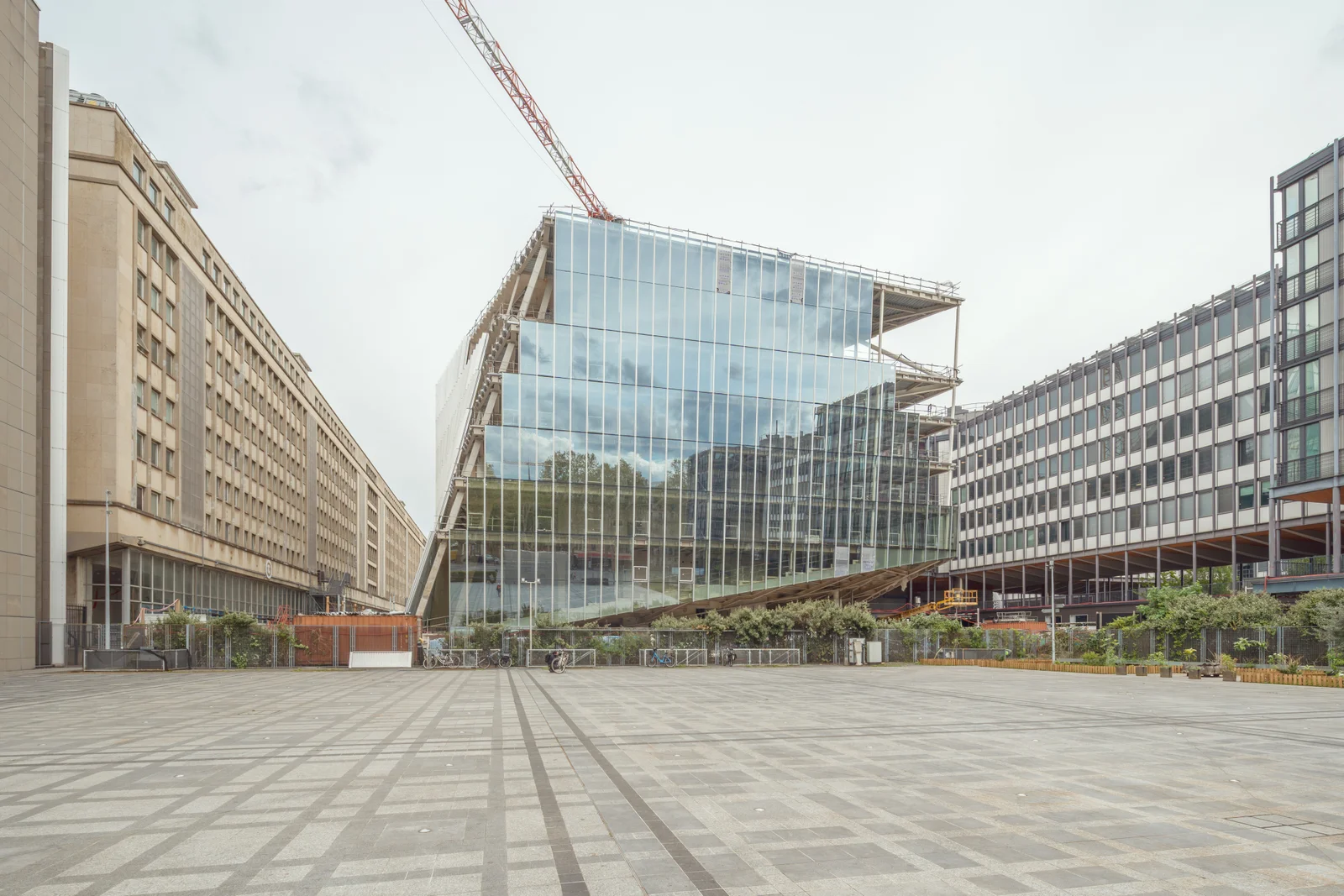
On Cité de l’Innovation at Jussieu campus, for BIG – Bjarke Ingels Group and OXO Architectes, this kind of follow-up documented structural stages that would have been invisible once the building was finished. The same logic guided the follow-up on PARISPARC, with the same architects: the frame under construction appears nowhere in the finished images, yet it tells part of the project the finished result no longer shows.
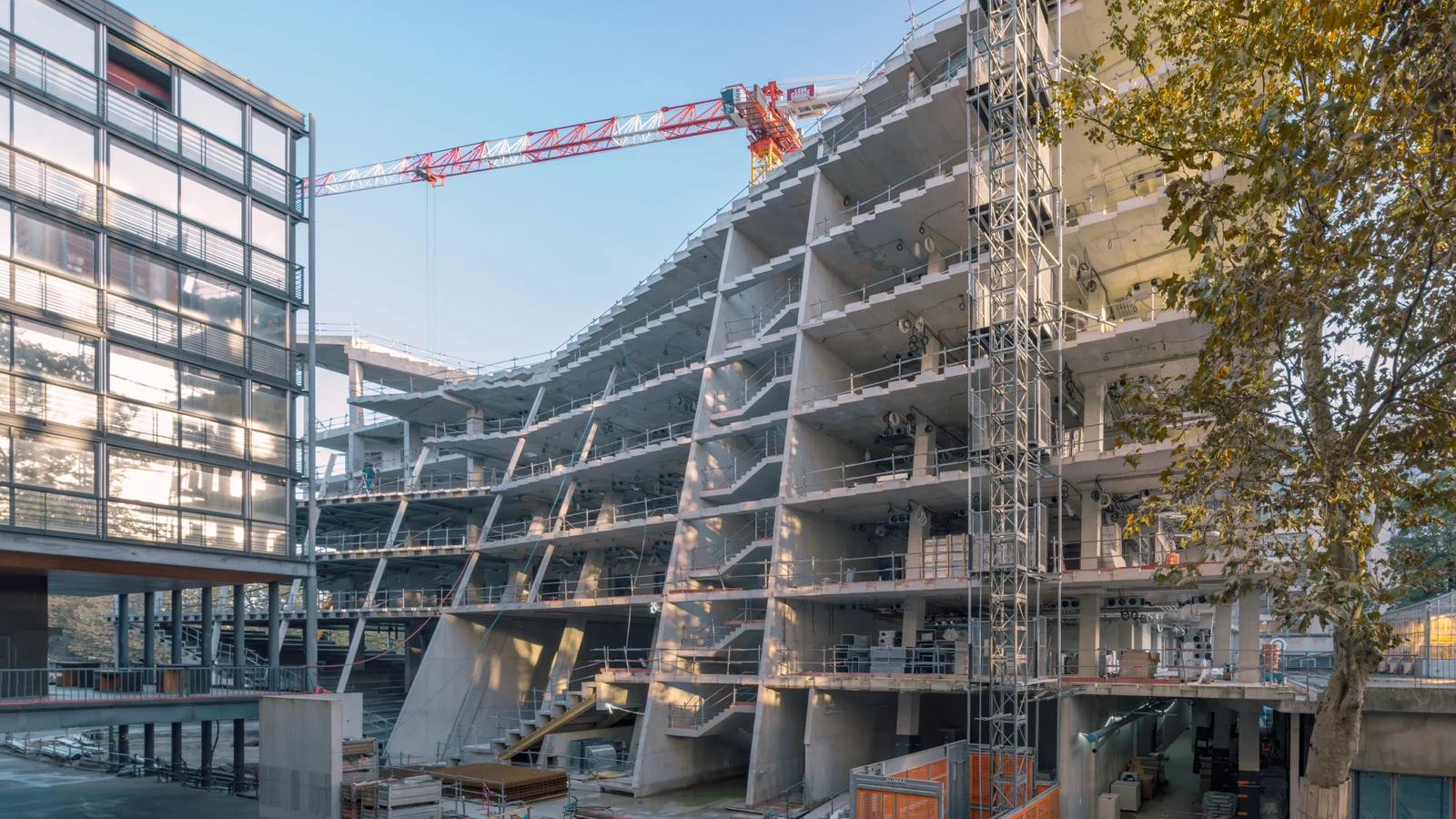
This construction-phase follow-up is not an alternative to handover photography: the two complement each other. One documents the process, the other documents the result. A project photographed only at handover loses any visual trace of what happened before — and that trace has value both for internal communication and for future reference files.
Matching the date to the intended use of the images
The timing question cannot be separated from who the images are for. A competition file usually expects clean, unoccupied images, available quickly after the works end. Institutional communication tied to an opening event needs precise timing against that date — which means planning the reportage weeks ahead, not deciding the night before. A record kept for future reference or tender files tolerates more flexibility but benefits from continuous documentation rather than a single point in time.
This is why project scoping happens upfront: I reply within 24 hours to scope a request, and the detailed quote follows within 48 hours with a delivery schedule — but that schedule depends directly on the date the site will actually be photographable, which is almost never the contractual handover date. Details are on the Rates and usage rights page.
This upfront scoping also avoids a common confusion: assuming that a single shoot can serve every use at once. A competition file, an opening campaign and a project archive do not share the same requirements for light, staging or timing — separating them from the start makes it possible to schedule the right date or dates, rather than chasing a compromise that fully satisfies none of them.
The case of multiple stakeholders
On a construction project, timing gets more complex when several parties expect the same images for different purposes: the client wants to illustrate a progress report, the architect wants a reference book, the contractor wants to document its own work. In that case, it is more efficient to set not a single date but a calendar of milestones — foundations, structure, envelope, finishes — so each party gets its useful moment without multiplying uncoordinated one-off visits. This is the principle laid out on the Construction photography in Paris page, with ad hoc, milestone-based or regular follow-up formats.
This multi-stakeholder coordination has another benefit, often underestimated at the scheduling stage: it limits redundant site visits, since a single well-timed intervention can serve several uses in parallel, provided the usage rights framework has been clarified in advance for each party involved.
Planning ahead rather than reacting
The best date for a handover shoot is not a single day — it is a decision made weeks in advance, alongside the schedule for cleaning, removing site protections and setting final lighting. That anticipation, more than any technique on the day itself, is what separates a successful handover reportage from a rushed one.
If you are preparing for this kind of deadline, the most useful thing is to write as soon as the end date starts to take shape, even approximately: Get in touch. Scoping the project — intended use of the images, number of stakeholders involved, the real construction schedule — makes it possible to set the shoot date for the moment the building is actually ready to be shown, not just declared complete.