
Contemporary Architecture in France: 5 'Trending' Architects in 2025, Seen by a Photographer
An overview of five French architects in vogue in 2025 – Lacaton & Vassal, Bruther, Lina Ghotmeh, A6A and Rudy Ricciotti – seen through the eyes of an architectural photographer.
French architecture is experiencing a revival that combines sustainable innovation with a raw aesthetic. Whether it involves raw concrete or bio-based materials, today’s architects are imagining original spaces built to last. As an architectural photographer, I see first-hand how photography plays a key role in showcasing these contemporary works – capturing light sliding across raw concrete, revealing the texture of a façade or the finesse of a structure. Here is an overview of 5 French architects in vogue in 2025, blending established figures and emerging talents, all recognised by their peers for the originality of their approach, the beauty of their work and their commitment to sustainable architecture.
Documenting these singular signatures is my daily work as a photographer for architects.
Anne Lacaton & Jean-Philippe Vassal – Pioneers of Sustainable Architecture
The duo Lacaton & Vassal is celebrated worldwide for their humanist, sustainable and innovative approach to architecture. “Praised for their exacting and innovative approach, Anne Lacaton and Jean-Philippe Vassal champion an architecture of restraint, favouring conversion over demolition… doing more with less… focusing on the comfort of the occupant without neglecting environmental protection. An architecture on a human scale, in short” (CULTURE.GOUV.FR)
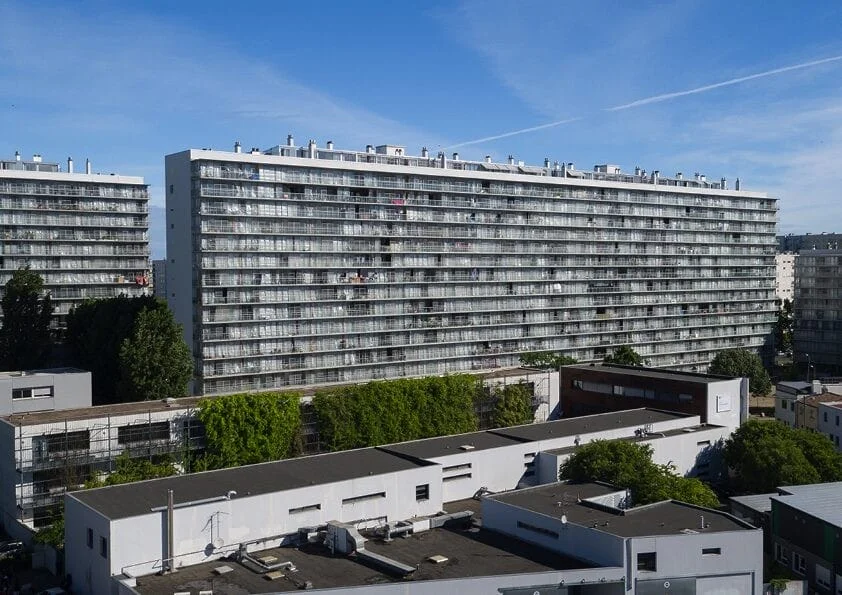
Winners of the prestigious 2021 Pritzker Prize, they champion “never demolish” – never tearing down the existing building but transforming it intelligently. Their work, understated and light-filled, such as the transformation of the 530 dwellings at the Grand Parc in Bordeaux (2019 European Union Mies van der Rohe Award) or the Nantes School of Architecture, offers generous, adaptable spaces, enhanced by natural light. For a photographer, these buildings provide an ideal field of expression: large glazed volumes, exposed structures and raw materials that catch the light.
Their website: lacatonvassal.com
Bruther (Stéphanie Bru & Alexandre Thériot) – Raw Lines and Geometric Rigour
Founded in 2007, the Paris-based practice Bruther has made a name for itself on the international scene with architecture of character, blending a brutalist aesthetic with social commitment. “The French pair have gathered numerous awards and recognition abroad with a strong language, a mix of geometric rigour and refined detail, that highlights the structure of buildings and their mechanics.” (LEMONDE.FR)
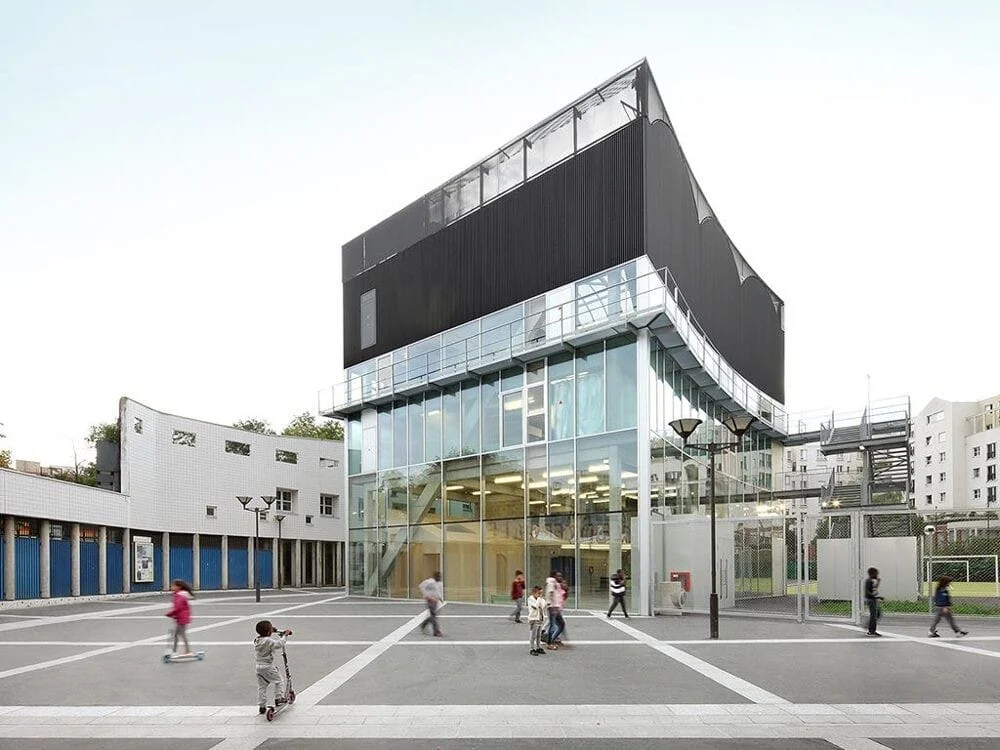
Winners of the Équerre d’Argent on three occasions and of the 2020 Swiss Architectural Award, Stéphanie Bru and Alexandre Thériot design flexible buildings, open infrastructures ready to accommodate evolving uses (SWISSARCHITECTURALAWARD.COM). The Saint-Blaise sports and cultural centre (Paris) and the Maison de la Recherche (Caen) illustrate their style: exposed concrete, pared-back volumes and transparency that creates urban connection. These structures offer the photographer striking plays of shadow and light on the raw concrete, underlining the “fineness of texture and precision” so dear to Bruther.
Their website: bruther.biz
Want to Capture Contemporary Architecture at Its Best?
The work of today’s architects, between raw concrete, clean lines and a sustainable approach, deserves images equal to their ambition. As a specialist photographer, I bring out the materiality, the light and the unique aesthetic of each project.
If you would like to give your projects the visual impact they deserve, please do not hesitate to contact me via the form below. The article continues right after!
Lina Ghotmeh – Memory, Material and a Sustainable Vision
Lina Ghotmeh, a French-Lebanese architect based in Paris, is one of the rising stars of world architecture. Her work combines the poetry of memory and ecological innovation. “Having grown up in Beirut, she has developed a distinctive architectural stance inspired by the concepts of renaissance and renewal, using natural materials and traditional techniques. Her work is celebrated for its sensitivity to history and materiality… striving to create a sustainable and inclusive architecture.” (FR.WIKIPEDIA.ORG)
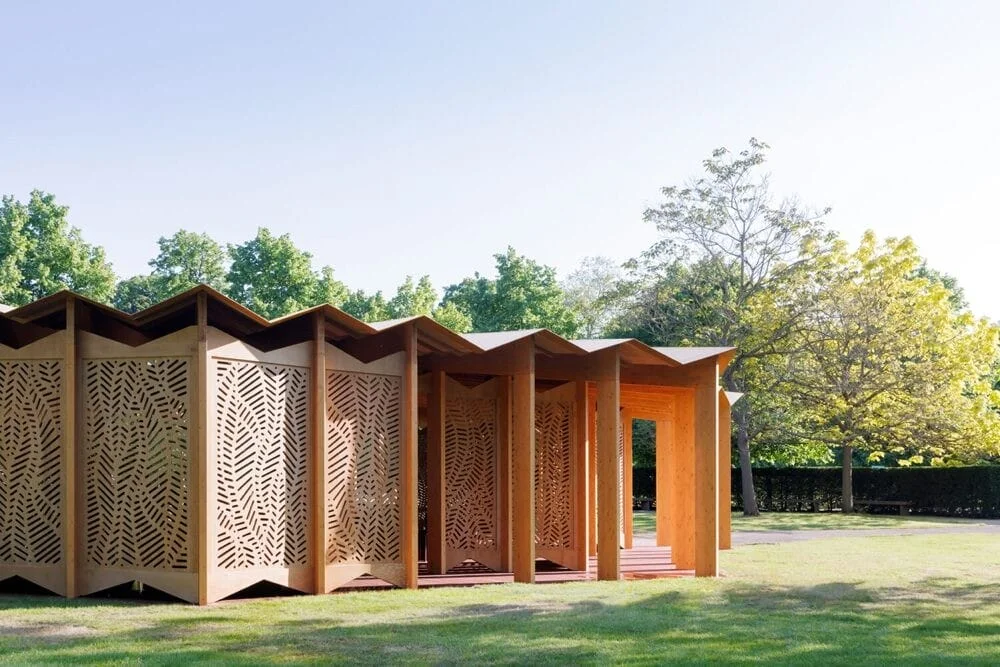
Awarded the 2020 Schelling Architecture Prize, and chosen to design the 2023 Serpentine Pavilion in London, Lina Ghotmeh conceives each project as an “archaeology of the future”, in dialogue with its context. The spectacular Stone Garden in Beirut, a sculptural building in organic concrete, or the À Table Pavilion (a timber structure with openwork patterns) offer sensitive volumes in which light plays across materials. In photographs, her work reveals a great richness of detail – cut-out patterns, textures of earth or wood – testifying to a deeply humanist and sensory approach.
Her website: linaghotmeh.com
Atelier A6A (Bordeaux) – Evolving Housing and Raw Simplicity
Among the new generation, Atelier A6A (short for “Atelier 6 Architecture”) embodies boldness and sustainable commitment. This young Bordeaux practice, winner of the 2020 Albums des Jeunes Architectes (AJAP) and the 2023 Équerre d’Argent award in the Housing category, offers an alternative vision of housing. “Founded in Bordeaux by Roberto de Uña, Michel Hardoin and Antoine Ragonneau, the A6A studio received the Équerre d’Argent… an honour rewarding their Volumes Capables programme, a form of evolving housing” (JUNKPAGE.FR).
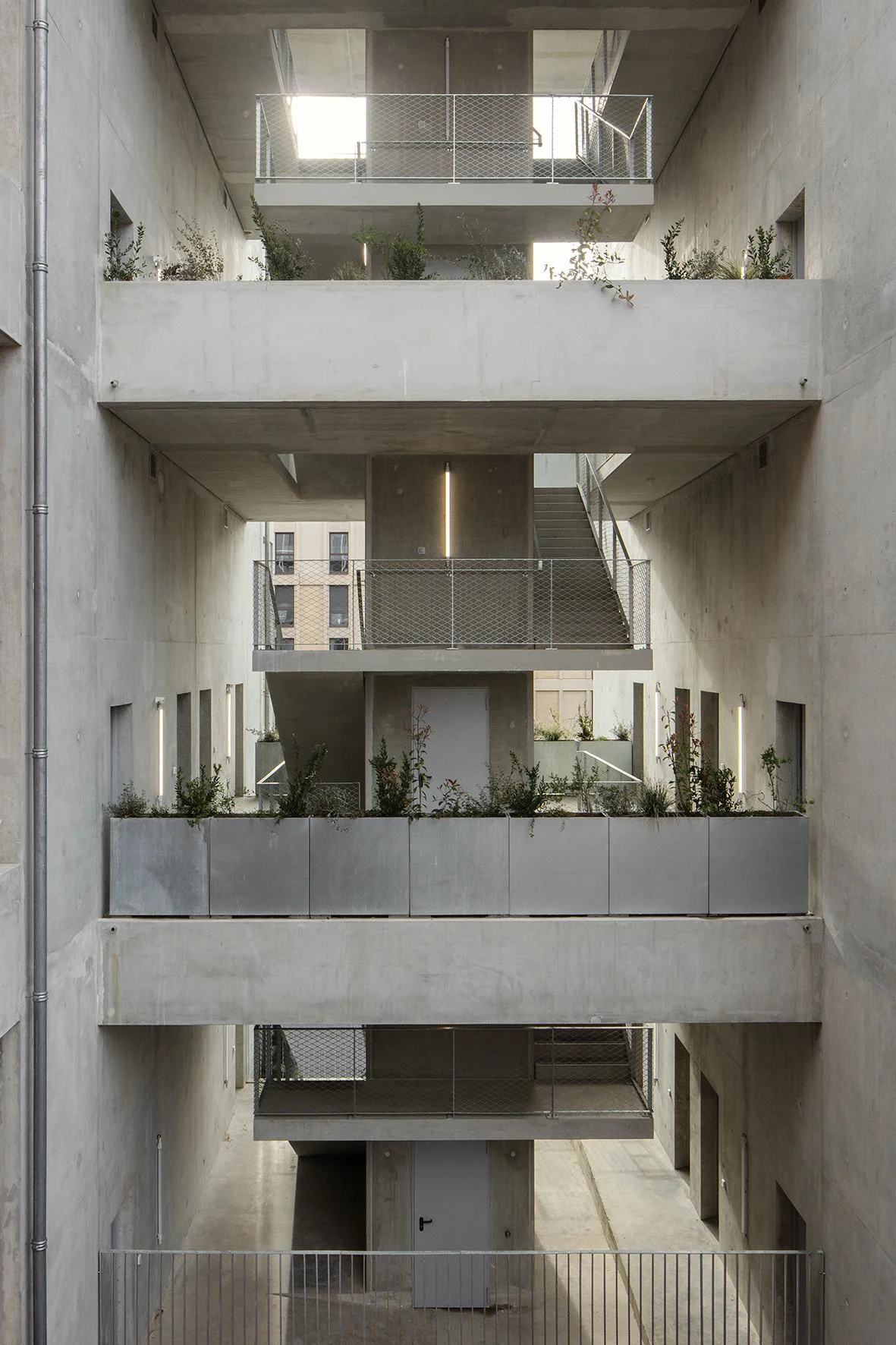
This project, located in the new Brazza district, offers large raw-concrete volumes, deliberately delivered nearly empty and with generous ceiling heights, which residents can fit out progressively (adding mezzanines, partitions) as their needs evolve. “This Équerre d’Argent award is a recognition of our approach, in particular a desire for simplicity in our architectural language,” the architects say.
Photogenic in their radicalism, Les Volumes Capables feature clean lines, exposed structures and an unabashedly neo-brutalist aesthetic. The photographer can capture the purity of the concrete and the modularity of the spaces here, evidence of a “frugal” architecture geared towards freedom of use.
Their website: a6a.fr
Rudy Ricciotti – Virtuoso of Raw Concrete
An unavoidable figure, Rudy Ricciotti is the star architect of concrete. Winner of the Grand Prix National d’Architecture in 2006, he revolutionised the use of concrete with bold, poetic structures, such as the Mucem Museum in Marseille or the Jean-Bouin stadium in Paris. An architect and engineer by training, he “champions a modern use of concrete and casts a keen eye over the urban planning of working-class neighbourhoods” (ANRU.FR).
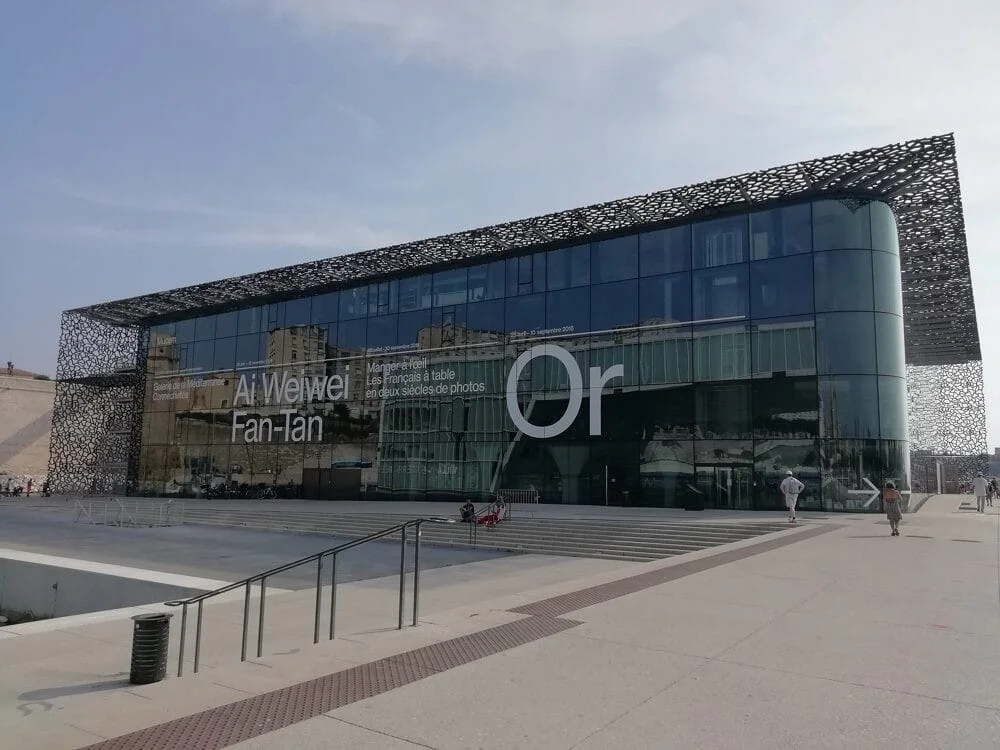
His material of choice is ultra-high-performance fibre-reinforced concrete, which he handles like a sculptor: “a material I talk to and which talks back to me… much like a good mother,” he says with a mischievous smile (FR.WIKIPEDIA.ORG).
His iconic works – the concrete lattice of the MuCEM that filters the Mediterranean light, the concrete footbridge at the Pont du Diable, or the Rivesaltes Memorial – leave their mark on the landscape. From a photographic standpoint, Ricciotti’s works offer strong contrasts between shadow and sunlight, striking geometry and a raw materiality. Regarded as an “enfant terrible” in love with concrete, he remains one of the standard-bearers of French neo-brutalism, marrying art and technique.
His website: rudyricciotti.com